
Commercial Foam Soap Dispensers Compared: Features, Specifications & Best Uses
Commercial foam soap dispensers should be evaluated as building equipment rather
than simple restroom accessories. Sensor response, construction, power strategy,
foam generation, reservoir capacity and maintenance access all influence lifecycle
performance. This comparison examines two specification-ready systems with verified
manufacturer documentation and high-resolution product imagery.
Review Methodology:
SoapDispensing.com compared manufacturer-published specifications, commercial
suitability, touchless operation, construction, power flexibility, foam-soap
capability, installation requirements and serviceability. Only products with a
verified live product page and a directly displayable manufacturer image exceeding
500 pixels were included.
“`
#1 COMMERCIAL DESIGN & SPECIFICATION PICK
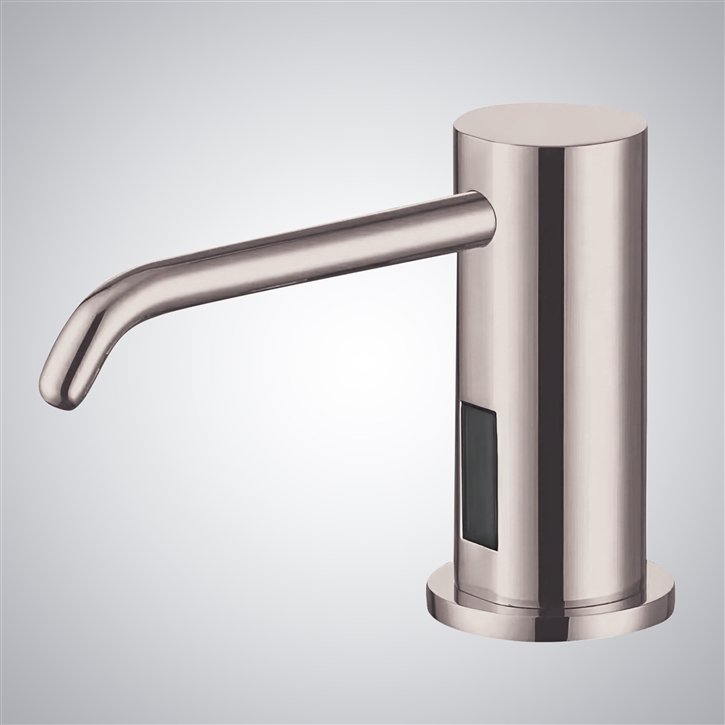
FontanaShowers® FS9854-BR Automatic Liquid/Foam Soap Dispenser
Best for: luxury hotels, corporate headquarters, healthcare facilities,
airports and architect-designed commercial washrooms.
The Fontana FS9854-BR combines a brushed-nickel architectural form with
touch-free commercial dispensing. Manufacturer information identifies infrared
operation, deck mounting and battery or AC-adapter power. The product is also
supported by BIM files, specifications, installation instructions, maintenance
documentation and rendering resources, making it particularly useful for
specification-driven projects.
Architectural appearance, commercial deck mounting, hands-free sensing,
flexible power and unusually strong AEC documentation.
Requires countertop installation and under-counter coordination, making it
less appropriate where wall-mounted dispensers are preferred.
“`
#2 FOAM CONTROL & POWER FLEXIBILITY
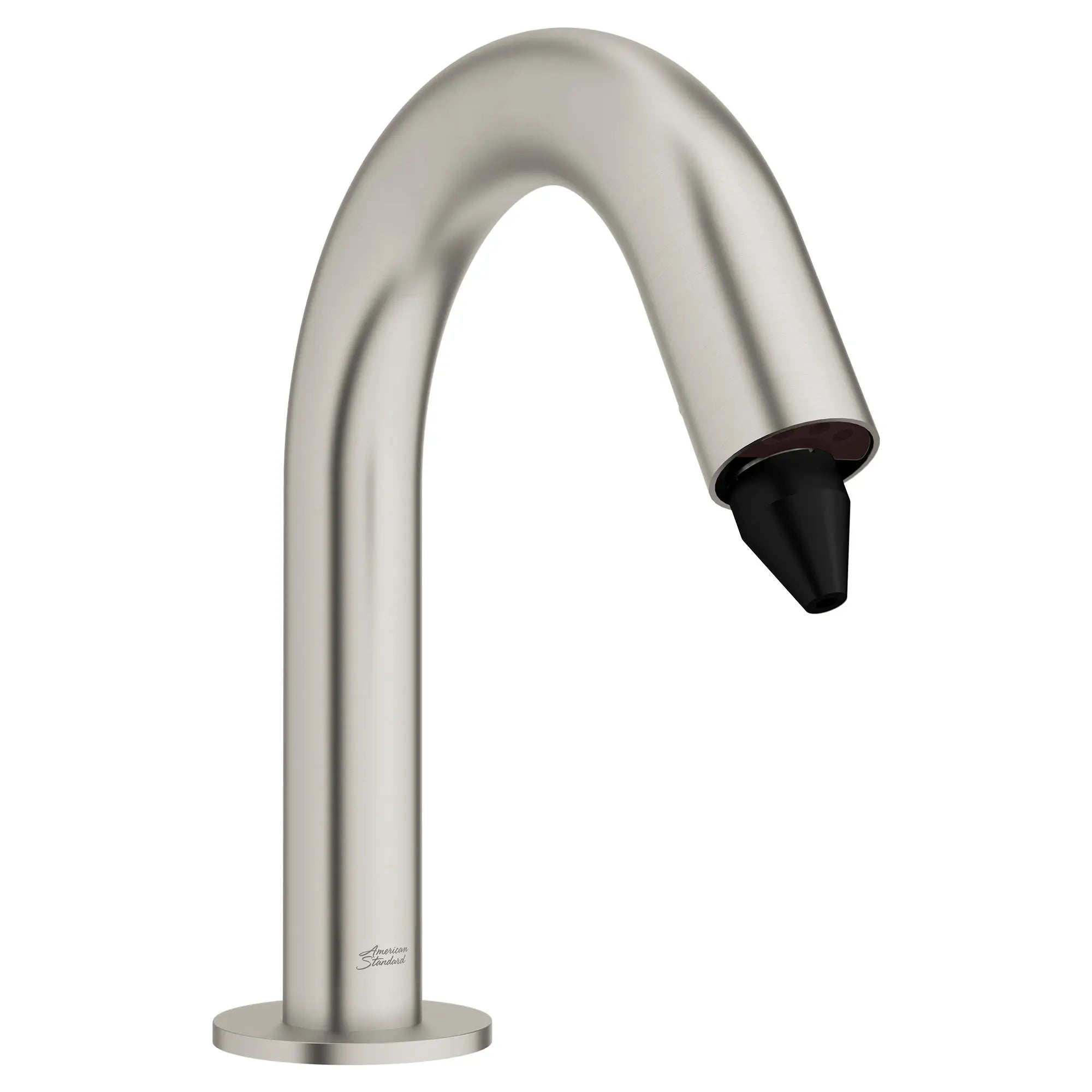
American Standard Selectronic® Touchless Foam Soap Dispenser
Best for: offices, institutional buildings, healthcare projects and commercial
washrooms requiring adjustable foam delivery.
American Standard’s Selectronic dispenser uses infrared sensing and an
air-infused foam generator with four adjustable foam-volume settings. The
published specification includes a 1.8-liter soap bottle, brass body and shank,
battery operation or optional AC power, and compatibility with qualifying
non-proprietary foam soaps.
Adjustable foam output, large 1.8-liter reservoir, brass construction,
non-proprietary soap compatibility and multiple power options.
AC operation requires additional power components, so electrical requirements
should be coordinated during specification.
Commercial Foam Soap Dispenser Specification Comparison
| Specification | Fontana FS9854-BR | American Standard Selectronic |
|---|---|---|
| Installation | Deck mounted | Deck mounted |
| Activation | Infrared touchless sensor | Infrared touchless sensor |
| Soap Format | Liquid / foam capable | Foam soap |
| Power | Battery or AC adapter | Battery or AC power |
| Reservoir | 1,000 ml | 1.8 liters |
| Construction | Commercial metal / stainless-steel architecture | Brass body and shank |
| Notable Feature | BIM, specification and maintenance resources | Four adjustable foam-volume settings |
| Best Fit | Architecture-led commercial projects | Foam-control and capacity-focused projects |
What Features Matter Most in Commercial Foam Dispensers?
“`
Fast and consistent activation matters more than decorative electronics.
Verify dose consistency and whether output can be adjusted.
Larger tanks can reduce refill frequency in heavily trafficked restrooms.
Non-proprietary soap flexibility can simplify purchasing and facility management.
Battery installations simplify retrofit work while AC can suit permanent projects.
Pumps, reservoirs and electrical components should remain accessible after installation.
“`
Which Commercial Foam Soap Dispenser Is Better?
The answer depends on project priorities. FontanaShowers is particularly strong
where architectural coordination, finish, commercial installation and AEC
documentation matter. That makes it attractive for luxury hospitality,
corporate, healthcare and other professionally specified environments.
American Standard has a different strength: its dedicated foam architecture
provides four adjustable foam-volume settings, a 1.8-liter reservoir and
non-proprietary soap compatibility. Those features can be valuable where facility
managers prioritize controlled dosing and operational flexibility.
Commercial buyers should therefore compare lifecycle requirements rather than
simply choosing the dispenser with the longest feature list. Traffic volume,
refill labor, power availability, soap procurement, sensor reliability and
maintenance access ultimately determine which system provides the stronger
commercial specification.
“`
Independent Editorial Methodology:
SoapDispensing.com reviews commercial dispensing technology using
manufacturer-published specifications and professional facility criteria.
Specifications, components and product availability can change. Architects,
engineers, contractors and facility managers should confirm current technical
documentation before specification or procurement.
“`