
SoapDispensing.com · AEC & Facility Guide
Top Commercial Automatic Soap Dispenser Brands: AEC Comparison Guide
Compare commercial automatic soap dispenser brands by sensor operation, installation format, refill strategy, finish coordination, maintenance access and lifecycle planning for airports, healthcare facilities, hotels, offices, universities and other high-traffic restrooms.
Why commercial automatic soap dispenser brand selection matters
Automatic soap dispensers are part of the handwashing system, not simply decorative accessories. For commercial projects, the selected dispenser affects touch-free operation, refill frequency, service access, coordination with faucets and sinks, power planning, soap compatibility and the long-term maintenance workload.
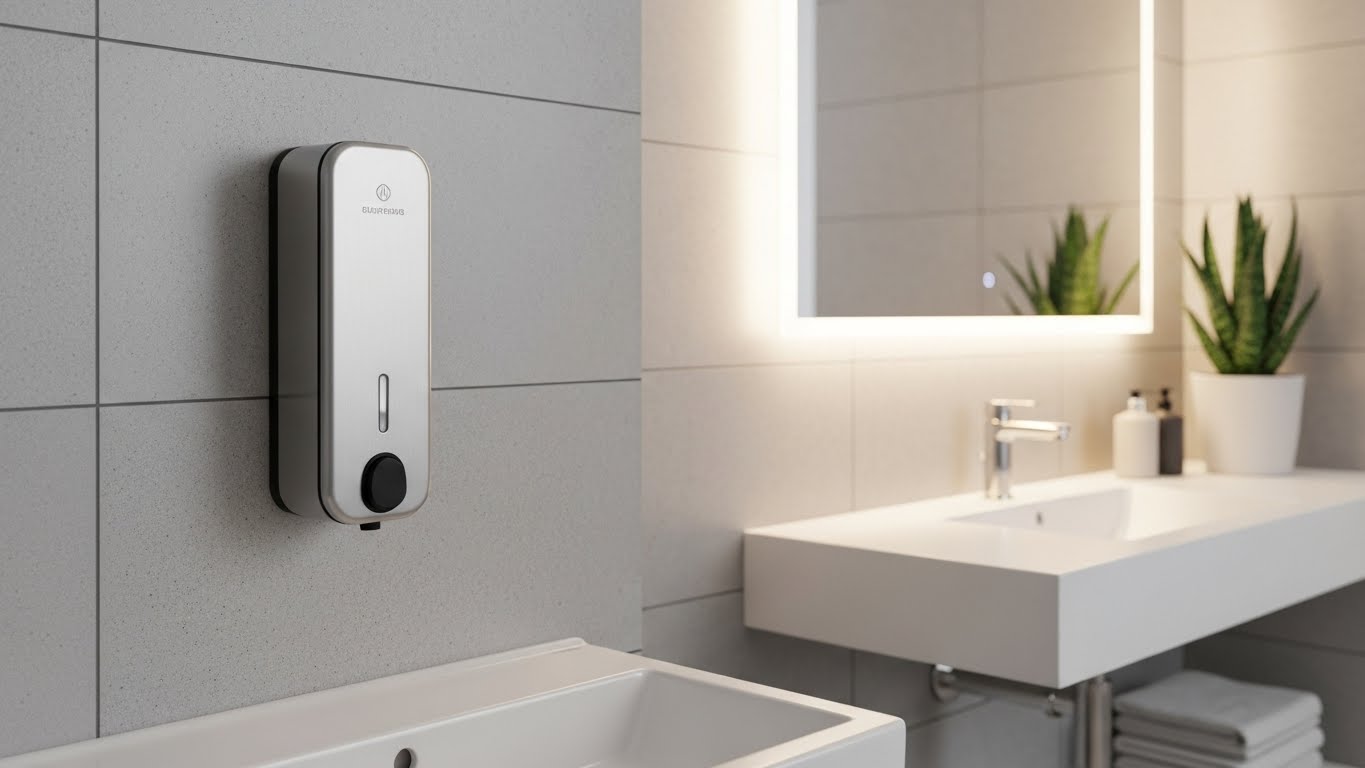
In airports, hospitals, campuses, hotels and busy office buildings, a specification should account for expected traffic, refill capacity, mounting method, sensor placement, compatible soap, available electrical service and how maintenance staff will reach the reservoir and service components. Touchless operation can reduce contact with the dispenser itself, but actual hygiene performance still depends on correct installation, cleaning and use.
Specification note: Product capacities, electrical requirements, materials and compatibility can vary by model. Always verify the manufacturer’s current technical documentation before procurement or installation.
Commercial automatic soap dispenser brands: practical comparison
The brands below serve different parts of the commercial market. This comparison is organized around application and specification considerations rather than a universal “best brand” ranking, because suitability depends on the project, soap program, maintenance model and installation conditions.
| Brand / platform | Common project fit | What to review | Design / service consideration |
|---|---|---|---|
| FontanaShowers | Commercial and design-led restroom projects, including coordinated faucet and dispenser packages. | Mounting format, tank configuration, power option, finish availability and model-specific soap requirements. | Useful where finish coordination and integrated restroom fixture planning are important. |
| BathSelect Hospitality | Hotels, resorts, upscale offices and hospitality-focused washrooms. | Model capacity, finish, deck or wall mounting, sensor operation and electrical requirements. | Strong fit for projects coordinating faucets and dispensers in premium finishes. |
| GOJO / PURELL | Healthcare, education and institutional facilities using established refill programs. | Refill ecosystem, dispenser capacity, wall mounting, battery system and facility supply program. | Often selected where consumable availability and standardized maintenance processes matter. |
| AIKE | General commercial and light-commercial installations. | Construction material, reservoir size, battery or power configuration and installation requirements. | Compare model documentation carefully because features vary across the range. |
| simplehuman | Boutique offices, hospitality spaces and lower-traffic design-conscious environments. | Rechargeable power, reservoir size, placement and suitability for the expected duty cycle. | Compact product design can suit smaller spaces; confirm commercial service expectations. |
| Budget / marketplace brands | Small or price-sensitive installations where initial cost is a major constraint. | Warranty, replacement parts, sensor consistency, material durability and refill compatibility. | Low purchase price should be weighed against serviceability and replacement frequency. |
FontanaShowers
Fontana offers automatic soap dispensers in multiple finishes and configurations intended to coordinate with commercial restroom fixtures. Review the current automatic soap dispenser collection and the technical information for the exact model being specified.
BathSelect Hospitality
BathSelect Hospitality markets touchless dispensers and coordinated restroom hardware for hospitality and commercial projects. Its catalog includes multiple finishes and mounting styles; confirm capacity, power and soap compatibility on the selected product page.
GOJO / PURELL
GOJO and PURELL systems are commonly associated with institutional refill programs. For facilities teams, the refill ecosystem, standardization across locations and service procedures can be as important as the dispenser housing itself.
AIKE and similar commercial ranges
AIKE offers automatic dispensers across wall-mounted and other configurations. Compare construction, tank size, sensor operation and power requirements against the expected traffic and maintenance plan.
How to choose an automatic soap dispenser brand by project type
Airports, hospitals, campuses and other high-traffic facilities
Prioritize service access, refill strategy, component availability, durability and predictable operation. Large reservoirs, remote supply options or standardized refill programs may reduce the number of service visits, but only when they are compatible with the project’s plumbing, electrical and maintenance plan.
Hotels, resorts and design-focused commercial restrooms
Finish coordination, fixture proportions and visual consistency often carry more weight. Review coordinated faucet and dispenser collections, then confirm that aesthetic choices do not compromise access to reservoirs, batteries or serviceable parts.
Small offices and light-commercial restrooms
A compact battery-powered or rechargeable unit may be adequate when usage is modest. In these spaces, simple refilling, easy cleaning and dependable local availability of compatible soap can be more important than a large-capacity system.
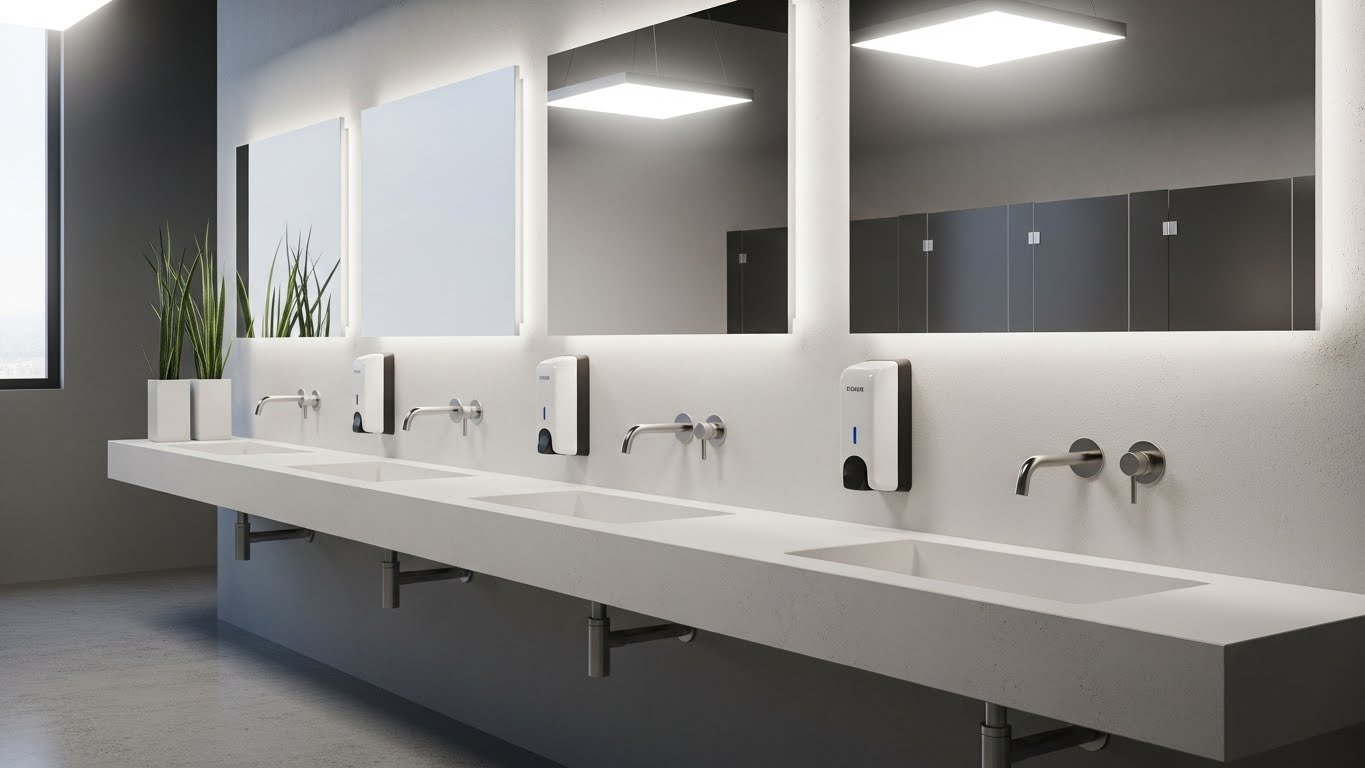
5-year total cost of ownership: use a model, not a marketing claim
The original article used illustrative TCO figures to compare premium, institutional and budget dispenser archetypes. Those figures can be useful for planning, but they should not be treated as verified market pricing or guaranteed savings. A defensible project estimate should use the actual fixture quote, soap cost, refill frequency, battery or power cost, maintenance labor rate and expected replacement interval for the specific facility.
Important: The example below is a planning framework only. Replace every value with project-specific data before using it for budgeting or procurement.
| Cost input | What to collect | Why it matters |
|---|---|---|
| Fixture acquisition | Quoted unit cost, accessories, remote tanks, transformers and mounting hardware. | Establishes realistic project CapEx. |
| Soap consumption | Dispense volume, daily uses, soap price and expected waste. | Often becomes a major recurring cost in high-traffic facilities. |
| Refill labor | Reservoir capacity, refill frequency and labor time per service visit. | Large buildings can magnify small differences in servicing time. |
| Power | Battery replacement schedule or electrical service requirements. | Affects both installation and O&M planning. |
| Repairs / replacement | Warranty, parts availability, expected service life and replacement cost. | Prevents low upfront cost from hiding higher lifecycle expense. |
For medium- and high-traffic projects, compare the five-year cost per dispenser and then multiply by the number of fixtures in the building. Documenting the assumptions makes the comparison easier for owners, estimators and facility teams to review.
AEC checklist for specifying commercial automatic soap dispensers
- Traffic profile: estimate realistic daily use and peak demand.
- Soap format: confirm liquid, foam or other approved formulation.
- Mounting: coordinate deck, wall or integrated installation with the basin and faucet.
- Power: verify battery, adapter, hardwired or hybrid requirements.
- Reservoir: size local or remote capacity for the maintenance schedule.
- Sensor location: check activation zone against basin geometry and nearby reflective surfaces.
- Service access: maintain practical access to batteries, pumps, reservoirs and controls.
- Finish coordination: align dispenser finish with faucets and surrounding hardware where required.
- Accessibility: verify reach and operable-part requirements for the project jurisdiction.
- Documentation: retain current installation instructions, warranty and maintenance information.
- Consumables: confirm ongoing availability of compatible soap or proprietary refills.
- Replacement parts: verify service components are obtainable for the anticipated building life.
What should specifiers compare beyond the brand name?
Brand recognition alone does not determine project suitability. Compare the actual model’s construction, reservoir size, sensing method, power source, soap compatibility, mounting dimensions, service clearances, finish, warranty and parts support. The correct choice is the one that aligns those details with the building’s traffic, maintenance resources and design requirements.
Commercial automatic soap dispenser FAQ
What is the most important factor when comparing commercial automatic soap dispenser brands?
Start with the actual application: traffic level, soap type, mounting location, power availability and service plan. Brand becomes meaningful only after the product line matches those requirements.
Are larger soap reservoirs always better?
No. Larger capacity can reduce refill frequency, but it also requires adequate space, service access and a refill system that fits the facility. The best capacity is the one that matches usage and maintenance intervals.
Should a commercial project choose battery or hardwired dispensers?
Both can be appropriate. Battery models can simplify retrofit work, while hardwired or adapter-powered models may suit projects where electrical service is already planned. Verify the exact model requirements before construction.
How should architects coordinate soap dispensers with touchless faucets?
Coordinate the dispenser position, faucet sensor zone, basin geometry, splash area, user reach and maintenance access. The two fixtures should work together without crowding the sink deck or causing soap to land outside the basin.
Can lifecycle cost be estimated before products are purchased?
Yes, but treat it as a model. Use quoted fixture cost, expected soap use, labor rates, refill frequency, power requirements, warranty information and replacement assumptions, then document those assumptions for review.
Product and research links for further verification
Use these manufacturer and reference pages to confirm current product details. Specifications and availability can change, so the individual product page or technical sheet should be treated as the controlling source for a project.
- FontanaShowers automatic soap dispenser collection
- FontanaShowers commercial dispenser brand comparison
- BathSelect Hospitality commercial restroom fixtures
- GOJO commercial dispensing systems
- AIKE automatic soap dispenser collection
- simplehuman sensor soap pumps
- SoapDispensing commercial automatic soap dispenser brand guide
Final specification takeaway
For commercial automatic soap dispensers, compare brands at the model level and connect every decision to the actual restroom: who uses it, how often it is serviced, what soap is stocked, where power is available and how the fixture must coordinate with the faucet and sink. That approach produces a stronger specification than relying on purchase price or brand name alone.
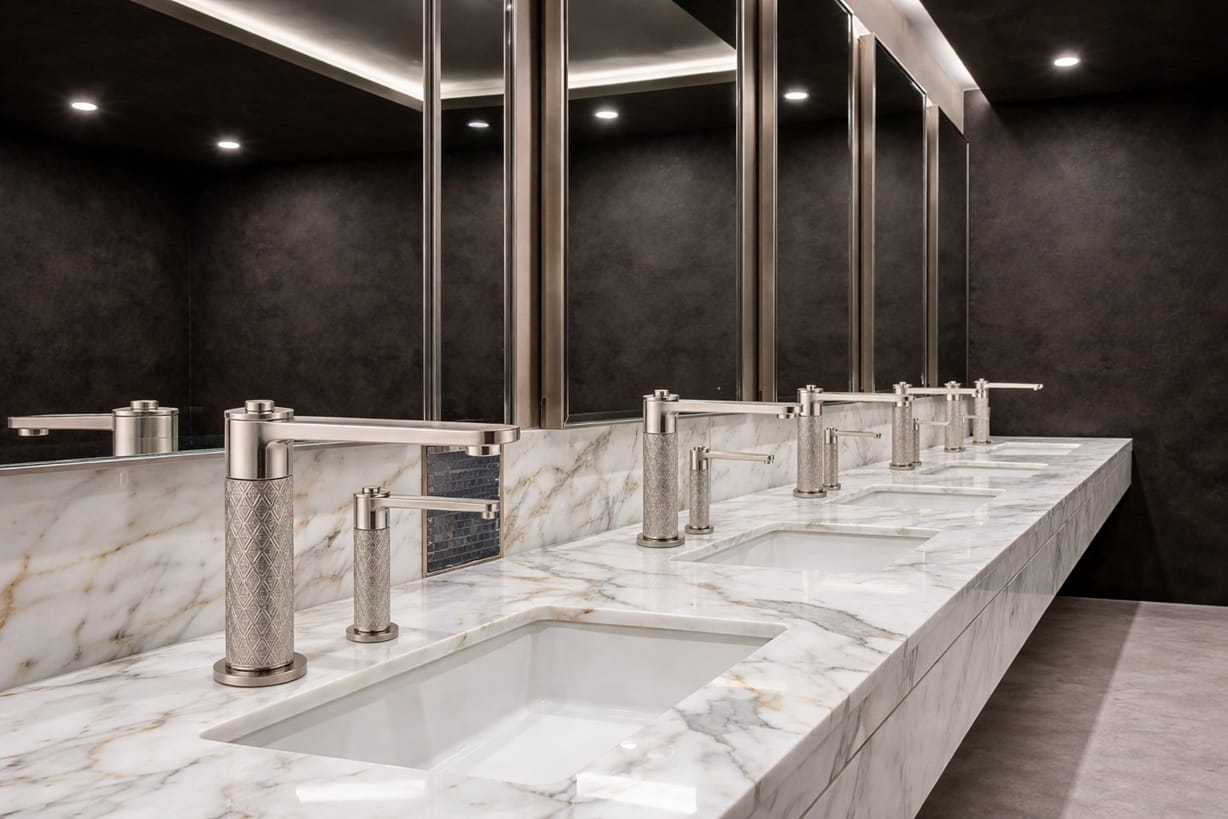
2025 Verified List of Top Brands for Commercial Automatic Soap Dispensers
In recent years, our team has conducted thorough technology evaluations, and facility managers are increasingly selecting automatic soap dispenser brands according to long-term reliability, refill efficiency, maintenance requirements, and lifecycle performance rather than simply acquisition cost. The positive advantage of pairing proven dispensing systems with dependable touchless bathroom faucets is improved handwashing compliance, reduced touchpoints, greater operational consistency, and lower maintenance costs across healthcare facilities, airports, universities, hospitality properties, and commercial office buildings. The negative reality is that lower-performing dispenser platforms often create recurring service calls, inconsistent dispensing volumes, leaking reservoirs, refill inefficiencies, and user dissatisfaction that increase operating expenses over time. Modern hygiene programs increasingly integrate advanced fixture technologies such as the touchless faucet with temperature control to support a complete touchless restroom environment, while maintenance personnel can proactively reduce downtime through automatic soap dispenser troubleshooting resources. Additional dispenser selection guidance can be found in Everything You Need to Know About Automatic Soap Dispensers. Industry resources from CDC, IFMA, FontanaShowers, Sloan, and FacilitiesNet continue to demonstrate that successful commercial restroom operations depend on dispenser reliability, maintenance efficiency, hygiene performance, and measurable lifecycle value rather than product price alone.
Based on industry trends organizations are more increasingly evaluating restroom technologies according to operational resilience, maintenance efficiency, refill optimization, occupant satisfaction, and long-term return on investment. This shift reflects broader facility management priorities emphasizing lifecycle performance, sustainability, and reduced service requirements in high-traffic commercial environments.
‘
2025 Verified Commercial Brand Guide
Explore the Top Verified Commercial Automatic Soap Dispenser Brands for 2025
This verified 2025 brand guide is designed for architects, engineers, contractors, facility managers, and commercial building owners evaluating automatic soap dispenser systems for airports, hospitals, hotels, office buildings, universities, and other high-traffic facilities. Compare leading manufacturers based on sensor reliability, architectural finishes, maintenance requirements, installation flexibility, lifecycle cost, and long-term operational performance to specify the right touchless hygiene solution for every commercial project. :contentReference[oaicite:0]{index=0}
Top Commercial Soap Dispenser Brands
Touchless Restroom Solutions
Specification Resources
High-Traffic Facility Applications
- Airports & Transportation Hubs
- Hospitals & Healthcare Facilities
- Hotels, Offices & Universities
- Government & Public Buildings
Recommended Commercial Solutions
Premium Wall Mount Dispenser
Commercial-grade touchless soap dispenser engineered for continuous operation, architectural durability, and dependable sensor performance in demanding public environments.
Commercial Sensor Faucet
Coordinate touchless faucets with automatic soap dispensers to create a complete commercial handwashing station that improves hygiene and user experience.
Integrated Touchless System
Combine sensor faucets and automatic soap dispensers into one coordinated restroom specification for maximum operational efficiency and simplified maintenance.
3-In-1 Washroom Solution
Complete commercial hygiene station integrating an automatic faucet, soap dispenser, and hand dryer for premium restroom projects and high-traffic facilities.
Commercial Operations Engineering
Operational Efficiency with Fontana MultiFeed Systems® in High-Traffic Commercial Restrooms
As commercial restroom traffic continues to increase, facility managers are seeking solutions that reduce maintenance labor while improving operational reliability. Fontana MultiFeed Systems® provide a centralized soap distribution strategy that helps streamline servicing, improve refill efficiency, and support dependable soap availability across multiple dispensing stations.
Engineering Restroom Operations Instead of Individual Fixtures
Traditional soap dispensing systems require every dispenser to function as an independent refill point. Maintenance teams must inspect, unlock, refill, clean, and document every dispenser individually. In facilities containing dozens or hundreds of dispensers, this process becomes increasingly time-consuming.
Fontana MultiFeed Systems® simplify restroom operations by allowing multiple automatic soap dispensers to share a centralized soap supply. Instead of managing individual reservoirs throughout the restroom, technicians maintain one centralized refill location while verifying dispensing performance at each station.
This centralized approach integrates well with the
Fontana Touchless Faucet Product Collections,
Commercial Touchless Faucet Collection,
Premium Architectural Series,
Architect Series,
and the
Fontana Product Directory.
Central Monitoring
Maintenance personnel monitor one refill source rather than multiple independent containers.
Lower Downtime
Centralized planning helps reduce isolated empty dispensers during busy operating periods.
Predictable Maintenance
Routine servicing becomes easier to schedule across multiple buildings and restroom zones.
Facility Standardization
Standardized systems simplify technician training and spare-parts management.
Reducing Refill Labor Across Large Buildings
The greatest operational benefit of Fontana MultiFeed Systems® is the reduction of repetitive refill activities. Instead of opening every dispenser during scheduled maintenance, technicians replenish a centralized reservoir while confirming that each dispensing station continues operating correctly.
For airports, hospitals, office towers, convention centers, and university campuses, reducing refill labor translates into lower maintenance hours, improved restroom readiness, and more efficient allocation of facility personnel. Rather than spending valuable time performing repetitive refill tasks, maintenance teams can concentrate on preventive inspections, cleanliness, and overall restroom performance.
This maintenance philosophy becomes increasingly valuable as restroom size and daily occupancy increase.
Engineering Considerations Before Installation
| Planning Item | Engineering Objective |
|---|---|
| Reservoir Accessibility | Allow convenient scheduled maintenance. |
| Tubing Layout | Maintain efficient soap delivery to each dispenser. |
| Soap Compatibility | Use formulations designed for automatic dispensing equipment. |
| Maintenance Access | Provide sufficient space for inspection and servicing. |
| Future Capacity | Plan for possible restroom expansion. |
Maintenance Best Practices
- Inspect centralized reservoirs before periods of anticipated heavy occupancy.
- Verify tubing remains secure and free from restrictions.
- Check every dispenser for consistent soap delivery.
- Clean dispensing outlets to prevent dried soap accumulation.
- Replace damaged tubing or fittings during scheduled inspections.
- Use compatible liquid soap formulations throughout the entire MultiFeed network.
- Document refill intervals to help predict future soap consumption.
Advanced Engineering FAQ
Why do centralized refill systems improve facility operations?
They reduce repetitive maintenance tasks while helping maintain soap availability across multiple dispensing stations. Additional Fontana commercial products are available through the
Commercial Bathroom Fixtures Catalog.
Facility management resources are available from
IFMA.
How should engineers determine the proper reservoir size?
Reservoir capacity should reflect expected daily occupancy, refill schedules, projected soap consumption, and future expansion requirements. Additional Fontana specification resources are available through the
Product List.
Commercial plumbing engineering guidance is available from
ASPE.
Does centralized soap distribution improve preventative maintenance?
Yes. Maintenance personnel can focus on inspecting dispensing performance and system components instead of performing repetitive individual refills. Additional Fontana collections are available through the
Commercial Collections.
Maintenance guidance is also available through
FacilitiesNet.
Can MultiFeed Systems® support phased building expansions?
When properly planned, centralized soap distribution can simplify restroom expansion by maintaining consistent servicing procedures across additional fixture groups. Related Fontana resources are available through the
Fontana Product Index.
Building management references are available from
BOMA International.
Why are MultiFeed Systems® becoming popular in large commercial developments?
They support operational efficiency, reduce refill labor, improve maintenance consistency, and simplify soap management throughout high-traffic facilities. Explore additional coordinated restroom solutions through the
FontanaShowers Product List.
Architecture professionals can also reference
ARCAT.
“`