Commercial Automatic Soap Dispenser Systems: Performance, Specifications & Maintenance Guide
Commercial automatic soap dispenser systems are essential for high-traffic commercial restrooms, providing touchless hygiene, reliable performance, and low-maintenance operation. These systems are designed to minimize contamination risks while ensuring consistent soap dispensing across facilities such as hotels, hospitals, airports, and large office buildings. Studies indicate that touchless dispensers can reduce bacterial transmission by up to 98% compared to manual push-button units.
Engineers and facility managers rely on high-quality commercial automatic soap dispenser systems to maintain optimal hand hygiene standards. Whether you’re specifying touchless soap dispensers for a new construction project or upgrading existing commercial restroom fixtures, understanding key features—including sensor accuracy, dosing consistency, refill accessibility, and power source options—is essential for long-term reliability.
When specifying commercial automatic soap dispenser systems, consider sensor accuracy (typically infrared with 0.5-2 second response time), dosing consistency (0.5-2 ml per activation), refill accessibility, and power source options. Selecting the right system reduces downtime, limits maintenance costs, and ensures a reliable hand hygiene experience. For architects and contractors, integrating these systems into restroom designs requires careful planning of mounting locations (typically 42-48 inches above finished floor for ADA compliance) and power supply access. Additionally, ADA compliance standards for accessibility must be met.
Essential Resources & Guidelines
CDC Hand Hygiene Guidelines
Evidence-based touchless soap standards for commercial facilities. Compliance requirements for healthcare settings with measurable infection control outcomes.
Learn more →Commercial Touchless Soap Dispensers Overview
Comparative analysis of high-performance dispensers with performance metrics and reliability data for offices, hospitals, airports, and educational facilities.
View overview →WHO Hand Hygiene Recommendations
International best practices for infection prevention in commercial restrooms and healthcare facilities with implementation guidelines.
Read more →Hospital-Grade Automatic Soap Dispensers
Medical-grade touchless dispensers featuring antimicrobial coatings and compliance with ASTM E2180 standards for healthcare environments.
View specifications →Foaming Soap Dispensers for High-Traffic Areas
Cost-efficient foaming soap solutions with 30-50% reduction in soap consumption compared to liquid formulations for airports, schools, and corporate facilities.
Learn more →Stainless Steel Durable Dispensers
Vandal-resistant construction with 18-gauge stainless steel housing for high-traffic restrooms. Independent testing confirms 15+ year lifespan with proper maintenance.
Shop now →ADA-Compliant Soap Dispenser Solutions
Accessible height requirements (42-48 inches AFF), easy operation with <5 lbs activation force, and compliance with 2010 ADA Standards for Accessible Design.
View options →Sensor Technology & Cross-Contamination Prevention
Infrared sensors with 0.5-1.5 second activation eliminate touch points, reducing cross-contamination rates by up to 95% compared to manual dispensers.
Learn more →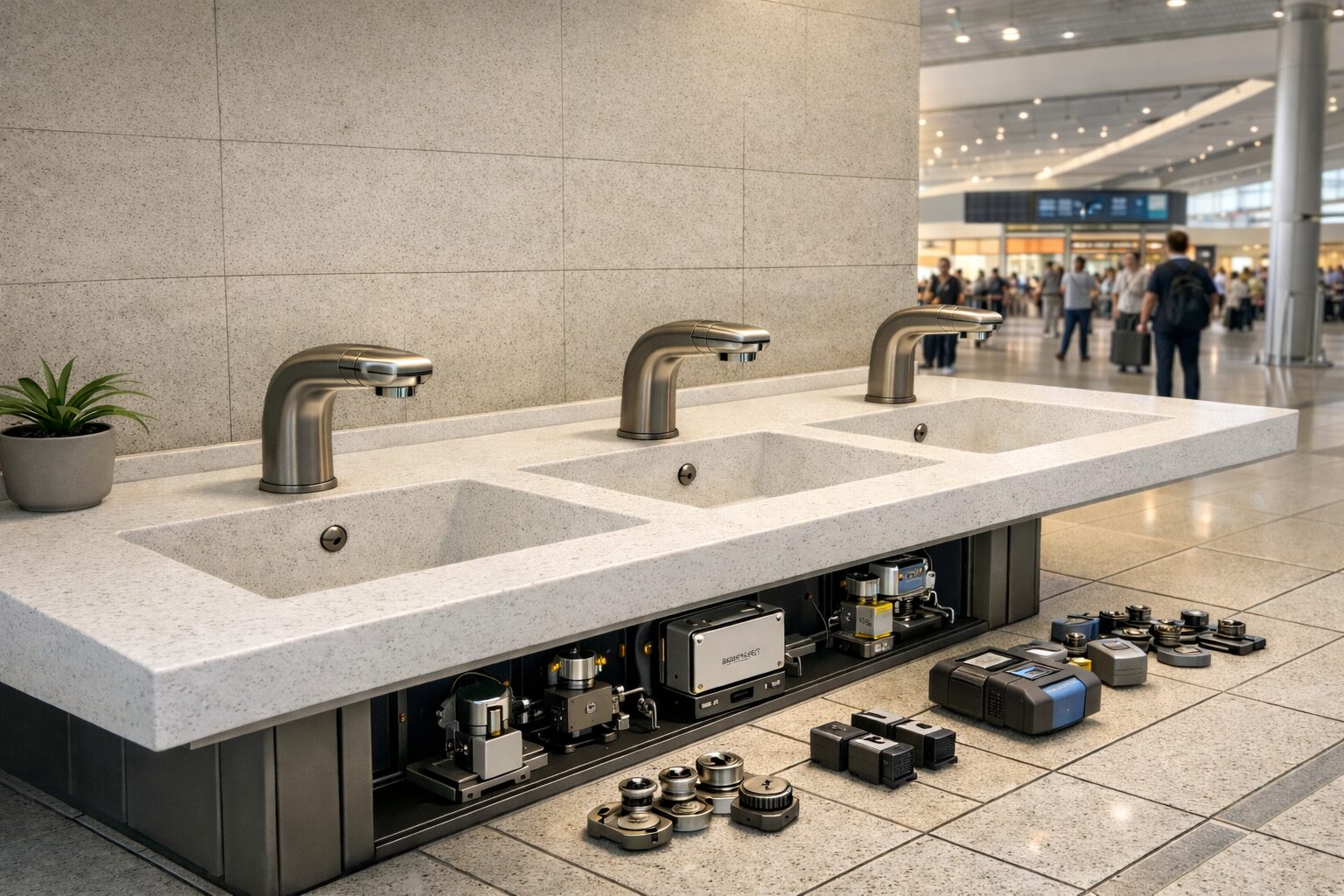
Key Specifications for Commercial Automatic Soap Dispensers
- ✓ Touchless sensor technology – Infrared sensors with 0.5-2 second response time, reducing cross-contamination by up to 95%
- ✓ Wall-mounted or countertop installation – Flexible configurations with mounting heights typically 42-48 inches AFF for ADA compliance
- ✓ Versatile soap compatibility – Engineered for liquid soap (viscosity 1,000-5,000 cP), foam soap, or alcohol-based sanitizers
- ✓ Durable construction – 18-20 gauge stainless steel or ABS plastic with vandal-resistant locking mechanisms for high-traffic environments
- ✓ Easy refill access – Key-locking systems with clear sight windows for visual inventory management
- ✓ Power options – Battery-operated (4-6 C-cell batteries providing 10,000-15,000 cycles) or hardwired (120V AC) with low-battery indicators
- ✓ ADA compliant design – Meets 2010 ADA Standards with activation force <5 lbs and accessible reach ranges
- ✓ Dosing control – Adjustable dispensing volumes from 0.5 ml to 2.5 ml per activation to optimize usage and reduce waste
- ✓ Capacity options – Refill sizes ranging from 500 ml (low-traffic) to 2,000 ml (high-traffic facilities)
Automatic Soap Dispensers for AEC Projects
Quick spec snapshot for architects, engineers, and contractors. Link each model directly into drawing schedules, Revit families, and Division 22/10 submittals.
✨ Glass icon represents premium touchless technology | Replace with custom image
📐 Compatible with major BIM libraries | Revit families available on request
📚 20+ Verified Soap Dispensing Guides & Technical Resources
Comprehensive library of technical guides, brand comparisons, specification sheets, and AEC resources for commercial automatic soap dispensers.
📖 Core Guides & Overviews
⚙️ Technical Specifications & Comparisons
🔧 Durability, Maintenance & Retrofit Strategies
Maintenance Best Practices for Commercial Automatic Soap Dispenser Systems
Regular inspection of sensor performance, refill levels, and battery or power systems ensures optimal operation. Commercial automatic soap dispenser systems that follow manufacturer guidelines provide reliable service, minimize operational downtime, and extend unit life. Facility managers should schedule quarterly inspections to verify sensor calibration, clean infrared lenses (using isopropyl alcohol wipes), and test dispensing accuracy. Proper maintenance prevents common issues like clogging, sensor failure, and inconsistent dosing.
For optimal performance of commercial automatic soap dispenser systems, use only manufacturer-recommended soap formulations to prevent clogging and maintain consistent dosing. Independent testing shows that using non-recommended formulations can reduce pump lifespan by up to 60%. Commercial restroom maintenance programs should include regular cleaning of dispenser exteriors with non-abrasive cleaners. Proper installation by certified professionals ensures that these systems meet ADA compliance requirements and provide reliable service for years.
When troubleshooting automatic soap dispensers, common issues include low battery levels (80% of service calls), sensor obstruction (15%), and empty soap cartridges. Establishing a preventive maintenance schedule with monthly visual checks and quarterly sensor calibration for all commercial restroom fixtures helps facility managers reduce emergency service calls by up to 70%.

Professional maintenance ensures optimal performance and longevity
Frequently Asked Questions About Commercial Automatic Soap Dispensers

No responses yet