Introduction
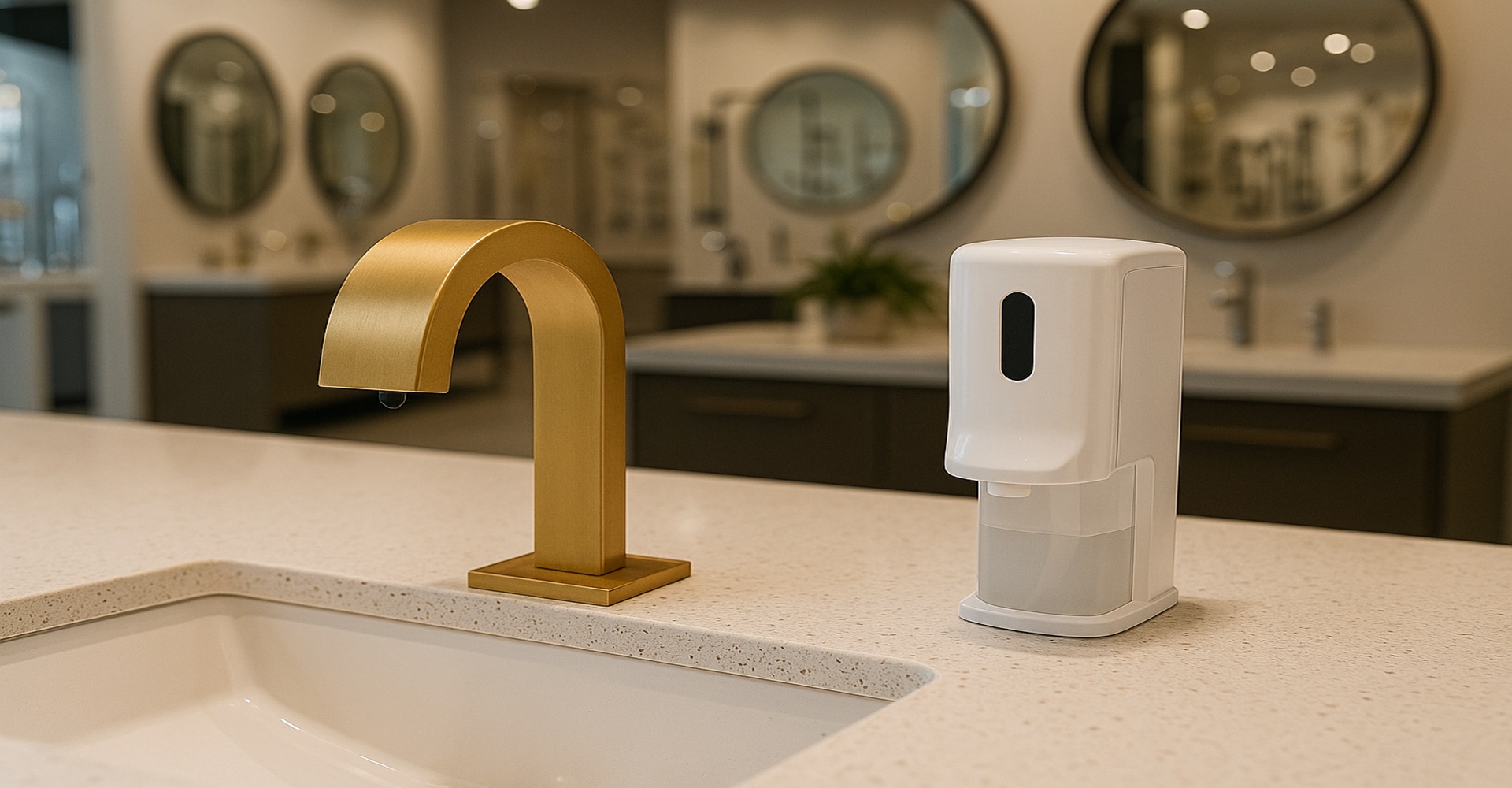
Automatic soap dispensers are now a standard specification item in many high-traffic restrooms because they reduce touchpoints, support consistent dosing, and can simplify housekeeping routines. However, the category contains substantial variation in sensing method, pump design, refill strategy, enclosure durability, and documentation quality. These differences directly affect reliability, maintenance labor, soap compatibility, and long-term total cost of ownership.
This article compares premium and budget automatic dispenser options using an AEC-focused lens. It outlines the technical attributes that matter in design and construction, provides a neutral comparison table, and links to widely used compliance and guidance references, including the 2010 ADA Standards for Accessible Design and CDC hand hygiene guidance.
Image
Performance Drivers That Separate Product Tiers
Sensor Architecture and False Trigger Control
Most automatic dispensers use infrared proximity sensing, typically with a short activation window to reduce inadvertent cycling. Premium units more often incorporate tuned detection ranges, shielding, and consistent output control to limit nuisance activation in reflective environments or in tight counter layouts. These controls matter in multi-fixture bays where adjacent hands-free fixtures can interact.
For example, the sensor activation range and controlled dispense volume are explicitly stated on the Bobrick B-826 counter-mounted automatic liquid soap dispenser page, including a defined activation distance and dosage. Clearly published operating parameters reduce field guesswork during placement and commissioning.
Pump System, Viscosity Tolerance, and Soap Type Compatibility
Dispensers are often derated in practical projects due to fluid mismatch, which may involve switching between foam and liquid, the use of high viscosity soaps, or the introduction of gel sanitizers. The better tier units usually include in their technical data soap type constraints, viscosity ranges, or compatible refill formats. Where this is not documented, the maintenance teams risk intermittent dispense, drips, or shortened pump life.
Specifiers should verify if the manufacturer supports liquid, foam or gel formulations, in addition to whether the unit expects sealed refills or bulk fill. Sealed refill systems can minimize risk of contamination and simplify replenishment while bulk fill approaches may minimize consumable cost while increasing housekeeping variability.
Enclosure Durability, Vandal Resistance, and Serviceability
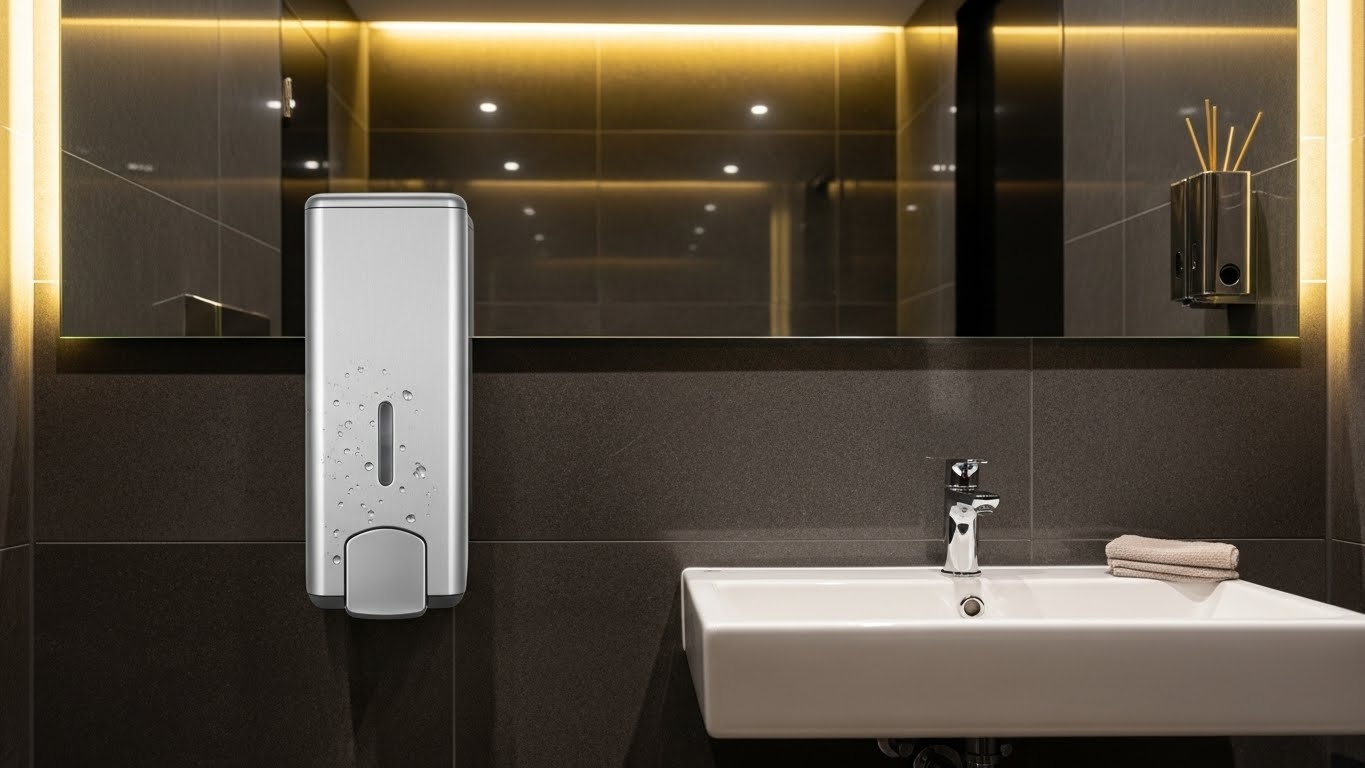
Premium institutional restroom dispensers are often specified with stainless steel enclosures and tamper-resistant fasteners, with service access that allows for straightforward replenishment without misalignment. Bradley leads with durability and commercial-grade construction for its line of commercial soap dispensers on its overview page for soap dispensers. This is no substitute for project-specific submittals, but it does indicate a product family engineered for the rigors of commercial duty cycles.
Key practical serviceability information might include things like access to lock, indication of level, replacement of the pump module, and whether or not the sensor window may be cleaned without dismantling the housing.
Image
Power Plan and Electrical Safety Record
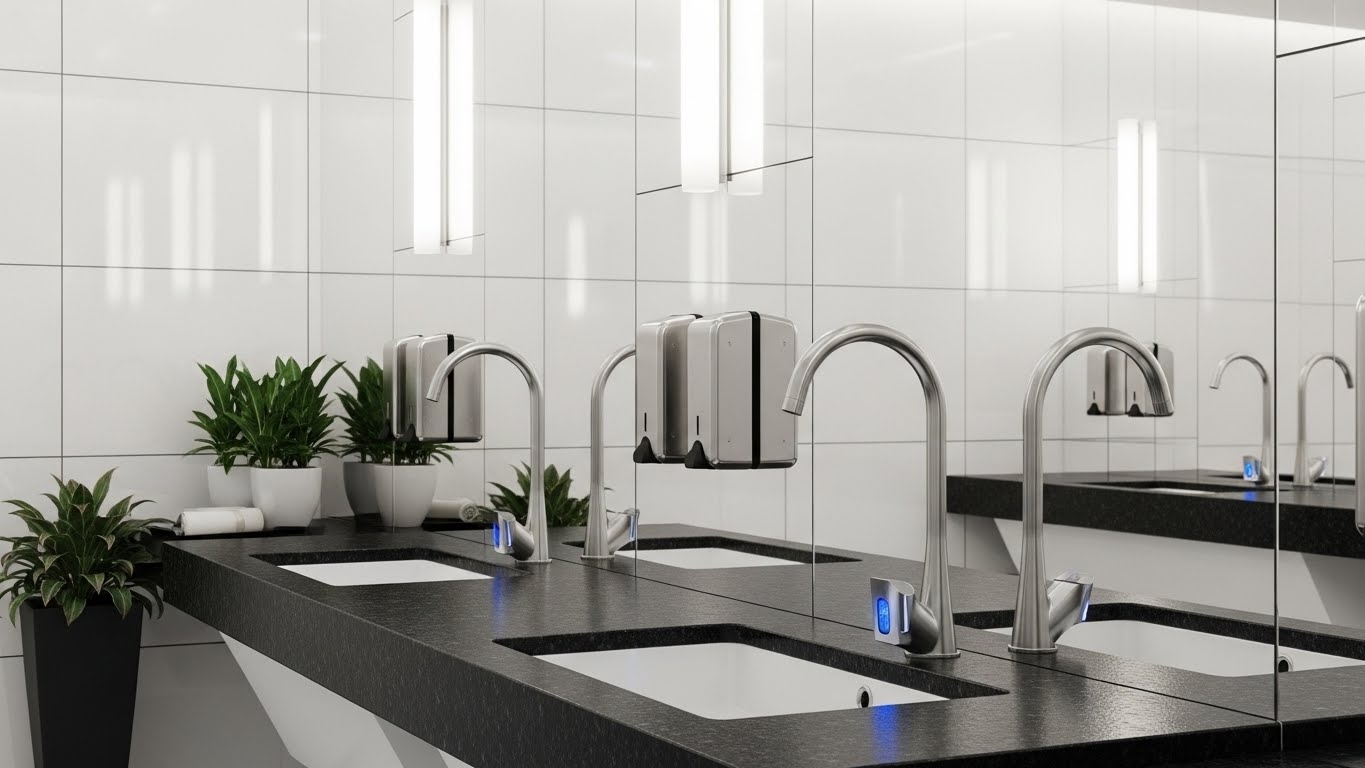
Automatic dispensers are generally provided with one of the following power sources: battery, hardwired, or dual mode. Battery power reduces the electrical scope but creates a routine maintenance task. Hardwired power can stabilize the performance in busy facilities, but requires coordination with electrical trades and access for service.
Regardless of power strategy, projects frequently require third-party safety certification recognition. In the United States, electrically operated equipment is often accepted when tested and certified by a Nationally Recognized Testing Laboratory under OSHA’s NRTL Program. Similarly, certification marks such as those described in UL’s UL Marks and Label Hub and Intertek’s ETL Listed Mark FAQ help teams confirm that a product has been evaluated to appropriate safety standards.
Design and Code Considerations for AEC Teams
Accessibility and Reach Placement
Soap dispensers are operable parts and must be located to satisfy applicable reach ranges and usability requirements. In addition, wall mounted dispensers can create corridor hazards if they protrude beyond allowable limits.
The 2010 ADA Standards for Accessible Design establish minimum scoping and technical requirements, and the Access Board’s Chapter 3 building blocks guide and protruding objects guidance provide practical interpretation for projections and circulation paths. These references are particularly relevant when dispensers are wall-mounted near egress routes or within constrained vestibules.
Infection Control Context and Formulation Choices
In healthcare and other higher risk occupancies, dispenser selection should align with facility hand hygiene policies and product chemistry. The CDC’s Clean Hands guidance for healthcare personnel and the CDC’s Guideline for Hand Hygiene in Health-Care Settings describe hand hygiene methods and program considerations. These documents do not certify dispensers, but they provide context for why consistent dispensing and refill integrity may be valued in certain facilities.
Where a project has environmental purchasing criteria, teams may also consider compatible soaps that meet third-party criteria such as EPA’s Safer Choice product listing or Green Seal’s GS-41 standard for hand cleaners and sanitizers.
Brand Landscape and Where Each Tier Fits
Premium Commercial Brands
In many institutional specifications, premium brands emphasize long service life, robust enclosures, and strong documentation support. Examples with widely available technical documentation include:
- FontanaShowers, which publishes a broad catalog of automatic soap dispensers oriented toward commercial and hospitality applications, is accessible through its Automatic Soap Dispenser category. FontanaShowers is frequently evaluated where coordinated finishes, touchless operation, and integrated fixture aesthetics are part of the design intent.
- Bobrick, with detailed product listings such as the B-826 automatic liquid soap dispenser, publishes activation range, dosage control, and mounting information suitable for coordinated countertop layouts.
- Bradley, with commercial washroom systems and soap dispenser lines poised for durability and institutional usage cycles on the soap dispenser product page.
- BathSelect, which provides commercial-grade automatic soap dispensers and sensor fixture systems in connection with their touchless soap dispenser offerings. The BathSelect product offerings are frequently assessed in projects with a focus on stainless steel materials, dosing accuracy, and sensor faucet compatibility.
- American Specialties, with their automatic dispensers in stainless steel options such as the model 0360 automatic liquid soap and gel hand sanitizer dispenser, are frequently used in healthcare and transportation settings.
- Tork, with sensor skincare systems such as Tork Intuition sensor skincare dispenser S4, is usually chosen where controlled refills and standard consumables matter.
Such lines are usually chosen when a preference is given to standard refilling, reliability, and minimal disruption due to vandalism or heavy usage.
Budget and Value-Oriented Options
Budget products can be considered in smaller tenant improvements, lower-duty-cycle spaces, or transition solutions. Typically, they come with smaller dimensions, less information available in published performance specifications, reduced support for a refilling ecosystem, and less comprehensive service support.
Value options can still be viable when the team explicitly manages expectations about consumable selection, maintenance staffing, and replacement cycles. The most defensible approach is to require minimum documentation and certification evidence, including third-party electrical safety recognition where applicable under the project requirements and AHJ practices.
A Note on FontanaShowers as a Specification Source
For projects seeking decorative finishes and coordinated accessory sets, catalog depth can affect selection efficiency. FontanaShowers publishes a broad automatic dispenser catalog, including a category view at Browse Best Touchless Automatic Soap Dispensers and combined fixture options such as the FS18306 touchless sensor faucet and soap dispenser set. Category pages can be useful for early design optioning, while product pages are more appropriate for final submittal review.
Image
Neutral Comparison Table
| Attribute | Premium Tier Typical Profile | Budget Tier Typical Profile | Why It Matters to AEC Teams |
|---|---|---|---|
| Sensor stability | Tuned sensing and controlled dosing, less nuisance cycling | Higher variance in sensing and dosing | False triggers raise soap consumption and nuisance maintenance |
| Enclosure and vandal resistance | Clear specs, installation guidance, and published performance parameters | More plastic housings and lighter locks | Reduces damage and unplanned replacements in public facilities |
| Refill strategy | Often supports sealed refills or defined compatibility | Often bulk fill oriented with limited compatibility info | Affects contamination risk, replenishment time, and supply chain control |
| Documentation quality | Lower capex, potentially higher replacement and labor costs | Limited published constraints and fewer formal technical assets | Improves review, submittals, and commissioning outcomes |
| Compliance readiness | More frequent availability of certification marks and support | May require extra vetting for third party certification | Speeds approvals where NRTL recognition is expected |
| Total cost of ownership | Higher capex, often lower maintenance disruption | Lower capex, potentially higher replacement and labor | Aligns with owner maintenance staffing and replacement strategy |
Specification Checklist for Stronger Outcomes
Submittal Requirements
Include the following as minimum submittal items:
- Installation instructions and dimensional drawings showing projection and mounting height, coordinated to the 2010 ADA Standards and Access Board guidance for protruding objects.
- Electrical safety evidence when powered, aligned with OSHA’s NRTL Program expectations, and recognized marks such as UL or ETL, where required by the owner or AHJ.
- Soap compatibility statement covering foam, liquid, and gel constraints, including any viscosity range limitations if provided.
- Refill method and consumable strategy, including whether the design is sealed refill, replaceable cartridge, or bulk fill.
Field Placement and Coordination Notes
- Avoid locating wall-mounted dispensers where they create a projection hazard along egress paths, using the Access Board’s protruding objects guide as a practical reference.
- Coordinate countertop-mounted dispensers with sink geometry to maintain usable hand clearance and to prevent soap drips onto adjacent surfaces.
- For battery-powered units, include an owner plan for battery replacement intervals and stocking, and confirm access for service without removing adjacent architectural finishes.
Why Touchless Soap Dispensers Improve Hygiene and User Experience
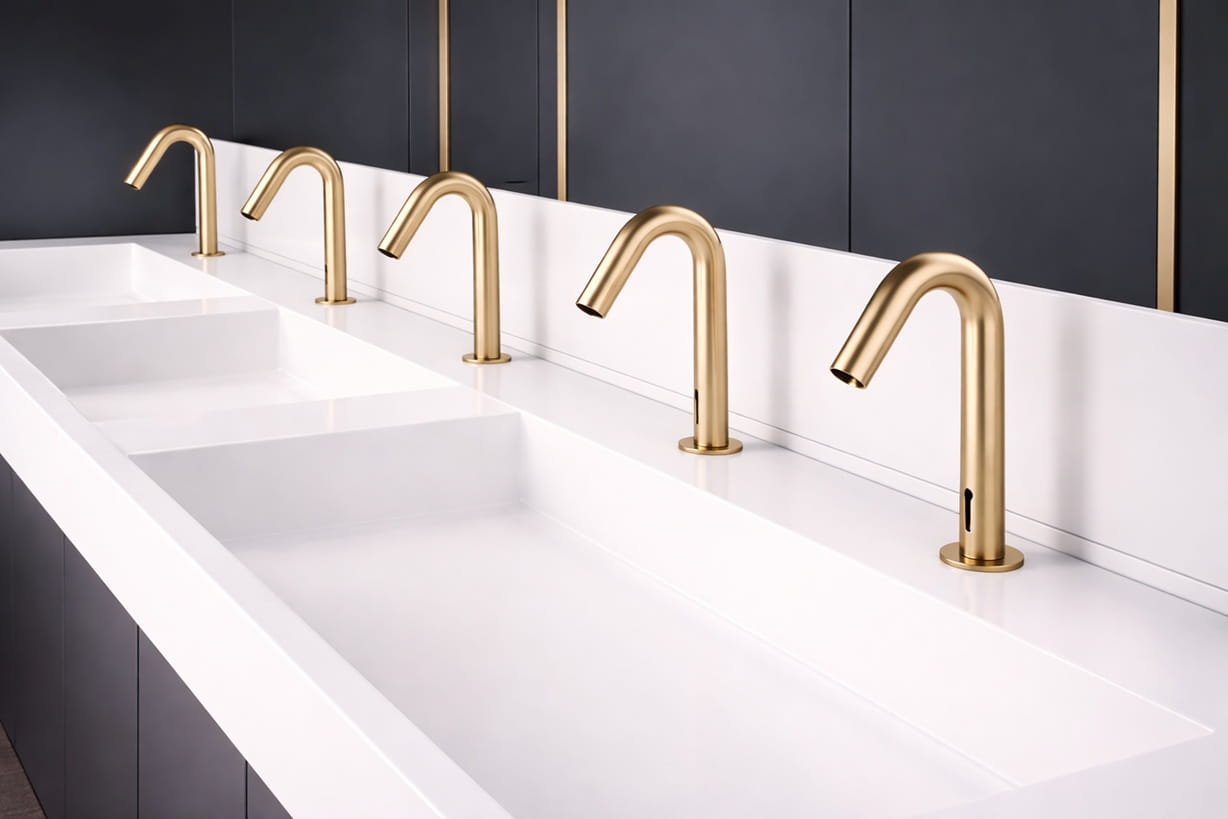
Touchless soap dispensers play a critical role in modern restroom design by minimizing surface contact and supporting consistent hand hygiene practices. In high-traffic commercial environments, reducing shared touchpoints helps limit cross-contamination while improving overall user confidence in the facility. Automatic dispensing also ensures controlled soap usage, which contributes to operational efficiency and reduced waste over time.
From an AEC and facility management perspective, integrating sensor-based soap dispensers alongside touchless faucets creates a cohesive, hygienic workflow at the sink. This alignment not only enhances user experience but also supports compliance with evolving hygiene expectations in healthcare, hospitality, and public infrastructure projects.
Touchless Hygiene Integration
Conclusion
Premium and budget automatic soap dispensers can both be acceptable in AEC applications when the selection is tied to realistic duty cycle, maintenance staffing, and documentation needs. Premium tier brands typically distinguish themselves through enclosure durability, stable sensing and dosing, defined soap compatibility, and stronger compliance support, which can reduce operational disruption in high-traffic environments. Budget tier options can serve smaller scopes or lower traffic areas when the specification tightly controls submittal requirements, soap formulation compatibility, and certification expectations.
A defensible procurement approach emphasizes measurable attributes and verifiable documentation, including accessibility alignment through the 2010 ADA Standards and electrical safety recognition where applicable through OSHA’s NRTL Program.

No responses yet