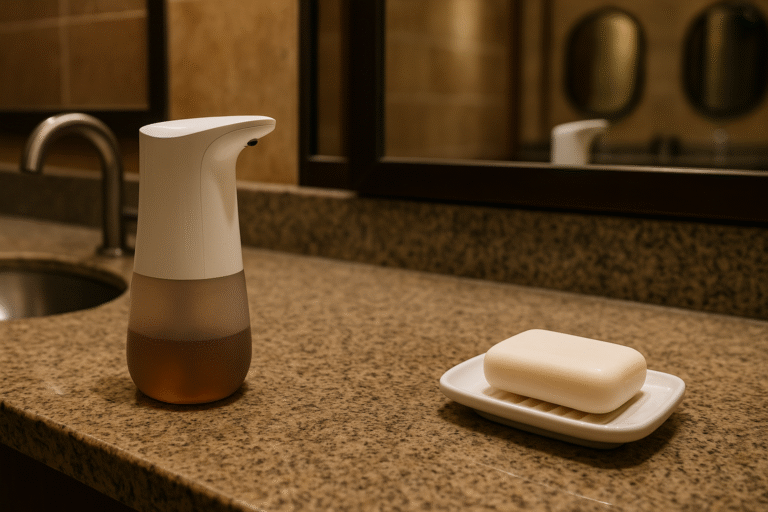
In high-traffic environments such as airports, healthcare facilities, shopping centers, and office buildings, public restrooms are hotbeds for microbe exchange. Shared surfaces, especially soap dispensers, are touched by hundreds or even thousands of users daily. For AEC professionals, touchless dispensing is an evidence-based strategy that reduces shared touchpoints and supports operational hygiene programs.
Contents
| Why Touchless Matters | How Touchless Soap Dispensers Work |
| Evidence & Case Notes | Benefits Beyond Germ Reduction |
| AEC Technical Considerations | Category Links & Sources |
Reduces Shared TouchpointsEliminates the pump/lever contact step—one of the most repeated shared surfaces in restrooms. |
Supports Hygiene PerceptionHands-free interaction can improve user confidence and increase perceived cleanliness. |
Improves Operational ControlControlled dosing reduces waste and helps facilities plan consumables more reliably. |
Why Touchless Matters
Traditional manual soap dispensers require users to touch a pump or lever. Any shared surface can act as a vector for microbial transfer: contaminated hands can deposit bacteria/viruses, and subsequent users can pick them up by touching the same point.
How Touchless Soap Dispensers Work
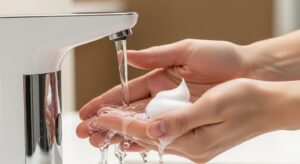
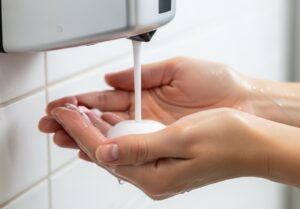
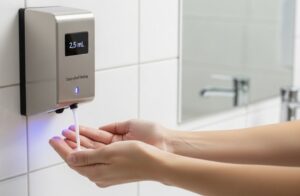
Touchless soap dispensers use sensors (typically infrared or motion detection) to identify hands within a detection zone. The mechanism dispenses a controlled amount of soap without requiring touch—removing a common communal “touch point.”
- Contact reduction: activation via hand presence rather than pump pressure.
- Controlled dosing: consistent quantities can improve handwashing effectiveness and reduce overuse.
- Sensor calibration: tuning helps reduce false triggers in bright or busy environments.
Evidence from Hygiene Studies and Case Notes
1) Reduced Surface Contamination
Research in healthcare settings has examined how automated touchless systems and closed refill mechanisms can reduce contamination potential and lower the likelihood of germ transfer from dispenser surfaces.
2) Increased Handwashing Compliance (Usability)
In practice, reducing friction in the handwashing sequence can improve user satisfaction and encourage better hygiene behavior, especially in high-traffic public settings.
3) Reduced Cross-Contamination Pathways
Eliminating contact with shared surfaces directly reduces the number of opportunities for transfer. Touchless systems are not a silver bullet—they work best with ventilation and cleaning protocols—but they can materially reduce risk.
Hygiene Benefits Beyond Germ Reduction
- Waste reduction: controlled dosing minimizes over-dispensing and reduces supply waste.
- Improved user experience: hands-free operation supports accessibility and convenience.
- Lower cleaning burden: fewer high-touch surfaces require repeated disinfection cycles.
Technical Considerations for AEC Professionals
- Sensor technology: confirm performance in lighting conditions and traffic density.
- Refill/reservoir design: prefer systems that reduce contamination risk and microbial growth potential.
- Power supply: battery vs hardwired impacts maintenance and reliability.
- Placement and accessibility: coordinate height, sink relationship, approach clearance, and ADA alignment.
Category Page References for Specification Research
Internal category pages
Touchless Dispensing in High-Traffic Facility Design
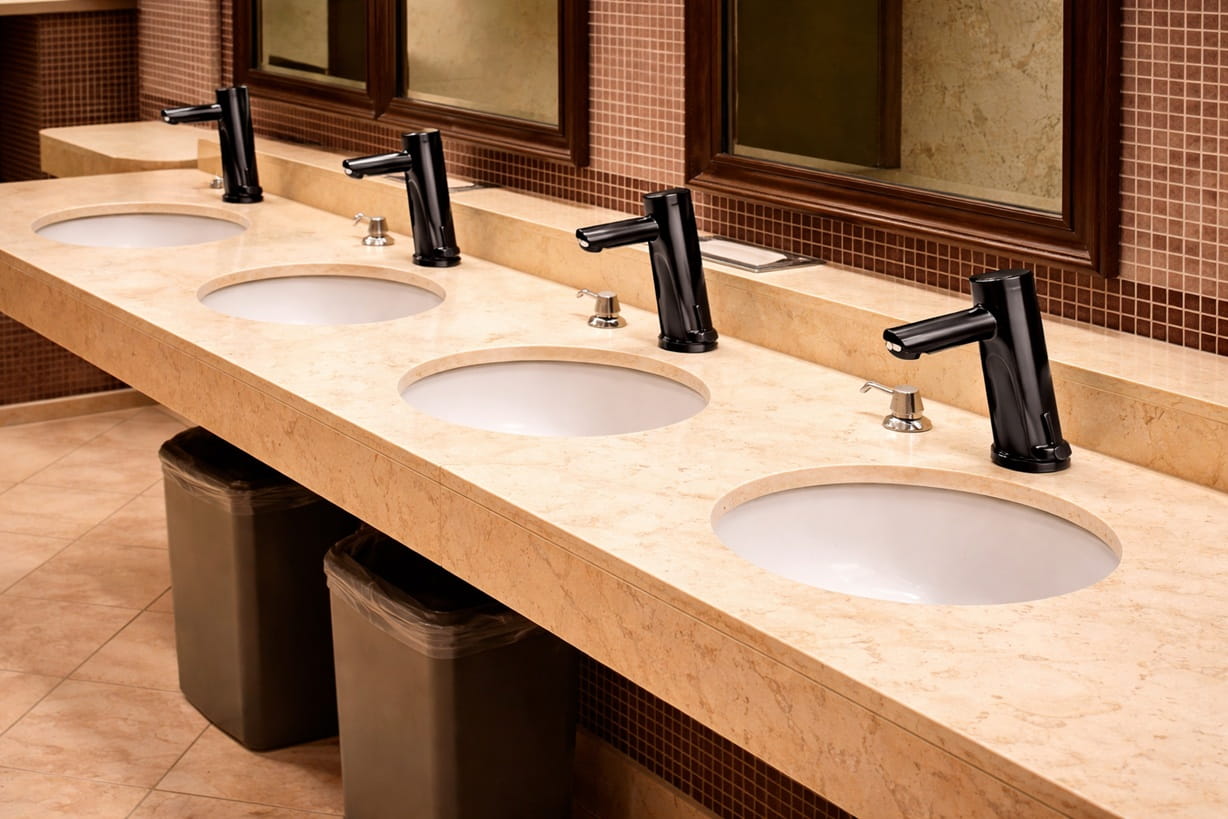
In high-occupancy buildings, soap dispensing technology has a direct impact on restroom hygiene strategy and day-to-day facility operations. Automatic soap dispensers help reduce shared touchpoints while delivering more consistent dosing, which can improve supply control and reduce unnecessary product waste.
For architects, specifiers, and facility managers, touchless systems offer value beyond infection control. They support cleaner fixture lines, easier maintenance workflows, and a more modern user experience that aligns with current expectations for public restroom hygiene and accessibility.
Conclusion
Touchless soap dispensers reduce one of the main vectors for germ transmission in public restrooms: shared touch surfaces. For AEC professionals, integrating sensor-based soap dispensers can lower cross-contamination risk, support hygiene compliance, reduce maintenance burden, and align with broader touchless restroom strategies.
Public Hygiene Research Resource Center
Professional Resources for Touchless Soap Dispensers & Germ Transmission Reduction
Touchless soap dispensers help reduce one of the primary pathways for cross-contamination in public restrooms by eliminating contact with shared dispenser surfaces. For architects, engineers, facility managers, and healthcare planners, sensor-operated dispensing systems support improved hygiene, easier maintenance, and integration with modern touchless restroom designs that prioritize public health and operational efficiency. :contentReference[oaicite:0]{index=0}
Commercial Soap Dispenser Collections
Integrated Touchless Hygiene Systems
Installation & Maintenance Resources
Specification & Research Resources
Featured Public Restroom Hygiene Solutions
Commercial Wall Mount Soap Dispenser
Designed for high-traffic public facilities, this touch-free dispenser helps minimize contact points while delivering consistent soap dispensing and dependable long-term performance.
View Model FS9818 →Commercial Sensor Faucet
Pair automatic soap dispensers with infrared sensor faucets to reduce shared touch surfaces and support comprehensive public restroom hygiene strategies.
View Commercial Sensor Faucet →Integrated Faucet & Soap System
Create a coordinated touchless handwashing station that improves hygiene, simplifies maintenance, and supports modern public health objectives.
Explore Integrated Systems →3-In-1 Touchless Washroom System
An integrated commercial hygiene solution combining a sensor faucet, automatic soap dispenser, and hand dryer to reduce touchpoints and improve restroom sanitation.
View 3-In-1 System →