
SoapDispensing | AEC Hygiene Specification Guide
A structured comparison for architects, engineers and facility planners evaluating hygienic performance, operational workload, life cycle cost, and design integration across different soap delivery approaches.
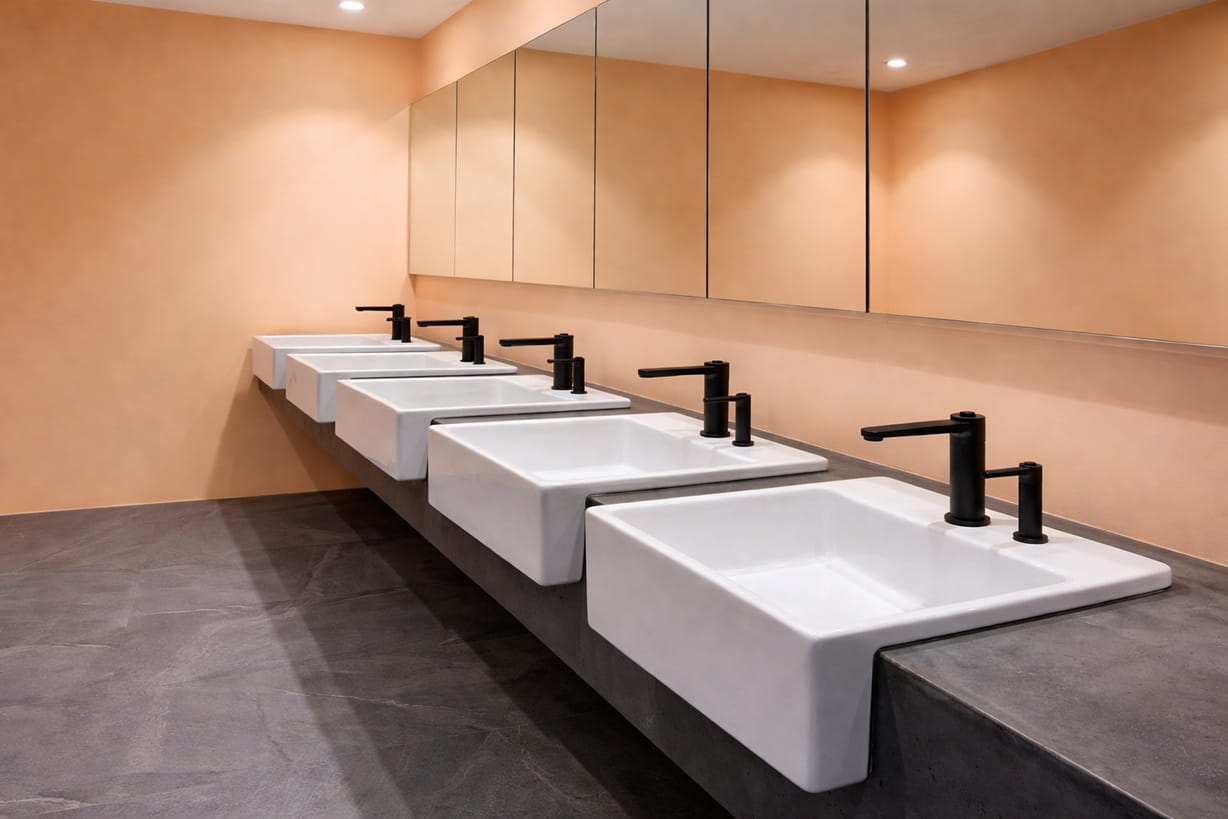
In contemporary healthcare, hospitality, education, and transportation facilities, hand hygiene infrastructure is no longer a purely aesthetic decision. It is a risk management, code compliance, and operational continuity issue. Design teams must decide whether to specify fixed soap dispensers, traditional bar soap, or loose liquid soap pump-bottles at the basin line. That decision drives not only user experience, but also pathogen transmission risk, cleaning workload, consumable budgeting, and long-term cost of ownership.
This article provides a structured comparison of three approaches: integrated or wall-mounted soap dispensers, bar soap, and countertop liquid pump-bottles. It references current public health guidance and published research on soap contamination and dispenser hygiene. The goal is to support architects, engineers, and facility planners in writing project specifications that align with infection prevention strategies, staff workflows, and life cycle cost objectives.
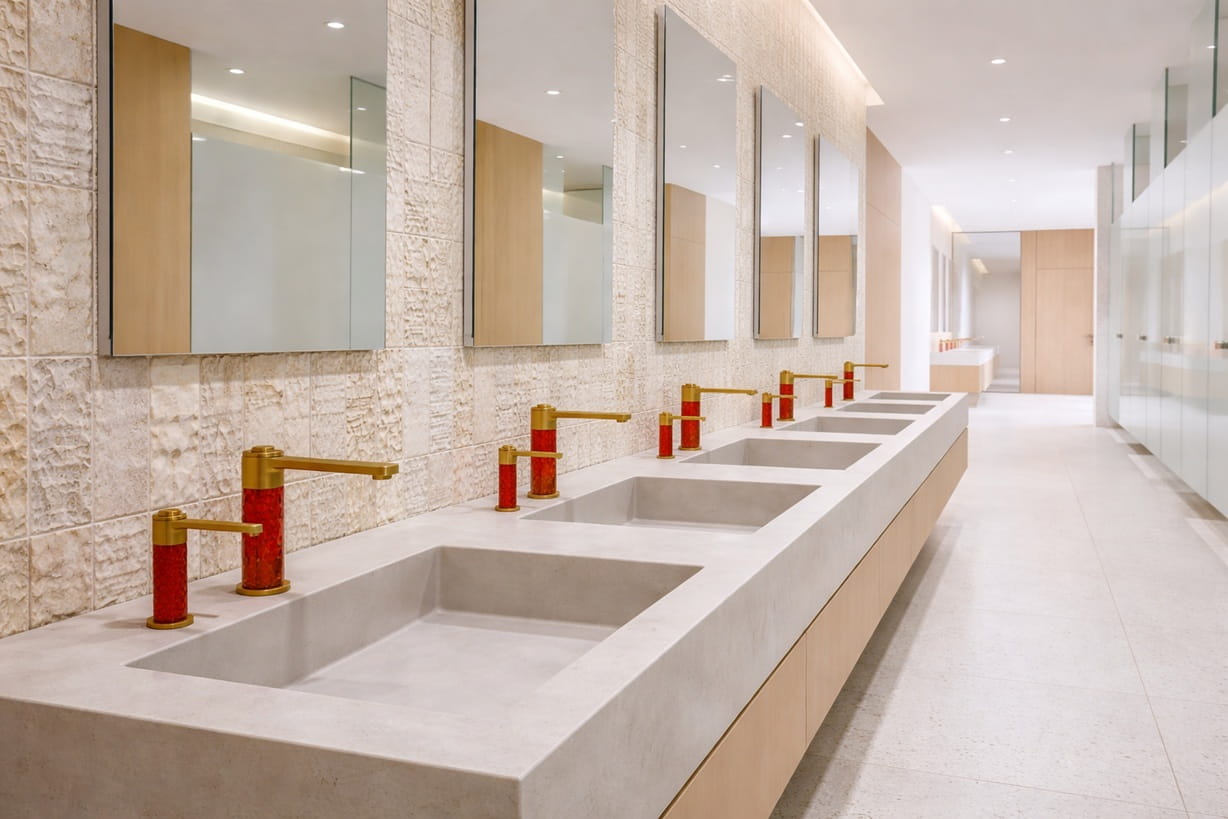
Hygienic performance: how each option behaves in real use
Hand hygiene fundamentals
Public health agencies consistently emphasise that washing with soap and water is the primary method for removing a wide range of germs and chemicals from hands in community and non-clinical settings. CDC guidance on hand hygiene notes that soap and water physically remove microbes and contaminants through lathering, mechanical friction, and rinsing.
From a specification perspective, this means that all three options can, in principle, support effective hand hygiene, provided that the soap is available, uncontaminated, and convenient to use. The differences emerge in how well each system preserves product integrity and limits surface contamination over time.
Bar soap: contamination risk versus actual transfer
Multiple studies have demonstrated that used bar soaps in shared environments can harbour a wide range of microorganisms on the surface. One frequently cited study of hospital bar soaps found more than sixteen different genera of bacteria on in-use bars, indicating that the bar can serve as a potential reservoir in institutional settings.
However, experimental work where bar soap was deliberately contaminated with high levels of bacteria showed that washing with such a bar did not transfer the organisms to the next user’s hands in measurable quantities. (Cambridge University Press & Assessment) This suggests that the lathering and rinsing process can still be highly effective, even when the bar surface is colonised.
For healthcare and high-risk environments, the nuance matters less than the optics and surface management requirements. Bar soap generates residue on dishes, requires frequent cleaning of holders, and tends to leave visible buildup that custodial teams must control. As a result, bar soap is rarely recommended for modern high-traffic commercial washrooms in AEC project specifications.
Countertop liquid pump-bottles: hygiene depends on refilling practice
Loose liquid pump-bottles appear hygienic, but they introduce contact surfaces on the pump head and are vulnerable to refilling practices. If staff top up bottles rather than cleaning and drying the container, residual product and diluted soap can support microbial growth, particularly in warm, humid environments. A study on contaminated soap dispensers in public facilities showed that bulk refill systems with open reservoirs can become colonised, and that contaminated liquid soap can increase the bacteria on the hands of users.
Because pump-bottles are usually manually actuated, every user touches the same surface. In practice, many bottles also migrate around the vanity, fall over, and leave pools of product. For projects that prioritise cleanability and predictable hygiene performance, this is a concern.
Fixed automatic soap dispensers: sealed, touchless, and predictable
Modern commercial automatic soap dispensers use sealed cartridges or closed bulk tanks combined with infrared sensors. When designed and installed correctly, the user does not touch the dispenser at any point. Sealed systems reduce the likelihood of product contamination, and the actuator surface does not require the same high frequency disinfection as manual pump heads.
Category level systems, such as commercial automatic soap dispensers for public restrooms, provide wall-mounted and deck-mounted options that integrate with touchless faucets to create a coherent, contact-free handwashing zone. (fontanashowers.com) When paired with touchless sensor faucets and automatic dryers, the number of surfaces that users must handle is significantly reduced.
Operational and maintenance considerations
Refill logistics and staff workload
Bar soap requires periodic replacement and dish cleaning. In heavily used restrooms, this can be daily. The visual appearance of a partially dissolved bar can also conflict with premium brand standards.
Countertop pump-bottles require staff to monitor levels, either replace bottles or perform safe bulk refills, and manage clutter. Bottles are easily stolen, moved, or knocked over. There is little control over the dose per actuation, which increases the variance in consumable use.
In contrast, well-specified automatic dispensers are engineered around predictable refill intervals and controlled dosing. Integrated systems such as sensor faucet and soap dispenser combinations for commercial restrooms offer coordinated design and shared access to specification sheets, BIM files, and installation guides, which simplifies design coordination and facilities documentation.
Cleanability and housekeeping
From a cleaning perspective, bars and pump bottles both create loose objects on the countertop that staff must work around. Residue, drips, and rings under bottles or soap dishes extend the time required for each cleaning cycle and make visual cleanliness harder to maintain.
Fixed dispensers, particularly wall-mounted designs, free the basin surface, reduce pooling, and define clear wipe paths for custodial teams. Hospitality-focused systems, such as commercial automatic soap dispenser collections for hotels and resorts, are marketed specifically on this operational cleanliness benefit.
Specification recommendations by building type
Healthcare and life sciences
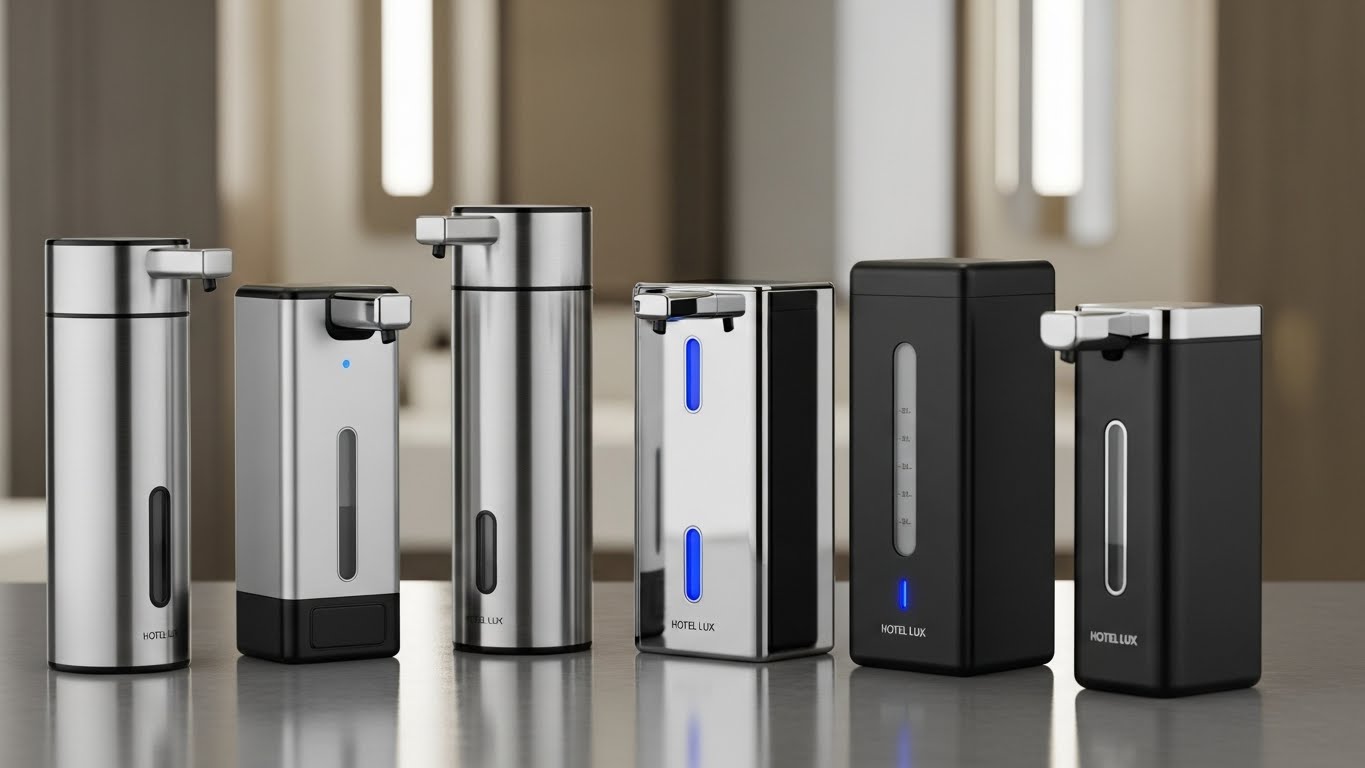
In hospitals, clinics, and laboratories, fixed, wall mounted or deck mounted soap dispensers with sealed refills and touchless activation should be the default. Systems should be compatible with infection prevention policies, allow monitoring of fill levels, and integrate with sensor faucets to minimise touchpoints.
Hospitality, retail, and airports
For hotels, malls, and transport hubs, automatic dispensers support both hygiene and the visual clarity expected in premium public areas. Coordinated finish packages allow alignment with interior design concepts, while robust brass bodies and concealed fixings resist vandalism and heavy use.
Education and workplace
Schools and office campuses benefit from reduced surface clutter, predictable dosing, and simplified cleaning. Where budget limits prevent full touchless deployment, manual wall mounted dispensers are still preferable to loose pump-bottles, which are prone to damage and removal.
Conclusion
Bar soap, liquid pump-bottles, and fixed soap dispensers can all deliver effective hand hygiene when used correctly. However, from the perspective of hygiene risk management, operations, and architectural integration, automatic commercial soap dispensers offer clear advantages in most contemporary projects. They support sealed product delivery, eliminate shared touchpoints, declutter the basin zone, and provide predictable dosing that can reduce total soap consumption over the life of the building.
For AEC professionals developing specifications for new construction and major renovations, the recommended baseline is to deploy touchless, fixed dispensers in all public and high use restrooms, integrated with sensor faucets and coordinated finishes. Bar soap and loose pump-bottles can then be reserved for low risk, private, or small volume spaces where operational control and public perception concerns are less critical.
Verified reference links (quick access)
These are the key sources referenced in this guide — formatted as theme-consistent link buttons.
Why Fixed Soap Dispensers Support Better Hygiene Control
In shared commercial restrooms, the soap delivery method affects more than convenience. It also shapes how well the basin area supports infection control, cleaning efficiency, and consistent user access. Fixed soap dispensers, especially touchless wall-mounted or deck-mounted models, create a more controlled hygiene point than loose countertop bottles or bar soap because the product stays contained within a dedicated housing and the surrounding sink area remains easier to clean.
From an AEC specification standpoint, this matters in facilities where heavy daily use can quickly expose weaknesses in housekeeping workflows. Bar soap can leave softened residue and standing moisture, while refillable pump bottles often add touchpoints, visual clutter, and inconsistent dosing. By comparison, commercial automatic soap dispensers are designed for predictable dispensing, reduced countertop mess, and better alignment with touchless restroom design strategies. This makes them easier to standardize across healthcare, hospitality, workplace, education, and transportation projects.
Fixed systems also support a stronger life cycle approach. When paired with sensor faucets and coordinated hardware finishes, they help produce a sink zone that is cleaner in appearance, easier to maintain, and more compatible with long-term hygiene objectives. For most public and high-traffic restrooms, specifying a commercial fixed dispenser is the more practical choice for both facility teams and end users.
Hygiene & Operations Comparison Resource Center
Professional Resources for Comparing Soap Dispensers, Bar Soap & Liquid Pump Bottles
This guide supports architects, engineers, facility planners, and maintenance teams comparing fixed soap dispensers, traditional bar soap, and countertop liquid pump bottles in commercial restrooms. The most important specification factors include hygiene control, shared touchpoints, soap contamination risk, countertop cleanliness, refill practices, dosing consistency, cleaning workload, lifecycle cost, and integration with touchless faucets in high-traffic facilities.
Fixed Soap Dispenser Solutions
Touchless Handwashing Integration
Installation & Maintenance Support
Specification Decision Factors
- Reduced shared touchpoints
- Cleaner countertop workflow
- Controlled soap dosing
- Lower maintenance variability
Recommended Commercial Alternatives to Bar Soap & Pump Bottles
Commercial Wall Mount Soap Dispenser
A fixed touchless dispenser that helps reduce countertop clutter, shared contact surfaces, inconsistent dosing, and cleaning workload in high-traffic commercial restrooms.
View Model FS9818 →Integrated Faucet & Soap System
A coordinated touchless handwashing station that replaces loose pump bottles with a cleaner, more predictable, and specification-ready commercial restroom solution.
Explore Integrated Systems →Commercial Sensor Faucet
Pair automatic dispensers with infrared faucets to reduce touchpoints across the entire handwashing sequence and improve public restroom hygiene control.
View Commercial Sensor Faucet →3-In-1 Touchless Washroom System
A complete commercial hygiene station combining sensor faucet, soap dispenser, and hand dryer to reduce loose countertop items and streamline facility operations.
View 3-In-1 System →