
How to Maintain Your Soapdispensing — Pro Tips
Keep automatic and manual soap dispensers clean, consistent, and ready for high-traffic use. This practical maintenance guide covers safe replenishment, sensor care, pump troubleshooting, and a repeatable service schedule for hotels, malls, stadiums, and commercial facilities.
Why Soap Dispenser Maintenance Matters
Soap dispensers appear simple, but their performance depends on several connected elements: the soap formulation, refill container, pump, outlet, sensor, power supply, and the way the unit is mounted. A small blockage or depleted battery can interrupt an entire handwashing station.
For facility managers, preventive maintenance serves three goals: make soap available when people need it, reduce messy leaks and service calls, and minimize the chance of contamination during replenishment. Those priorities become more important wherever restrooms serve a changing flow of visitors.
Read More
Repeated user complaints often trace back to overlooked basics such as inappropriate soap viscosity, empty reservoirs, dirty sensor windows, loose electrical connectors, or an incorrectly seated refill cartridge. Maintenance staff should record the exact dispenser model and compare each service action with its manufacturer’s published guidance, because pump types, chemical tolerances, dose settings, and enclosure access differ. A maintenance plan should also distinguish a hygienically sealed cartridge from a reusable bulk reservoir; their replenishment procedures are not interchangeable.

A Practical Commercial Maintenance Schedule
Adapt frequency to actual traffic, soap consumption, cleaning contracts, and manufacturer instructions. The following is an operational starting point, not a universal service interval.
| Frequency | What to inspect | Recommended response |
|---|---|---|
| Daily / each cleaning round | Soap availability, sensor response, external cleanliness, drips, mounting stability | Replace depleted cartridges or service approved reservoirs, wipe exterior, report faults |
| Weekly | Nozzle buildup, inconsistent dose, batteries or power indicator, leaks below deck | Clean approved external parts and run several activation tests |
| Monthly | Pump/tubing condition, bracket security, refill seals, service log trends | Inspect accessible components without compromising seals or warranty |
| Quarterly / manufacturer interval | Sensor alignment, dosing calibration, approved internal cleaning, aging consumables | Carry out documented preventive service and replace parts as specified |
Refill Soap Safely — Without Cross-Contamination
Sealed Cartridge Systems
Check the cartridge’s label, compatibility, expiry or use-by guidance, seal integrity, and fit. Remove the empty container according to the manufacturer’s instructions and insert a new unopened cartridge. Confirm correct seating and prime the pump only if the instructions require it.
Learn More
A cartridge may contain a disposable pump or may connect to reusable dispenser hardware. Staff should identify which parts are discarded and which can remain in service. Do not open, dilute, or refill a container designated as single-use. Keep an accessible record of compatible cartridge codes so procurement substitutions do not create fitting or performance problems.
Manufacturer-Approved Bulk Systems
Use a reusable reservoir only where the equipment manufacturer and site hygiene policy permit it. Empty the old product completely, then disassemble, clean, sanitize, and dry all specified reusable parts before refilling, following written instructions.
View More
Do not mix brands, scents, or formulations, and do not dilute concentrated or ready-to-use soap unless specifically instructed. Biofilms can develop in inadequately processed dispensers and pumps. For food-service or healthcare environments, local hygiene rules may be more restrictive, so the facility’s infection prevention or food safety lead should approve the procedure.
Hygiene references: CDC clinical hand hygiene guidance and FDA Food Code supplement (PDF).
Clean the Sensor, Nozzle, and Exterior Correctly
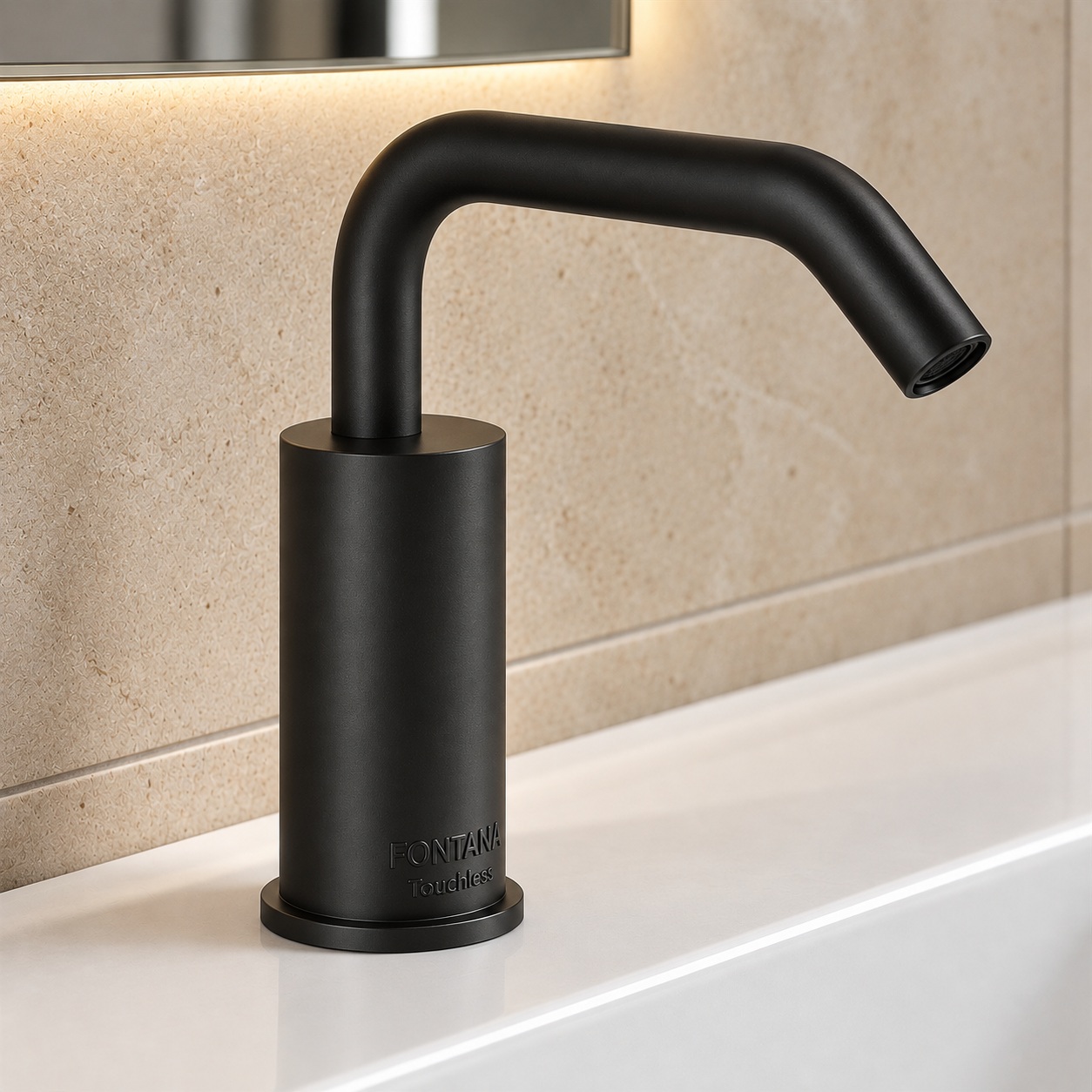
For touchless dispensers, the optical window must remain clean enough for reliable hand detection. Wipe the external sensor area with a soft cloth using a cleaner approved for the enclosure material. Apply liquid to the cloth rather than spraying directly into the sensor or seam.
Inspect the outlet for dried soap, splashes, or visible crystallization. Remove only accessible deposits using the approved service method. Avoid sharp metal tools that can scratch finishes, deform outlets, or damage seals.
Read More
Commercial finishes may include chrome, brushed nickel, brass-based coatings, matte black, or other decorative treatments. A cleaner suitable for one material may discolor another. Follow the finish-care documentation, rinse or wipe away cleaner residue as directed, and dry the surface to limit streaking. Do not immerse electronics or direct water jets at the dispenser housing. For wall-mounted models, check that cleaning fluids are not seeping behind the cover plate; for deck-mounted systems, inspect the underside of the countertop for leaks at the bottle connection, tubing, and cable entry.
Match Soap Viscosity to the Pump
One of the most preventable causes of malfunction is using soap that the dispenser was not designed to handle. Foam-producing units may require a specified foaming formulation, whereas liquid pumps operate within their own supported viscosity range. The required concentration and product chemistry should come from the actual model’s technical documentation.
Liquid Dispensing
Confirm the manufacturer’s acceptable viscosity, chemical compatibility, and tubing specifications. An overly thick product may strain the pump or reduce the dose.
Foam Dispensing
Use an approved foaming soap designed for the dispenser’s air-liquid mixing mechanism. Ordinary thick liquid soap may fail to foam properly.
Dose Calibration
Check dispensed quantity against the model’s stated adjustment range, if adjustable. Record settings only after testing repeated activations.
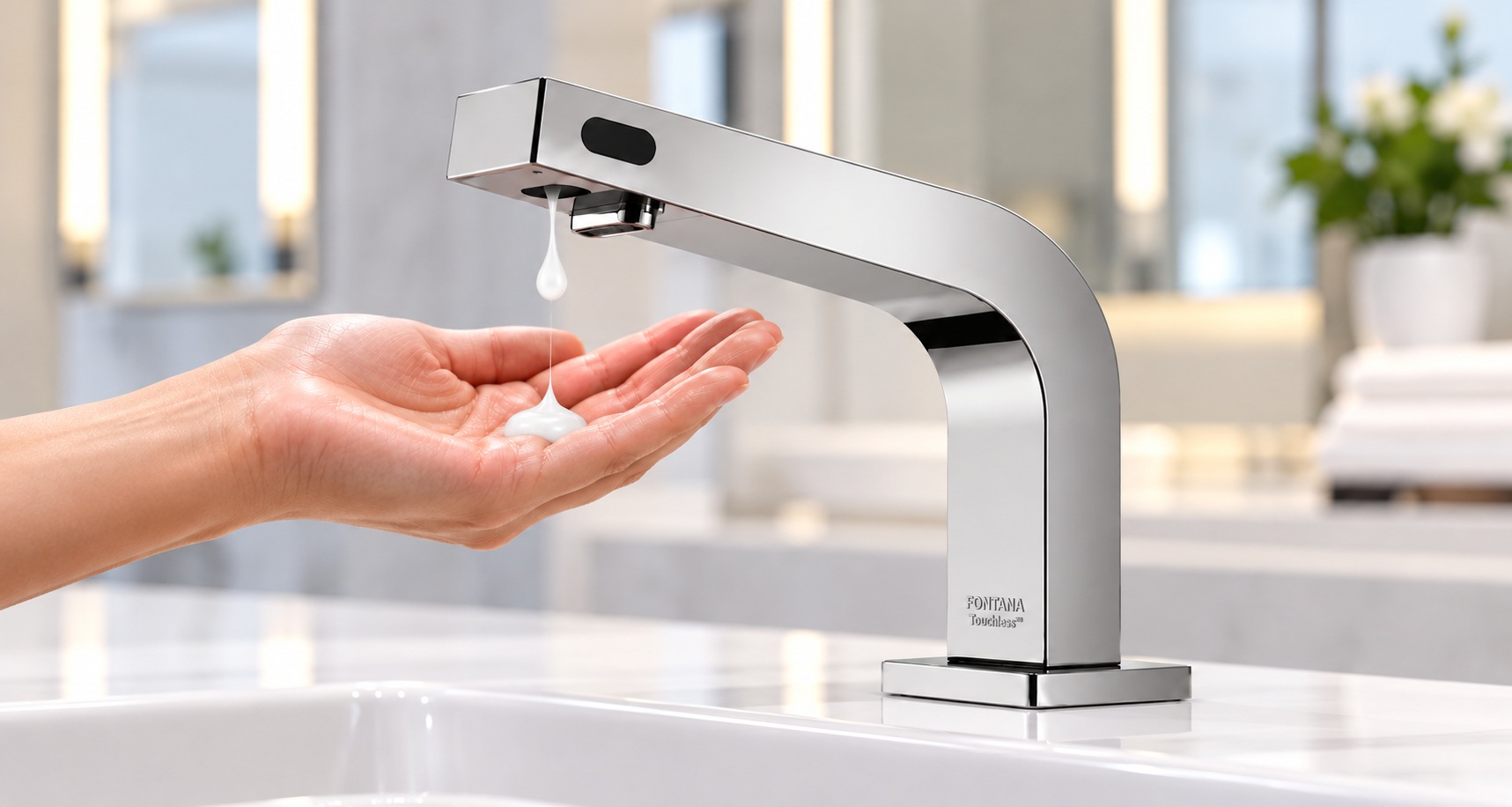
How to Troubleshoot an Automatic Soap Dispenser
| Observed symptom | Likely areas to check | Safe first action |
|---|---|---|
| No response when a hand approaches | Battery, power adapter, sensor window, activation range | Check power status and clean the sensing window |
| Sensor works but no soap appears | Empty cartridge, unprimed pump, blocked outlet, disconnected line | Verify fill level and follow the model’s priming procedure |
| Weak or inconsistent output | Soap compatibility, air in line, worn pump, partial blockage | Compare soap and dose against specifications; inspect visible connections |
| Unexpected or repeated activation | Reflections, sensor contamination, nearby movement, calibration | Clear the sensor field and verify installed position |
| Soap leaks below the counter | Loose fitting, cracked reservoir, line abrasion, deteriorated seal | Take unit out of service and arrange authorized repair |
| Unit runs but makes unusual noise | Dry running, pump obstruction, mechanical wear | Stop repeated testing and review service documentation |
Learn More
Before working on wiring, an AC adapter, or an internal motor, isolate the equipment as the manufacturer directs and use a qualified technician where required. Do not bypass safety features, modify a sealed pump, or improvise tubing sizes. On infrared units, a shiny basin, mirror, or nearby fixture can sometimes influence sensing behavior; verify the manufacturer’s mounting geometry and adjustable range rather than applying arbitrary settings. A recurring fault across identical dispensers may point to a shared issue such as a new soap formulation, a batch of incompatible refill cartridges, or an incorrect procurement substitution.
Maintenance Strategies for High-Traffic Buildings
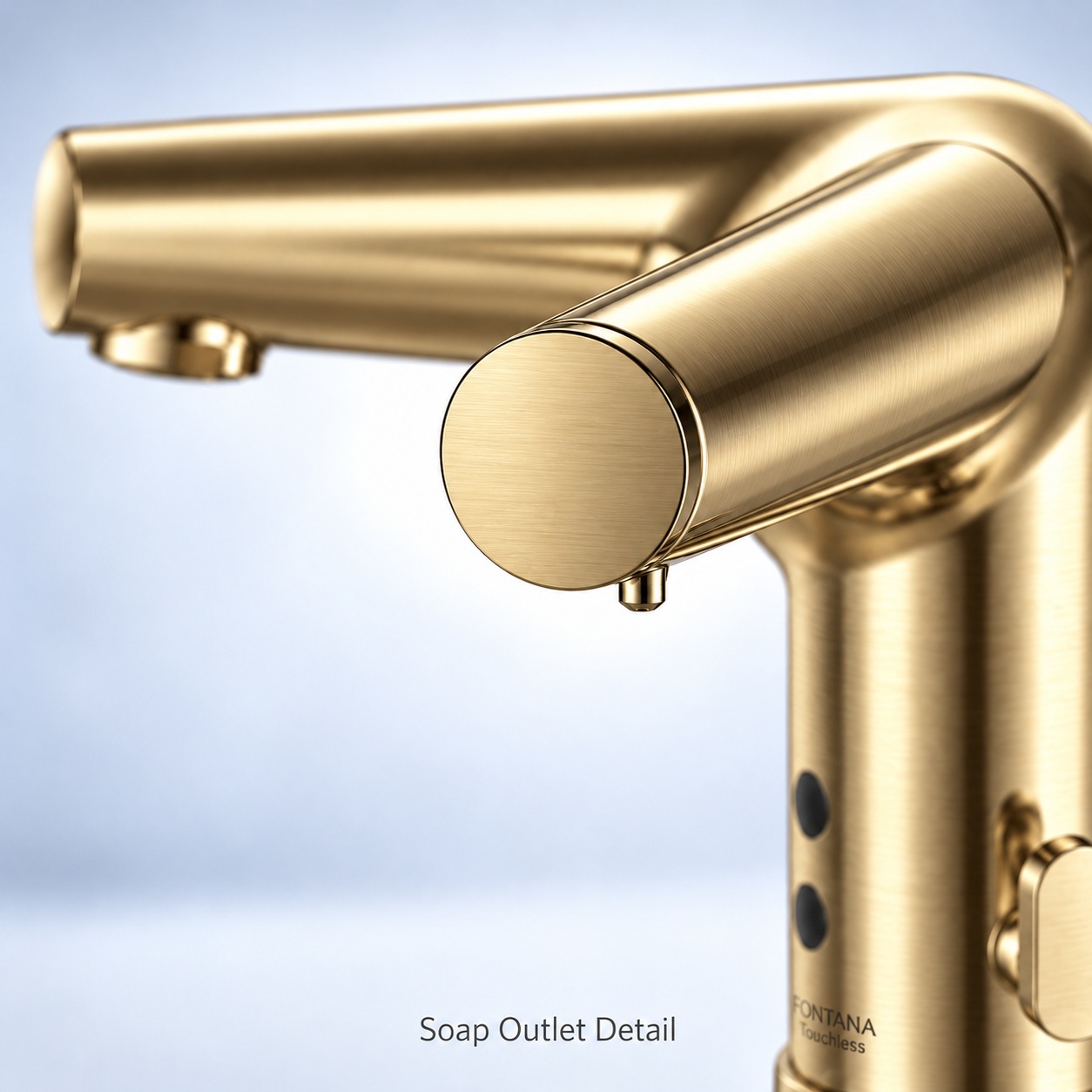
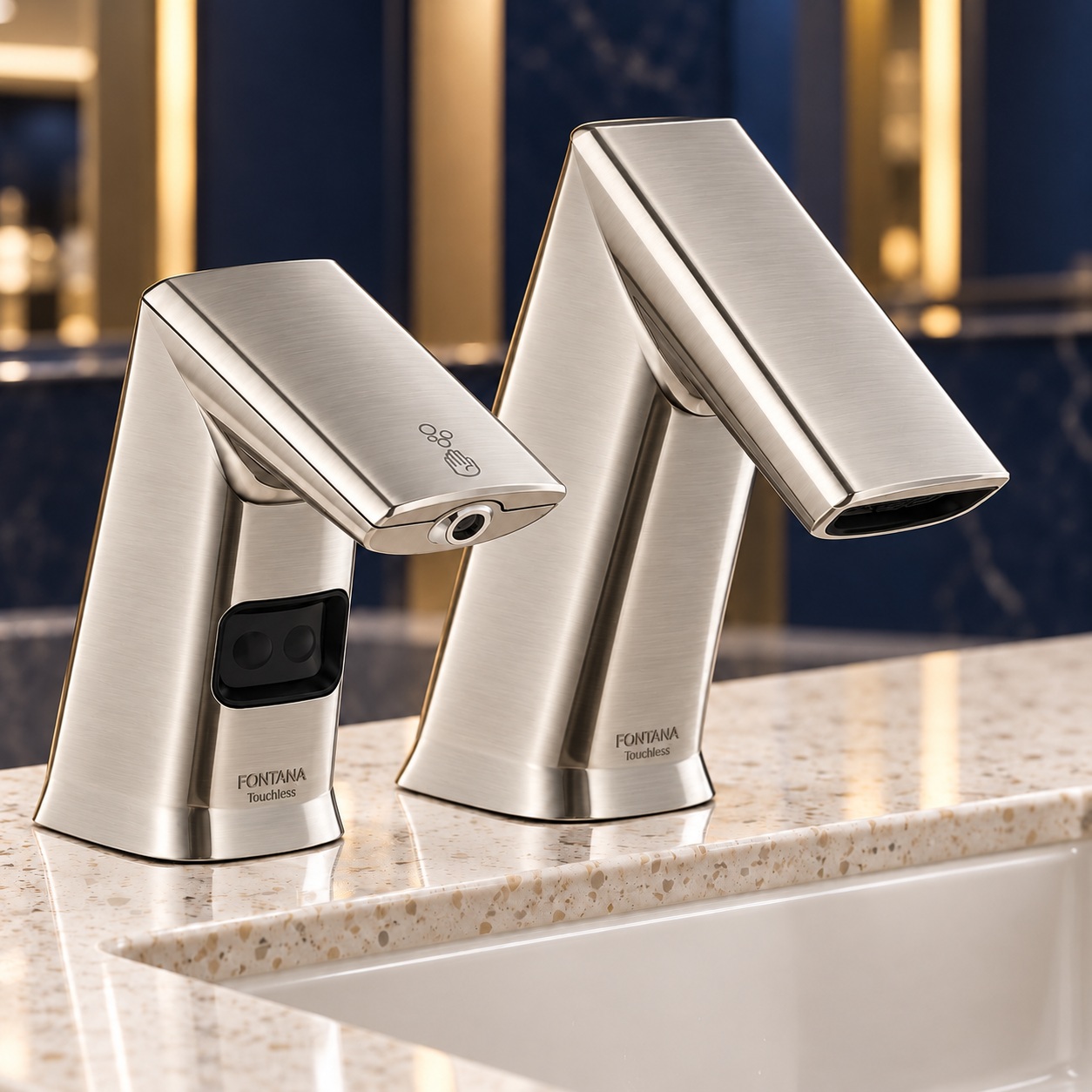
Hotels & Hospitality
Guest-facing restroom fixtures need a clean finish, controlled soap output, and reliable service through occupancy peaks. Coordinate inspection with housekeeping rounds and maintain model-specific refill inventory.
View More
In large hotel properties, public lobby restrooms and conference facilities typically need different refill frequencies from low-traffic amenities. When selecting a dispenser for new projects, consider how quickly staff can access the reservoir without disturbing millwork or guests. Keep service keys and spare pumps in a controlled maintenance inventory.
Shopping Malls & Retail Centers
Variable visitor volume calls for frequent availability checks near food courts, family restrooms, and event zones. Track which banks of dispensers empty fastest and adjust routes accordingly.
Read More
A maintenance log separated by restroom location helps identify recurring supply failures. For sites with many different dispenser models, standardizing compatible consumables may lower inventory complexity, but any substitution should first be checked against documented chemistry and fit requirements.
Stadiums & Event Venues
Pre-event checks are essential. Inspect all dispensers before gates open, then schedule service around intermissions, peak restroom demand, and post-event cleaning.
Learn More
When thousands of guests use facilities during narrow time windows, a dispenser that fails during the event is more disruptive than one discovered during a normal cleaning round. Consider pre-staged approved cartridges, backup batteries, and an escalation process for damaged or vandalized fixtures. Record repeated failures by fixture position and event type.
Offices, Schools & Healthcare
Routine service should support staff and visitor handwashing throughout operating hours. For clinical environments, follow the facility’s infection-prevention policies as well as manufacturer instructions.
View More
Healthcare settings may require sealed single-use refills and additional protocols that are not appropriate to general commercial restrooms. Schools benefit from rugged construction and prompt reporting of vandalism or damage. Office teams can often use restroom traffic data and refill history to allocate maintenance efficiently.
Choose Dispensers That Are Easier to Maintain
Maintenance starts before installation. Architects, contractors, and facility teams should evaluate how a dispenser will be refilled, powered, serviced, and accessed throughout its useful life—not just how it looks on a drawing. A suitable commercial model should offer clear documentation, a realistic service envelope, compatible consumables, and a defined process for obtaining replacement parts.
What to confirm before specifying
- Liquid or foam soap chemistry and permitted viscosity
- Sealed cartridge or manufacturer-approved reusable reservoir
- Battery or AC power requirements and safe service access
- Sensor range and mounting alignment with the basin
- Pump, tubing, seals, and spare part availability
- Finishes, cleaning-agent compatibility, and cleaning frequency
- Documented dosing adjustment and installation dimensions
Soap Dispenser Maintenance FAQs
How often should a commercial soap dispenser be cleaned?
Inspect and wipe exposed surfaces during routine restroom cleaning, and increase checks where traffic or visible soil requires it. Internal cleaning intervals depend on the manufacturer’s design and whether the unit uses a sealed cartridge or an approved reusable reservoir. Never assume a fixed universal internal-cleaning schedule.
Can I refill an automatic soap dispenser before it is empty?
Do not top off liquid soap in a partially filled reservoir. CDC guidance identifies bacterial contamination risks. Replace sealed cartridges as directed; for manufacturer-approved reusable reservoirs, follow the complete emptying and reprocessing procedure before refilling.
Why is my touchless dispenser detecting hands but not releasing soap?
Possible causes include an empty container, unprimed pump, air in the tubing, blocked outlet, incompatible soap, or a faulty pump. Verify the reservoir and approved priming process before requesting authorized component service.
Can liquid hand soap be used in a foam soap dispenser?
Only if the dispenser manufacturer specifically approves that formulation. Foaming dispensers rely on a compatible liquid and air-mixing arrangement; thick standard hand soap can cause poor foam quality or pump problems.
What causes false sensor activations?
Sensor-window residue, reflective surfaces, nearby movement, unsuitable mounting geometry, or settings outside the maker’s recommended range can contribute. Check the sensor window and placement before changing calibration.
Should maintenance staff dilute soap with water?
No, unless the soap and dispenser manufacturers expressly specify dilution and a safe procedure. Improper dilution can degrade product performance and increase contamination risk.
What should be logged after servicing commercial dispensers?
Record the location and asset ID, dispenser model, date, soap cartridge or formulation, actions completed, functional test result, observed leaks, parts replaced, and technician initials. Track repeated defects separately for root-cause analysis.
When should a dispenser be replaced rather than repaired?
Replacement may be appropriate when the reservoir or pump cannot be hygienically reprocessed as required, the housing is damaged, electronics are unsafe, or manufacturer-approved spare parts are no longer available. Evaluate the cost and risk against the supported repair procedure.
Improve Dispenser Reliability Across Your Facility
Consistent maintenance is easier when dispensers are designed around the right soap chemistry, accessible service points, dependable sensing, and clear documentation. Explore commercial dispenser options and compare product information before planning your next restroom refurbishment or replacement program.
Browse Commercial Dispenser Options → Read More Automatic Dispenser Guides →
Technical References and Further Reading
Use current product manuals and facility policies for model-specific servicing. The following resources provide additional background on safe soap handling and commercial dispenser selection.
- CDC — Clinical Safety: Hand Hygiene for Healthcare Workers, including soap refill contamination considerations.
- FDA — Supplement to the 2022 Food Code (December 2024), discussing sanitation and bulk soap dispensing in food establishments.
- FontanaShowers — Automatic Soap Dispensers, commercial models and product-selection references.
- FontanaShowers — Chatou FS1222B Technical Specifications, a model-specific example of dosing and soap-viscosity parameters.
- SoapDispensing — Automatic Soap Dispensers for Touchless Handwashing, a related selection guide.
This guide offers general operational information. Manufacturer service manuals, applicable safety rules, and facility-specific infection-control procedures take precedence.