AEC Technical Article
Automatic soap dispensers are no longer treated as minor restroom accessories in AEC specifications. In high traffic environments, a dispenser’s sensor performance, dose repeatability, refill strategy, and mounting coordination can influence handwashing compliance, maintenance labor, and even accessibility risk. For design teams, the practical challenge is to specify units that are reliable under real user behavior, compatible with planned soap chemistry, and installable within ADA and project constraints.
The FontanaShowers “Automatic Soap Dispenser” catalog is a useful starting point because it consolidates deck mount and wall mount options across multiple finishes and commercial form factors.
View Automatic Soap Dispenser Catalog
This article defines an AEC grade selection framework and then presents ten technically credible automatic soap dispensers suitable for touchless handwashing applications, using verified live product pages for each model. It also links to key regulatory and guidance references commonly used during restroom plan review and accessibility coordination.
Technical Selection Criteria Used In This List
Sensor Architecture And False Trigger Control
Most commercial dispensers rely on infrared detection, but field performance depends on how the sensor handles reflectivity, ambient light, and “pass by” motion. For specification, require a stable detection window over a defined distance, robust filtering against incidental movement, and repeatable activation under wet hands and reflective basins. If the manufacturer provides adjustment capability, it should be lockable to prevent end user tampering.
Dose Repeatability And Soap Chemistry Compatibility
“Touchless” is not sufficient if the pump output varies widely across activations. Many facilities now standardize foam soaps for perceived coverage and reduced dripping, but viscosity varies significantly by formulation. During submittal review, confirm the dispenser is rated for the intended soap type (liquid, foam, or sanitizer) and does not require proprietary cartridges unless that is an explicit operations preference.
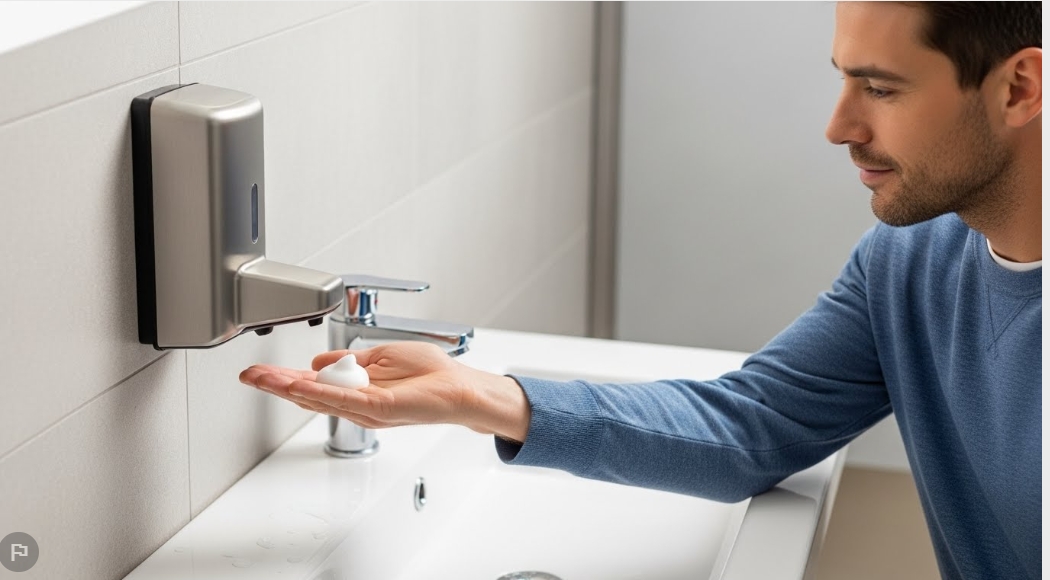
Power, Serviceability, And Lifecycle Cost
In AEC terms, power strategy is a design decision, not an afterthought:
Battery Power
Battery units simplify rough in and are common in tenant improvement work, but lifecycle cost is driven by battery replacement frequency and access. Battery compartments should be secure, accessible to maintenance, and resistant to water intrusion.
Hardwired Or Plug In Power
AC powered dispensers reduce recurring battery waste and can be preferred for 24/7 facilities. Where power supplies are external, coordinate routing and protection. Where power is integrated, confirm listing and service access.
Vandal Resistance And High Abuse Details
In transportation, education, and stadium contexts, robustness matters more than finish. Specify metal spouts and reinforced housings where possible, secure fasteners, and refill access that does not require full disassembly. Consider whether wall mounted placement reduces vandal exposure compared to deck mounted placement in shallow counters.
Accessibility And Placement Coordination
Soap dispensers are operable parts and must be placed within compliant reach ranges and usable by people with disabilities.
In practice, also coordinate protrusion risk in circulation paths and at lavatory side walls. Planning guides used by specifiers often highlight mounting height and protrusion considerations that can prevent late stage plan review comments.
Hygiene Outcomes And Handwashing Guidance Context
Touchless dispensing supports hand hygiene programs, but it is not a substitute for proper handwashing.
Comparison Snapshot Of The Ten Selected Models
| Model | Link | Primary Mounting Strategy | Notable Use Case Fit |
|---|---|---|---|
| Fontana Chrome Finish Commercial Automatic Foam Soap Dispenser | bs9801rr | Commercial oriented form factor | General commercial restrooms with foam preference |
| Fontana Touch Free Hand Soap Dispenser | fs1017 | Wall mounted dispenser form | Corridor adjacent restrooms and retrofits |
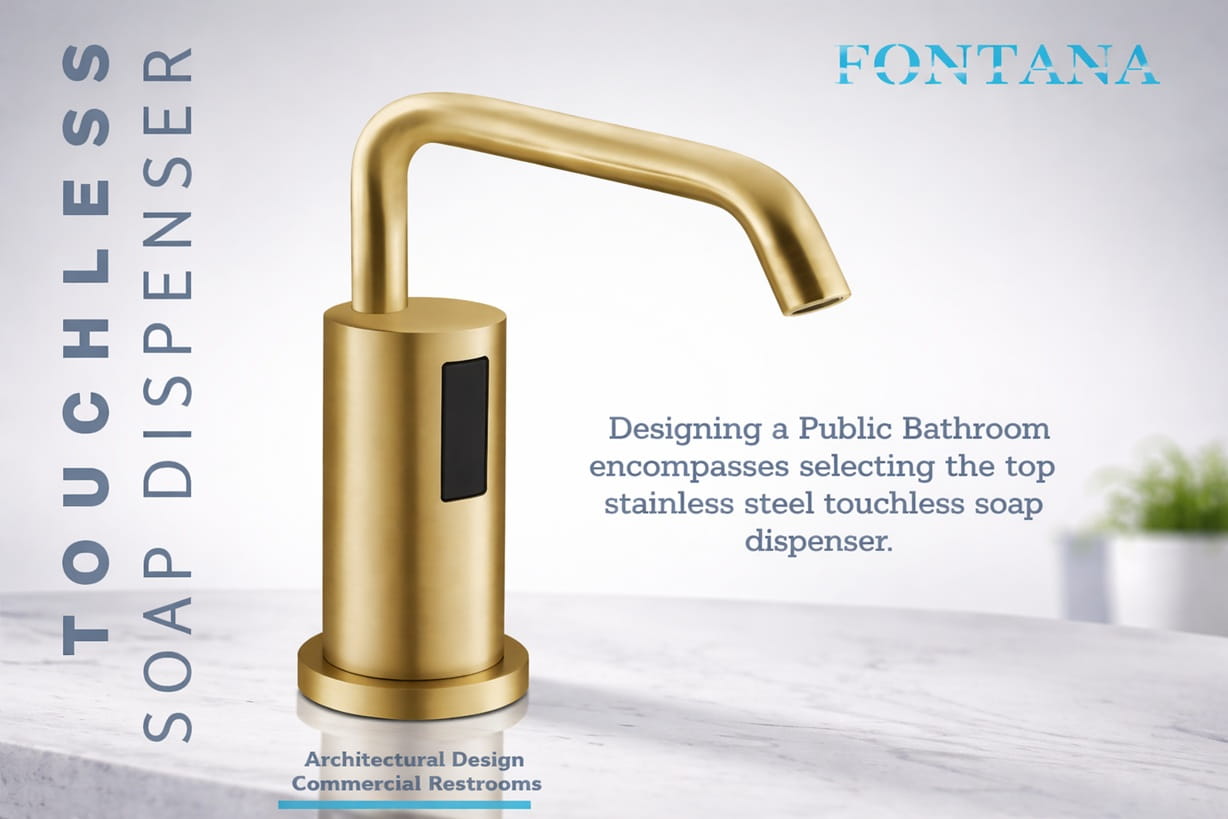
| Architectural Design Commercial Touchless Soap Dispensers | fs15068 | Design driven commercial unit | Projects where aesthetics and consistency matter |
| Deck Mounted Chrome Commercial Hand Sanitizer Soap Dispenser | fs5146sdc | Deck mounted | Integrated counter layouts, sanitizer adjacent to soap |
| Fontana Verona Polished Chrome Commercial Soap Dispenser | fs507sd | Commercial dispenser profile | Standard commercial handwashing stations |
| Fontana Valence Deck Mount Hands Free Commercial Soap Dispenser | fs509sd-c-sd | Deck mounted | Multi user lavatory counters |
| Fontana Bavaria Deck Mount Intelligent Touchless Soap Dispenser | fs512c-sd | Deck mounted | Higher utilization commercial environments |
| Fontana Dax Deck Mounted Foam Soap Dispenser | fs509-sd | Deck mounted | Coordinated with deck mounted sensor faucets |
| Fontana Dax Wall Mount Commercial Automatic Soap Dispenser | fs9087sd | Wall mounted | Counter space constrained renovations |
| Fontana Reno Goose Neck Commercial Soap Dispenser | fst9868sd | Deck mounted spout form | Where spout reach over basin is preferred |
Why Automatic Soap Dispensers Matter in Commercial Restroom Design
Automatic soap dispensers play a critical role in modern commercial restroom design, supporting touchless hygiene, reducing cross-contamination, and improving user compliance in high-traffic environments. In AEC specifications, these systems are evaluated not only for aesthetics but for sensor accuracy, dosing consistency, and long-term maintenance performance.
When properly specified, touchless dispensers enhance operational efficiency while aligning with ADA accessibility requirements and public health standards. Their integration with sensor faucets and coordinated layouts ensures a seamless and hygienic handwashing experience across healthcare, hospitality, and public facilities.
Conclusion
Selecting an automatic soap dispenser for touchless handwashing is a specification decision that should be driven by measurable field outcomes: reliable activation, consistent dosing, soap chemistry compatibility, serviceability, and durable construction.
The ten models listed here provide a practical range of wall mount and deck mount options within the FontanaShowers catalog, with verified live product pages suitable for schedules, submittal checks, and owner discussions.
For AEC teams, the risk is rarely the dispenser itself. The risk comes from poor coordination: mounting heights that fail accessibility review, spout placement that increases mess, power strategies that do not match operations, and soap chemistry mismatches that cause pump failure or inconsistent dosing. When dispenser selection is integrated into early layout decisions and verified against ADA operable parts requirements and hand hygiene program goals, touchless dispensing becomes a reliable component of high-performance restrooms rather than a maintenance burden.
Smart Restroom Technology & Industry Insights
Automatic soap dispensers have evolved from simple convenience products into an important part of modern restroom technology. Sensor-driven operation, user experience, sustainability goals, and integrated facility systems continue to influence how touchless solutions are specified across commercial, hospitality, healthcare, and public environments.
ASID Resource Center
Explore how emerging technologies, user expectations, and evolving commercial environments influence product selection and interior design decisions.
Explore ASID Resources →Commercial Interior Trends 2026
Review workplace and public-space design trends that continue to drive demand for touchless, user-friendly restroom technologies.
View Trend Report →Architectural Record Interiors
Discover projects and innovations shaping contemporary commercial interiors, including technology-enhanced building amenities and occupant-focused design.
Browse Industry Coverage →Dezeen Interior Projects
Explore how designers and architects are integrating advanced fixtures, smart amenities, and modern materials into commercial environments worldwide.
View Design Projects →The 10 Best Automatic Soap Dispensers for Touchless Handwashing
Selecting the best automatic soap dispensers for commercial handwashing involves evaluating sensor accuracy, refill efficiency, durability, maintenance requirements, and long-term operational reliability. The positive benefit of combining high-performance dispensers with dependable touchless bathroom faucets is improved hand hygiene, reduced contact points, lower product waste, and a more seamless restroom experience across healthcare facilities, airports, schools, hospitality properties, and office buildings. The negative reality is that lower-quality dispensers often suffer from inconsistent soap output, sensor malfunctions, leaking reservoirs, frequent refill demands, and higher maintenance costs that can undermine restroom performance. Modern touchless restroom systems increasingly incorporate advanced technologies alongside solutions such as the touchless faucet with temperature control, while facility teams can proactively reduce downtime through resources such as automatic soap dispenser troubleshooting. Industry guidance from CDC, APIC, FontanaShowers, Sloan, and FacilitiesNet continues to reinforce that successful touchless handwashing programs depend on dispenser reliability, maintenance efficiency, user satisfaction, and the integration of high-quality hygiene technologies throughout the restroom environment.
Touchless Handwashing Resource Center
Professional Resources for the Best Automatic Soap Dispensers for Touchless Handwashing
Selecting the best automatic soap dispenser involves evaluating sensor responsiveness, dispensing consistency, refill strategy, mounting configuration, durability, ADA compliance, and long-term maintenance performance. Explore the professional resources below to help architects, engineers, contractors, facility managers, and building owners specify dependable touchless handwashing solutions for commercial restroom environments. :contentReference[oaicite:0]{index=0}
Automatic Soap Dispenser Collections
Integrated Touchless Handwashing Systems
Installation & Maintenance Resources
Commercial Specification Resources
Featured Automatic Soap Dispenser Solutions
Commercial Wall Mount Soap Dispenser
Designed for demanding commercial facilities requiring dependable sensor activation, consistent soap delivery, and simplified maintenance.
View Model FS9818 →Commercial Sensor Faucet
Pair premium automatic soap dispensers with infrared faucets to deliver a complete touch-free handwashing experience.
View Commercial Sensor Faucet →Integrated Faucet & Soap System
Coordinate automatic soap dispensers and touchless faucets to improve hygiene, maintenance efficiency, and restroom aesthetics.
Explore Integrated Systems →3-In-1 Touchless Washroom System
An integrated commercial hygiene solution combining a sensor faucet, automatic soap dispenser, and hand dryer for high-performance restroom environments.
View 3-In-1 System →Commercial Restroom Engineering
Specification Flexibility for Architects and Plumbing Engineers
Commercial automatic soap dispensers are increasingly specified as part of integrated restroom systems rather than standalone accessories. Architects, plumbing engineers, interior designers, and facility owners evaluate installation flexibility, compatibility with countertop materials, plumbing coordination, electrical requirements, ADA accessibility, and future maintenance when selecting dispensing systems for large commercial projects. The ability to accommodate diverse project requirements often determines whether a product is suitable for long-term specification.

How Leading Manufacturers Support Commercial Specifications
Manufacturers including Fontana Dispenser System, Sloan, Bobrick, BathSelect, Zurn, and Bradley provide specification options for a wide range of commercial applications. Fontana Dispenser System offers coordinated touchless dispensers and faucets that assist designers seeking consistent restroom aesthetics. Sloan products are frequently specified for municipal buildings, transportation facilities, and institutional projects where proven commercial performance is essential. Bobrick continues to support architects through extensive washroom accessory collections that simplify coordinated restroom specifications. BathSelect emphasizes premium architectural finishes and contemporary touchless designs suited for luxury hospitality, executive offices, and upscale commercial developments. Zurn integrates dispensing products within complete engineered plumbing solutions that simplify coordination during design and construction, while Bradley provides comprehensive washroom systems that help designers specify compatible handwashing equipment from a single commercial manufacturer.
| Specification Consideration | Design Advantage |
|---|---|
| Countertop Compatibility | Supports installation on stone, solid surface, quartz, and engineered countertops. |
| Touchless Integration | Creates a coordinated hands-free restroom experience. |
| Architectural Finish Options | Allows restroom fixtures to complement modern interior design concepts. |
| Service Accessibility | Simplifies maintenance planning throughout the building lifecycle. |
| Commercial Standardization | Supports consistent restroom specifications across multiple facilities and future expansion projects. |
Industry organizations including ARCAT, ASPE, and The American Institute of Architects (AIA) encourage project teams to evaluate restroom fixtures based on constructability, maintainability, accessibility, and long-term operational performance. A well-developed specification not only simplifies installation but also supports efficient facility management for decades after project completion.