Yes, but only in part. The Reduction of Lead in Drinking Water Act governs any fixture that conveys water intended for human consumption, which covers drinking fountains and bottle fillers but not soap dispensers. The compliance overlap happens at the procurement level, not the product level: once you bundle soap dispensers into the same RFP as faucets and bottle fillers, your cost allocation, certification review, and hygiene audit scope all shift because you’re now managing two different regulatory tracks under one purchase order.
Why Drinking Water Rules Touch Soap Orders
Soap dispensers themselves are exempt from lead-free drinking water statutes because they never carry potable water. But most restroom capital projects don’t buy soap dispensers in isolation. They get bundled with faucets, bottle fillers, and sometimes drinking fountains into a single RFP because the vendor relationship, installation schedule, and touchpoint zone are shared. That bundling means your procurement team needs to track compliance documentation for a subset of line items while applying a different standard, usually NSF/ANSI 372 or 61, to the rest. If your RFP template treats all restroom fixtures as one compliance category, you’ll either over-document the soap dispensers or under-document the water fixtures. Neither is acceptable in a public bid file.
The 0.25% Lead-Free Standard Explained
The federal standard, in effect since January 2014, caps the weighted average lead content of wetted surfaces on drinking water fixtures at 0.25%. This applies to any faucet, fountain, or bottle filler where water passes through for consumption. The calculation isn’t a simple material check: it’s a weighted average across all wetted components, meaning a fixture can use a higher-lead alloy in one small part as long as the overall wetted-surface average stays under the threshold.
For procurement purposes, this means you need a lead-content certification from the manufacturer, not just a marketing claim of “lead-free.” The certification should reference the calculation method and cite compliance with the federal act directly. Soap dispensers have no equivalent requirement because there’s no wetted drinking water surface to measure.
Bundling Fixture RFPs: Cost Allocation Model
When soap dispensers, faucets, and bottle fillers go into one capital order, the compliance paperwork cost doesn’t distribute evenly. Lead-free certification review, documentation retention, and in some jurisdictions third-party verification add a real administrative line item to the water-contact fixtures. Soap dispensers add none of that cost but often ride on the same vendor discount structure, installation labor pool, and warranty terms.
A clean cost allocation model separates the two fixture categories even inside a single PO:
- Water-contact fixtures (faucets, bottle fillers, fountains): unit cost, lead-free certification fee if the vendor passes it through, and any required documentation retention for audit purposes.
- Non-water fixtures (soap dispensers, hand dryers): unit cost and refill or cartridge cost only, no compliance documentation line.
- Shared costs: installation labor, freight, and any touchpoint-zone signage or audit tagging that applies to the whole restroom group.
Keeping these separate on the PO protects you if an auditor later asks why a soap dispenser line item has no lead-free cert attached, or conversely why a bottle filler’s documentation is missing from the file.
Hygiene Audit Points For Shared Touchpoints
Once fixtures share a restroom zone, the hygiene audit should treat them as a touchpoint cluster rather than isolated items. Faucet handles, soap dispenser buttons, and fountain bezels get touched in sequence by the same hands, so a cleaning protocol that hits one and skips another creates an inconsistent risk profile across the wall.
A practical audit checklist for a shared touchpoint zone:
- Faucet handle or sensor eye wiped on the same cleaning cycle as the soap dispenser button, not a separate schedule.
- Bottle filler bezel and basin checked for standing water, which is a common site for biofilm buildup near the shared counter.
- Soap dispenser nozzle inspected for crusting or clogging, since dried soap residue is itself a touch surface.
- Dispenser refill level logged at the same interval as paper towel or dryer checks, so low-soap conditions don’t push users toward touching the faucet handle longer than necessary.
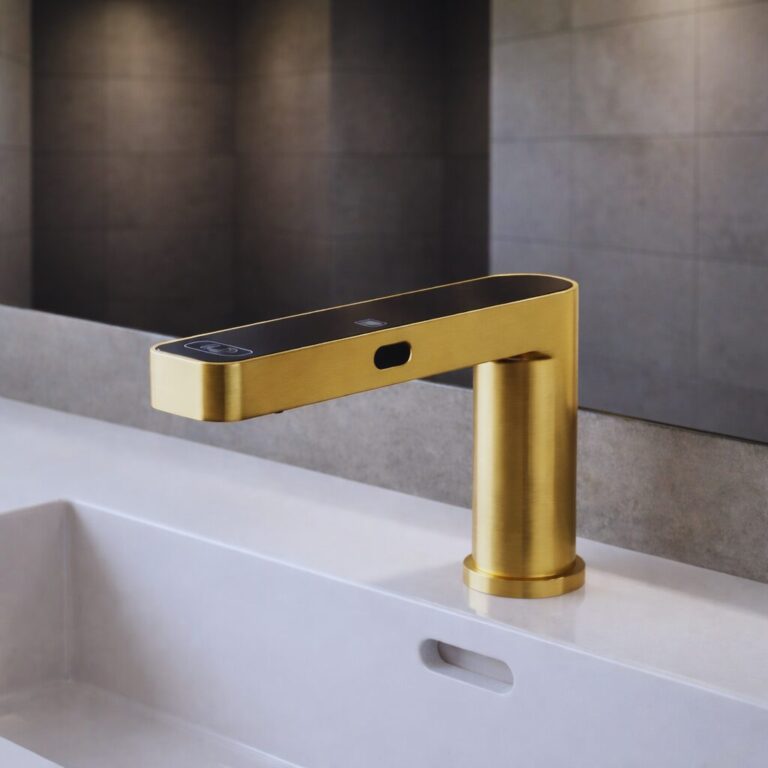
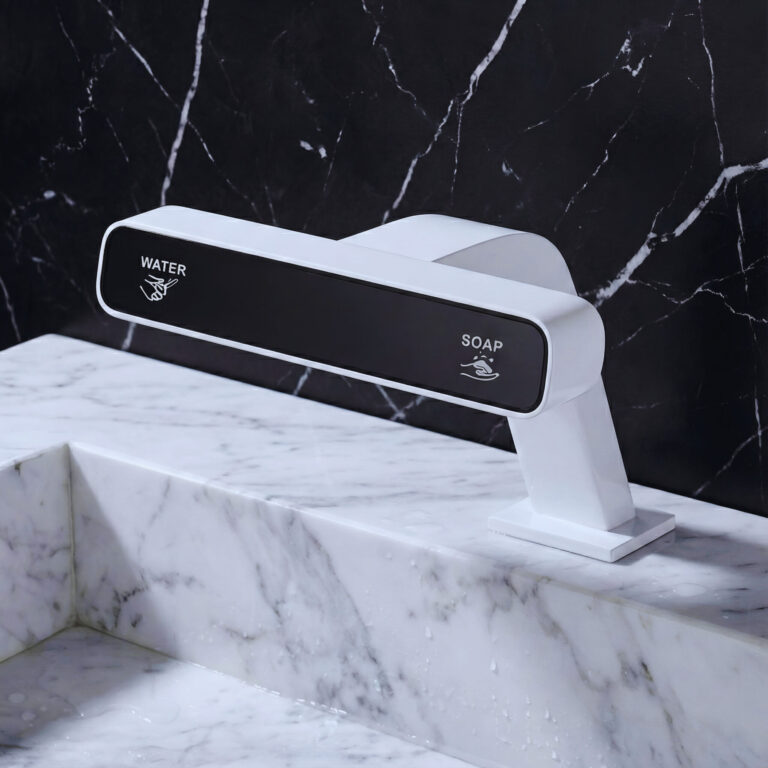
If your facility is moving toward sensor-based fixtures to reduce touchpoints generally, it’s worth specifying hands free basin faucets alongside touchless soap dispensers in the same bundle, since mismatched touch and no-touch fixtures in one restroom undercut the hygiene gain you’re paying for. A sensor faucet next to a manual push-button soap dispenser still leaves one high-contact point in the sequence.
Certification Marks To Check Before Signing
Three certification marks come up in a bundled restroom RFP, and procurement teams often conflate them because they appear on adjacent product spec sheets.
| Standard | Applies To | What It Verifies |
|---|---|---|
| NSF/ANSI 61 | Faucets, bottle fillers, fountains | Material safety for drinking water contact, including leaching of contaminants |
| NSF/ANSI 372 | Faucets, bottle fillers, fountains | Lead content compliance tied to the 0.25% weighted average standard |
| Manufacturer hygiene claims (no single NSF mark) | Soap dispensers | Varies by vendor; check for antimicrobial housing claims or cartridge sealing specs separately, since no federal lead standard applies |
When a bottle filler spec sheet lists both NSF/ANSI 61 and 372, that’s the pairing you want: 61 covers material safety broadly, 372 covers the lead-specific threshold. A fixture listing only one of the two marks should prompt a follow-up question to the vendor before the PO is signed. Soap dispensers won’t carry either mark, and that absence is expected, not a red flag, as long as your audit file doesn’t mistakenly flag it as a missing certification.
Flow Rate Context for Bundled Bottle Fillers
Most bottle fillers bundled into these restroom orders run close to 1.1 GPM (4.2 LPM), which is lower than a standard lavatory faucet flow rate and set that way to control fill-cycle time and splash at the basin. This number matters for your RFP because some vendors quote fountain flow rates instead of bottle-filler-specific rates, and the two aren’t interchangeable in a spec comparison. Confirm which flow rate the vendor is quoting before you use it in a water-use or fixture-count calculation for the project.
What To Check Before You Sign
Before finalizing a bundled restroom RFP, separate the compliance documentation by fixture type rather than by vendor or PO line. Confirm NSF/ANSI 61 and 372 marks on every water-contact fixture, request the lead-content calculation method from the manufacturer, and treat soap dispenser certification as a different, lower-documentation category. Build your hygiene audit schedule around the touchpoint cluster, not the individual fixture, so faucet handles, dispenser buttons, and fountain bezels get checked on the same cycle. If your facility is standardizing on touchless fixtures for part of the restroom, confirm that the non-touch fixtures in the same zone don’t reintroduce the contact point you’re trying to eliminate.