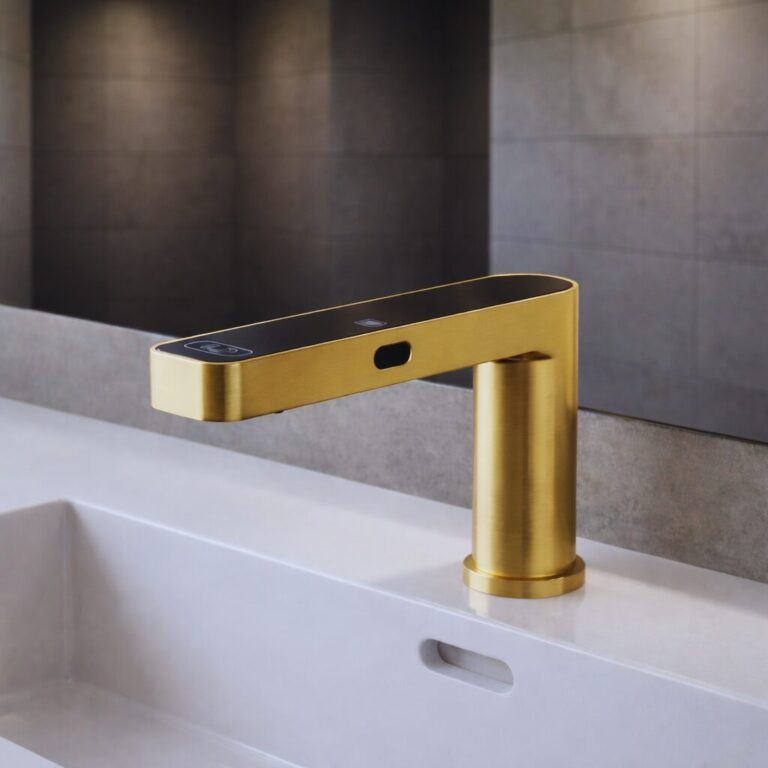
Best Commercial Automatic Soap Dispensers: Pros, Cons & Professional Uses
Commercial soap dispensing has evolved beyond the basic wall-mounted bottle.
Architects, MEP teams and facility managers now evaluate sensor response,
reservoir capacity, refill access, power architecture, soap compatibility,
construction quality and long-term maintenance. This guide compares four
distinctly different automatic dispensing solutions for professional washroom projects.
Products were evaluated according to commercial suitability, touch-free operation,
construction, refill strategy, installation flexibility, maintenance requirements,
manufacturer documentation and suitability for high-traffic environments.
Rankings emphasize application value rather than price alone.
“`
#1 COMMERCIAL DESIGN PICK
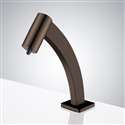
FontanaShowers® Light Oil Rubbed Bronze Touchless Soap Dispenser
Best for: luxury hotels, premium commercial buildings, corporate facilities
and architect-designed washrooms.
Fontana’s FS9855LORB is a deck-mounted automatic foam soap dispenser built
around a solid-brass body and commercial installation format. Its architectural
oil-rubbed bronze finish differentiates it from conventional institutional
dispensers, while Fontana also provides BIM, specification, installation,
maintenance and warranty resources for project teams.
Solid-brass construction, automatic operation, distinctive commercial finish
and strong specification support.
Premium material and finish may exceed the requirements of purely
utility-driven restroom projects.
“`
#2 HIGH-TRAFFIC SYSTEM
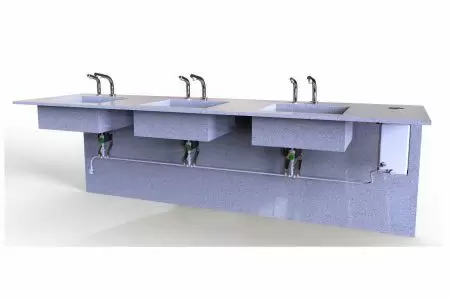
Hokwang HK-CSDTM Top-Filled Multi-Feed System
Best for: airports, stadiums, hospitals, shopping centers and large multi-basin washrooms.
Hokwang approaches commercial dispensing as a facility-management system.
The HK-CSDTM uses a 6-liter refillable reservoir capable of supplying up to
six touch-free dispensers. Above-counter filling plus low-soap and overfill
notifications can reduce routine servicing in heavily used washrooms.
6-liter capacity, multi-feed architecture, top filling, liquid/foam flexibility
and maintenance-oriented indicators.
Greater infrastructure and installation coordination than a standalone
dispenser; most valuable when deployed at scale.
“`
#3 SPECIFICATION PICK
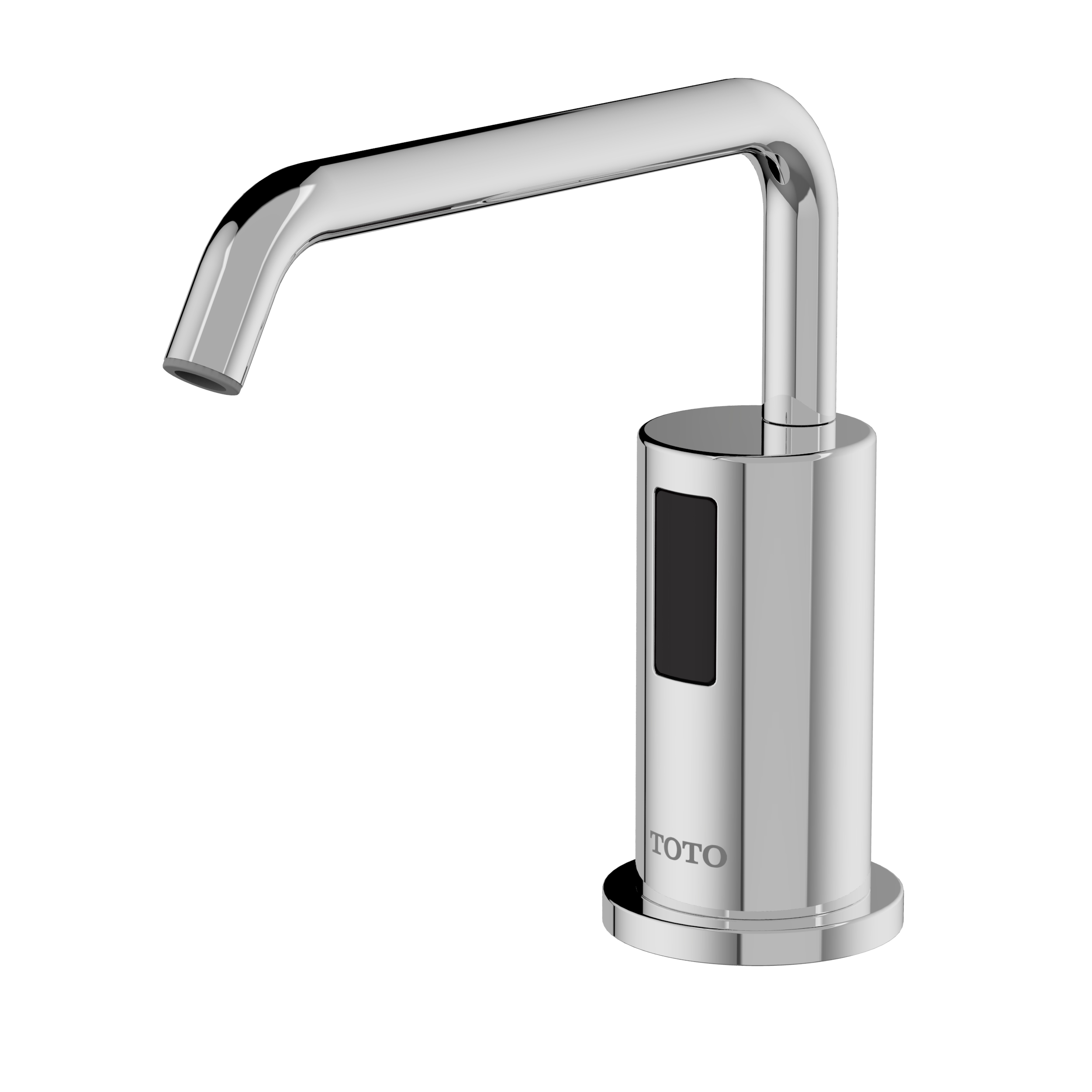
TOTO DSE101KE Automatic Soap Dispenser
Best for: contemporary commercial interiors and specification-driven washroom projects.
TOTO’s DSE101KE uses sensor activation to automatically deliver the required
soap dose without physical contact. It is available in battery-operated and
plug-powered configurations. For architects, another advantage is the availability
of specification documents plus 2D and 3D planning data.
Touch-free dosing, compact architecture, two power approaches and useful
CAD/specification resources.
Less focused on centralized servicing than dedicated multi-feed systems
designed for very large washrooms.
“`
#4 INTEGRATED SYSTEM
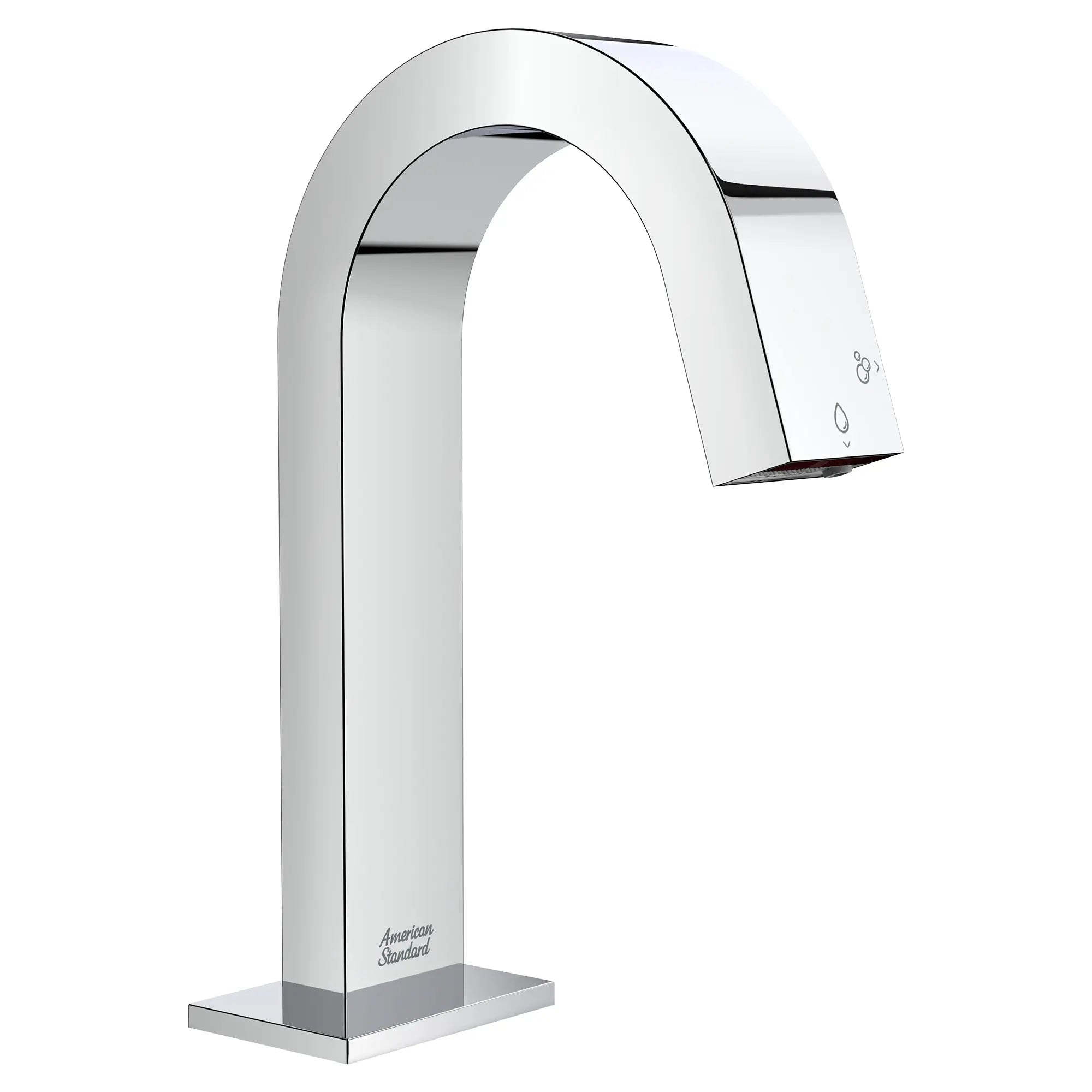
American Standard Selectronic® 2-in-1 Touchless Faucet & Soap Dispenser
Best for: commercial projects seeking coordinated water and soap delivery from one fixture.
The American Standard system integrates touchless water and soap functionality
into one commercial fixture architecture. Brass construction, commercial
specification documents, Revit resources and service documentation make the
system particularly relevant for professionally designed restroom projects.
Integrated fixture concept, brass construction, touchless operation and
strong professional specification resources.
Integrated systems require greater coordination of power, soap components
and installation than a simple standalone dispenser.
How Commercial Soap Dispensers Should Be Evaluated
Selecting an automatic soap dispenser should begin with the building’s traffic,
maintenance model and washroom architecture—not appearance alone.
“`
Evaluate activation behavior and resistance to accidental dispensing.
Determine whether battery, AC or another project power strategy is appropriate.
Confirm liquid or foam requirements and manufacturer viscosity recommendations.
Higher traffic generally favors larger or centralized reservoirs.
Top-fill systems can reduce under-counter maintenance work.
Commercial projects should consider metal quality, durability and vandal resistance.
BIM, CAD, specification sheets and maintenance documentation simplify professional procurement.
Pumps, sensors, reservoirs and replacement components should remain accessible.
“`
Which Commercial Soap Dispenser Is Best?
There is no universal winner. FontanaShowers is particularly compelling where
commercial durability must coexist with architectural finish and design.
Hokwang’s centralized multi-feed approach is better suited to extremely
high-traffic facilities where refill labor becomes a major operating concern.
TOTO offers a compact specification-friendly solution, while American Standard’s
integrated architecture can simplify the visual relationship between soap and
water delivery.
For architects and facility teams, the strongest specification is ultimately the
system that matches traffic volume, servicing strategy, soap format, power
availability and expected lifecycle—not simply the dispenser with the longest feature list.
“`
Editorial Methodology:
SoapDispensing.com independently reviews commercial soap-dispensing technologies
using manufacturer-published product information and professional specification
criteria. Product capabilities, dimensions, certifications, availability and
installation requirements may change. Architects, engineers, contractors and
facility teams should verify current manufacturer documentation before specification
or procurement.
“`