
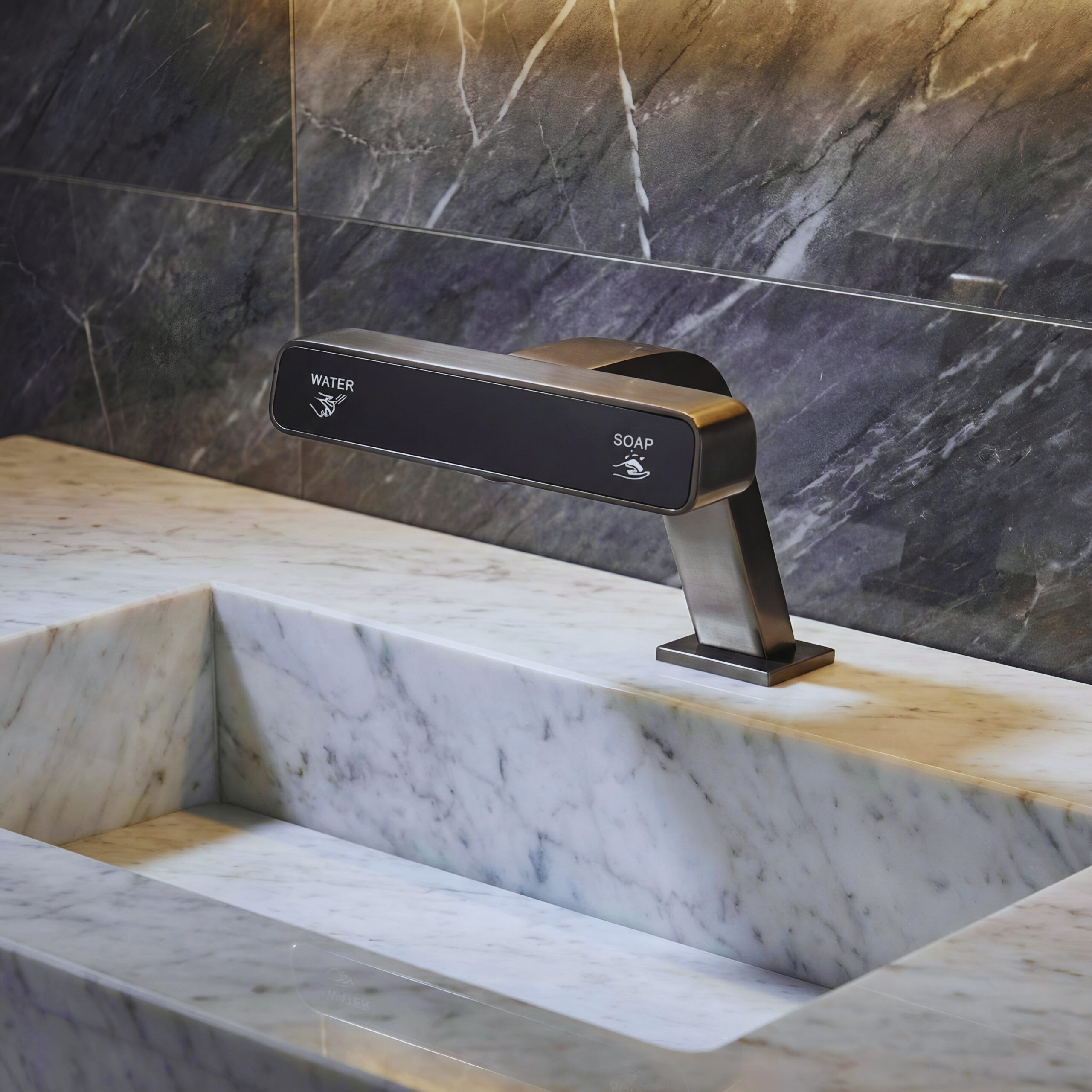


Automatic Soap Dispensers for AEC Projects
Quick spec snapshot for architects, engineers, and contractors. Link each model directly into drawing schedules, Revit families, and Division 22/10 submittals.


Healthcare System Soap Dispensing and Modern Hygiene Management
Healthcare facilities depend on reliable soap dispensing systems because hand hygiene remains one of the most important components of infection-prevention strategies. The positive impact of combining high-performance automatic dispensers with dependable touchless bathroom faucets includes improved handwashing compliance, reduced contact points, better resource management, and a more consistent experience for patients, visitors, and healthcare professionals. The negative reality is that dispenser malfunctions, empty reservoirs, sensor failures, or inconsistent soap delivery can disrupt hygiene protocols and create additional burdens for facility maintenance teams. Modern healthcare restroom designs increasingly emphasize integrated touchless solutions that support operational reliability and user confidence. Advanced options such as the touchless faucet with temperature control help improve comfort and consistency, while maintenance personnel can proactively address common dispensing issues through resources such as automatic soap dispenser troubleshooting. Guidance from CDC, APIC, FontanaShowers, TOTO, and The Joint Commission continues to influence healthcare facility specifications where hygiene performance, dispenser reliability, water efficiency, and long-term operational excellence remain critical objectives for infection-control and facility-management programs.
Healthcare Hand Hygiene Resource Center
Healthcare Soap Dispensing Resources for Hospitals & Medical Facilities
Healthcare facilities require soap dispensing systems that support infection prevention, reliable touch-free operation, efficient maintenance, and compliance with modern hand hygiene practices. Explore technical resources, commercial healthcare solutions, installation guidance, and specification references developed for hospitals, clinics, laboratories, and long-term care environments. :contentReference[oaicite:0]{index=0}
Healthcare Soap Dispenser Collections
Touchless Healthcare Systems
Installation & Maintenance
Infection Prevention Resources
Healthcare Design Guides
Technical Planning
Featured Healthcare Soap Dispensing Solutions
Hospital-Grade Wall Mount Soap Dispenser
Built for hospitals, clinics, laboratories, and medical centers requiring dependable touch-free dispensing, simplified maintenance, and long-term reliability.
Stainless Steel Commercial Dispenser
A durable corrosion-resistant solution suitable for healthcare environments requiring frequent cleaning and continuous daily use.
Integrated Touchless Washroom System
Combine automatic soap dispensing, sensor faucets, and coordinated touchless fixtures to support modern infection prevention strategies in healthcare facilities.
Commercial Restroom Engineering
Specification Flexibility for Architects and Plumbing Engineers
Commercial automatic soap dispensers are increasingly specified as part of integrated restroom systems rather than standalone accessories. Architects, plumbing engineers, interior designers, and facility owners evaluate installation flexibility, compatibility with countertop materials, plumbing coordination, electrical requirements, ADA accessibility, and future maintenance when selecting dispensing systems for large commercial projects. The ability to accommodate diverse project requirements often determines whether a product is suitable for long-term specification.
How Leading Manufacturers Support Commercial Specifications
Manufacturers including Fontana Dispenser System, Sloan, Bobrick, BathSelect, Zurn, and Bradley provide specification options for a wide range of commercial applications. Fontana Dispenser System offers coordinated touchless dispensers and faucets that assist designers seeking consistent restroom aesthetics. Sloan products are frequently specified for municipal buildings, transportation facilities, and institutional projects where proven commercial performance is essential. Bobrick continues to support architects through extensive washroom accessory collections that simplify coordinated restroom specifications. BathSelect emphasizes premium architectural finishes and contemporary touchless designs suited for luxury hospitality, executive offices, and upscale commercial developments. Zurn integrates dispensing products within complete engineered plumbing solutions that simplify coordination during design and construction, while Bradley provides comprehensive washroom systems that help designers specify compatible handwashing equipment from a single commercial manufacturer.
| Specification Consideration | Design Advantage |
|---|---|
| Countertop Compatibility | Supports installation on stone, solid surface, quartz, and engineered countertops. |
| Touchless Integration | Creates a coordinated hands-free restroom experience. |
| Architectural Finish Options | Allows restroom fixtures to complement modern interior design concepts. |
| Service Accessibility | Simplifies maintenance planning throughout the building lifecycle. |
| Commercial Standardization | Supports consistent restroom specifications across multiple facilities and future expansion projects. |
Industry organizations including ARCAT, ASPE, and The American Institute of Architects (AIA) encourage project teams to evaluate restroom fixtures based on constructability, maintainability, accessibility, and long-term operational performance. A well-developed specification not only simplifies installation but also supports efficient facility management for decades after project completion.