Commercial Touchless Soap Dispensers Across Industries
Performance, Specification, and Maintenance Drivers for AEC + Facility Teams
Touchless soap dispensers are no longer a “premium add-on” in commercial restrooms—they are increasingly treated as baseline hygiene infrastructure. For AEC teams, the real question is not whether to specify touchless, but how to select and detail systems that remain reliable under real-world conditions: high traffic, varied user behavior, aggressive cleaning chemistry, and limited maintenance staffing.
For facility managers, touchless systems can reduce cross-contact risk and improve user experience, but only when selection and installation are aligned with serviceability, soap compatibility, battery/power strategy, and placement.
This article provides a technical overview of touchless soap dispensers across major commercial sectors, highlighting how stress profiles differ and how specifiers can translate those conditions into durable, maintainable selections.
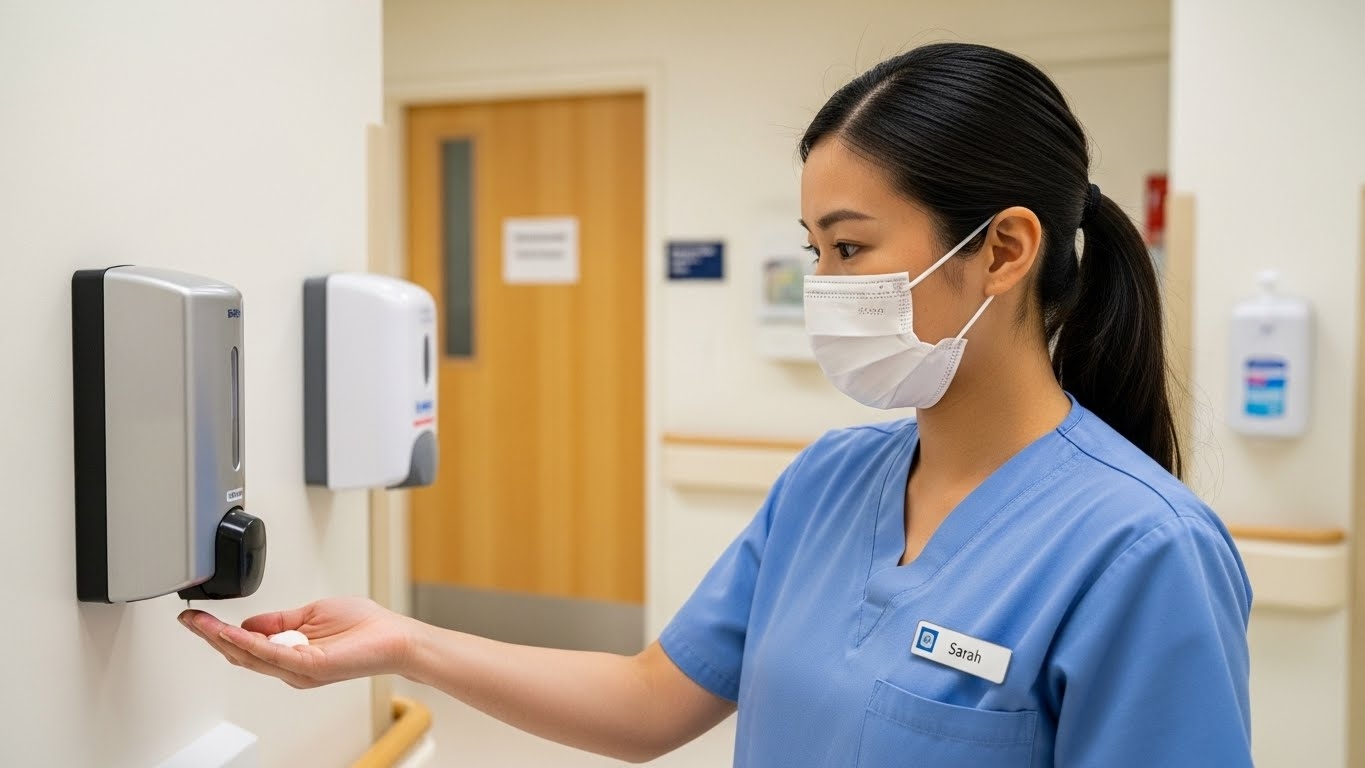
Why touchless soap dispensing became standard in commercial buildings
Across industries, the move toward touchless dispensing is driven by three practical outcomes:
- Reduced cross-contact points
- More predictable dosing (which stabilizes soap consumption)
- Cleaner countertops and simpler janitorial workflows (especially wall-mounted systems)
But in commercial environments, touchless dispensing is not “set and forget.” Dispensers must operate reliably through:
- Frequent activations
- Inconsistent user behavior (quick waves, lingering hands, double activations)
- Water splash and humidity
- Cleaning agents that can cloud sensor windows or degrade finishes
- High refill frequency and the potential for soap substitutions
Industry stress profiles: how environments change dispenser performance
A) Healthcare environments
Primary requirements: hygiene reliability, consistent availability, easy disinfection, minimum touchpoints.
Key performance risks:
- Aggressive disinfection routines can cloud sensor windows or degrade coatings over time
- Dispenser placement must support intuitive handwashing sequences and minimize splatter
- Downtime is less tolerated—empty dispensers quickly become escalation events
Specification priorities:
- Durable housing materials and sealed electronics
- Easy-to-service refill access and standardized consumables
- Stable sensor behavior even with frequent cleaning and wet conditions
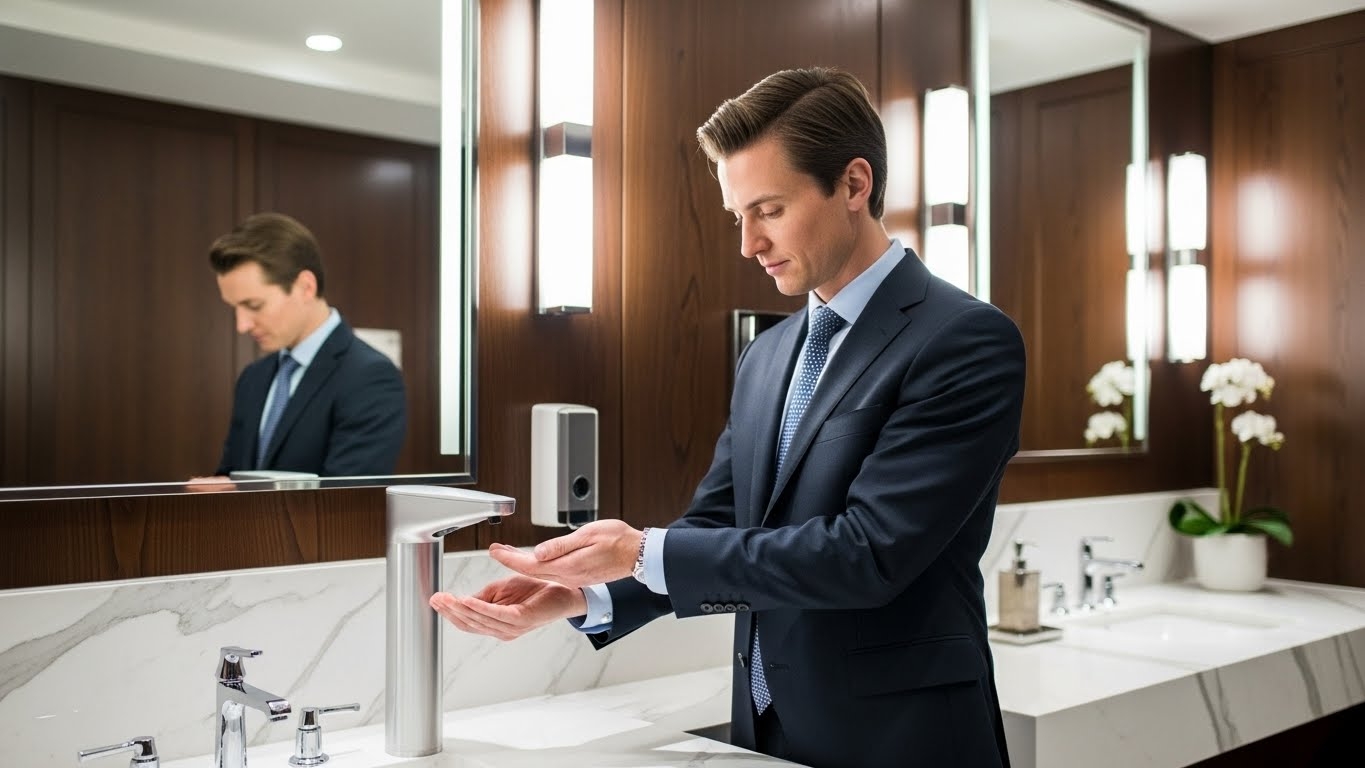
B) Hospitality environments
Primary requirements: aesthetics + guest perception + low visible maintenance disruption.
Key performance risks:
- Finish durability becomes critical (fingerprint visibility, spotting, wear patterns)
- Design-driven reflective surfaces can increase false activations
- Guest experience is sensitive to inconsistent dispensing or dripping
Specification priorities:
- Finish selection aligned to cleaning chemistry and frequency
- Clear commissioning process for sensor range and dosing
- Consistent fixture coordination (soap + faucet + drying) to support brand design intent
C) Corporate offices and mixed-use commercial buildings
Primary requirements: reliability with lean maintenance staffing and predictable O&M.
Key performance risks:
- Empty events create frequent complaints even in lower traffic spaces
- Non-standard soap substitutions are common if inventory controls are weak
- Battery failures often become reactive work orders instead of scheduled work
Specification priorities:
- Battery strategy based on traffic level and service access
- Standardized dispenser models across the portfolio
- Soap compatibility rules documented and enforced
D) Education (schools, universities)
Primary requirements: vandal resistance, scalability, low unit cost of maintenance.
Key performance risks:
- Higher abuse rates and tampering attempts
- Frequent refills and higher chance of incompatible soap being added
- Sensor obstruction from residue and grime buildup
Specification priorities:
- Robust housings, tamper-resistant locks, and quick-swap internal components
- Large-capacity reservoirs or cartridges to reduce refill cycles
- Clear maintenance cadence and spare-parts plan
E) Airports, stadiums, transit hubs
Primary requirements: extreme traffic, minimal downtime, faster service cycles.
Key performance risks:
- Constant activation accelerates pump wear and battery draw
- Run-outs occur rapidly if refill schedules are not data-informed
- Single-point failures create high visibility complaints
Specification priorities:
- High-duty-cycle pump mechanisms and replaceable internal assemblies
- High-capacity reservoirs or centralized/multifeed systems
- Service planning focused on speed, not just compliance
Multifeed systems can reduce refill burden by consolidating soap storage in high-use venues.
Core technology considerations that affect performance across industries
Sensor behavior and “false activation” control
Touchless dispensers rely on sensor stability. Poor tuning or poorly chosen placement can cause:
- False triggers from reflective backsplashes or mirrors
- Unnecessary pump cycles (accelerating wear)
- Increased soap waste
- Early battery depletion
Design and commissioning need to validate:
- Activation zone distance and angle
- Shutoff logic and post-dispense “lockout” timing
- Behavior under ambient lighting or reflective conditions
Soap chemistry compatibility (the hidden maintenance driver)
Soap chemistry affects pump reliability and nozzle cleanliness. The most common operational failures come from:
- Soap viscosity mismatch (too thick or too thin)
- Additive residue (clogging or gumming valves)
- Foam vs liquid misapplication
Facility standardization is critical: use one or two approved soaps per facility, and train housekeeping to avoid substitutions.
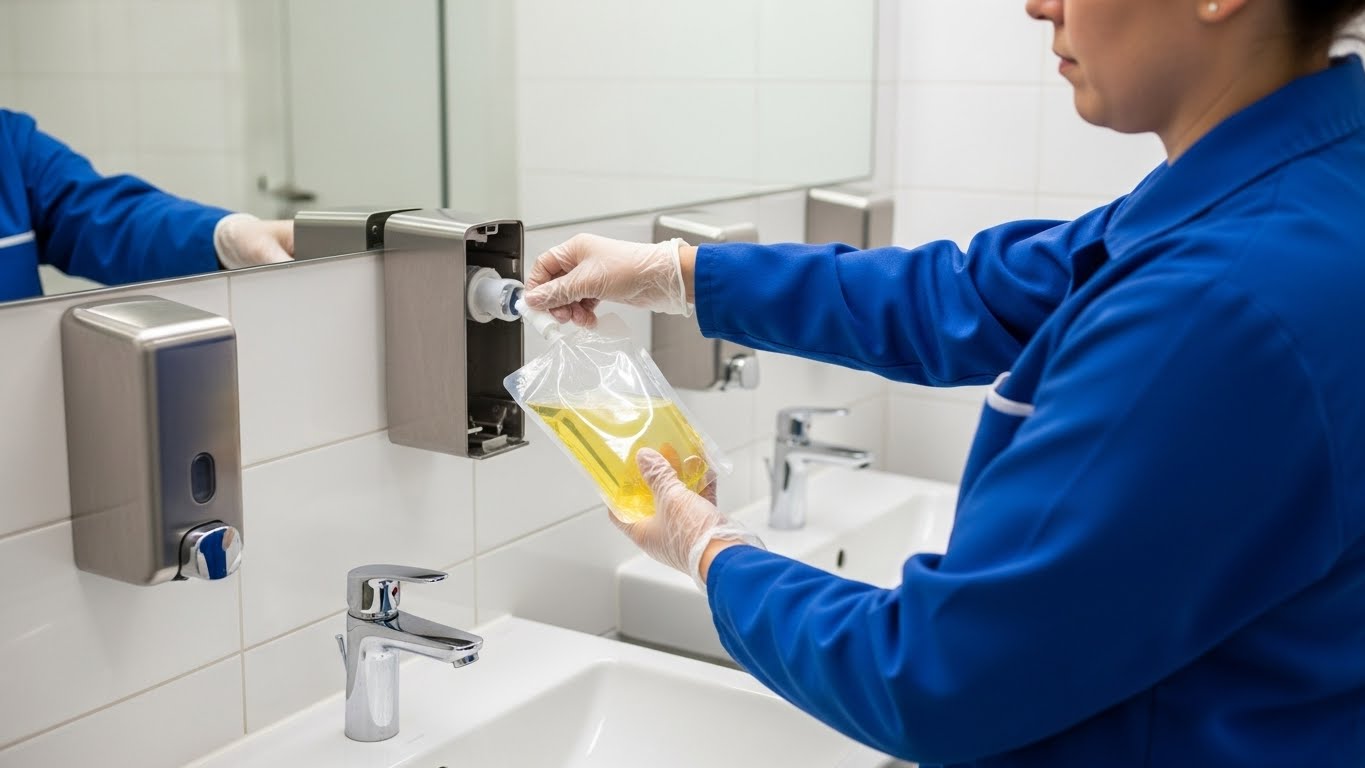
Power strategy: battery vs hardwired
Battery systems simplify retrofits but must be treated as a managed maintenance item:
- Define replacement intervals
- Track battery type and location
- Stock spares
Hardwired or transformer-fed systems reduce battery interruptions, but they introduce access coordination requirements, routing constraints, and more complex commissioning.
Specification guidance: what AEC teams should include in Division 10 / 22
When specifying commercial touchless soap dispensers, include requirements that protect long-term performance:
A) Material and finish requirements
- Housing material (stainless steel, brass, etc.)
- Finish durability aligned with cleaning chemistry
- Corrosion resistance for wet zones or coastal/high-humidity facilities
B) Sensor performance requirements
- Defined activation zone requirements
- Clear commissioning requirements (minimum cycle tests and functional verification)
- Anti-runaway logic and drip control expectations
C) Serviceability requirements
- Refill access without removing the dispenser
- Battery access without disassembly
- Replaceable internal modules where possible
- Tamper resistance and lock/key standardization
D) Documentation and closeout
- Model IDs, cut sheets, and O&M manuals
- Soap compatibility list
- Commissioning record (activation range, dosing settings, acceptance check)
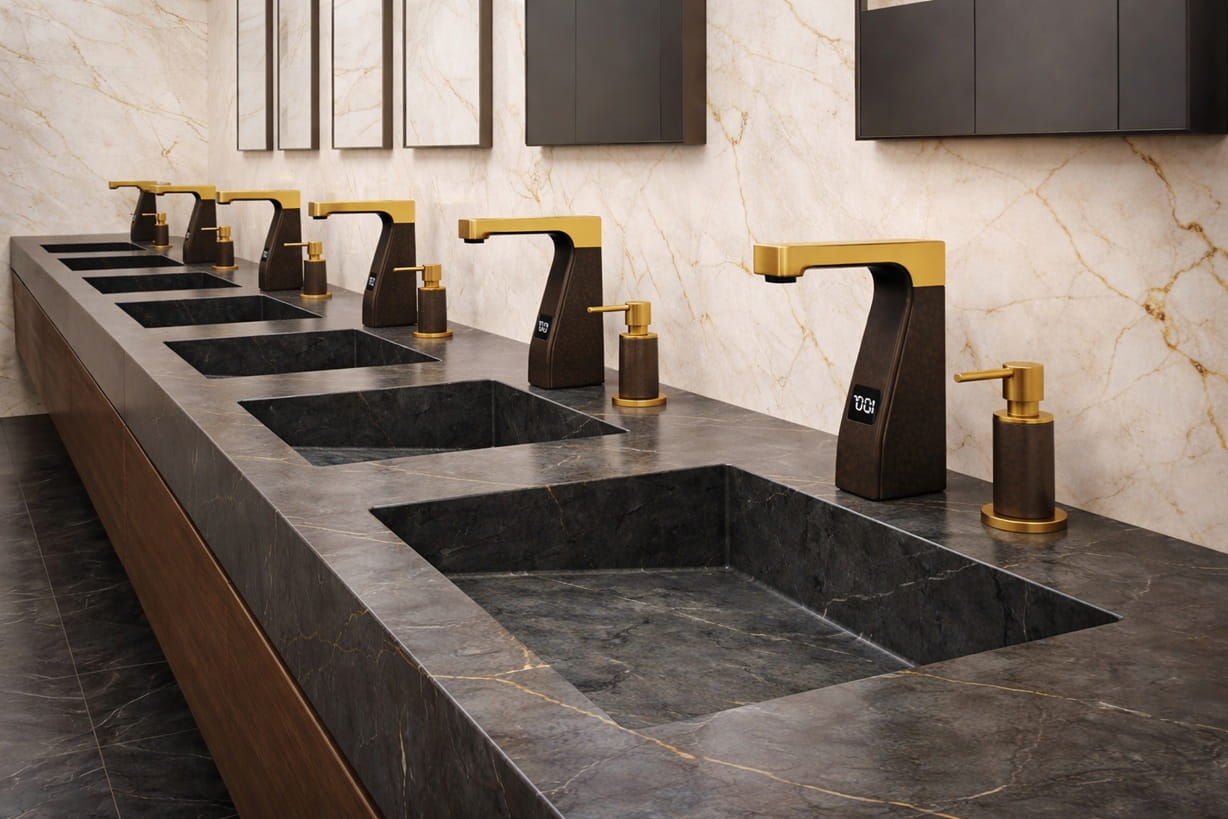
Coordinated fixture families reduce lifecycle risk
Across commercial sectors, coordinated families help reduce complexity, simplify technician training, and stabilize performance across restrooms.
Preventive maintenance: turning failures into predictable work
The best-performing facilities treat touchless dispensers like any other asset.
Routine checks
- Sensor window wipe-down
- Nozzle cleaning and residue removal
- Refill level verification
- Battery status checks
- Pump function confirmation
Lifecycle planning
- Define expected duty cycles for pumps
- Stock standard parts
- Set replacement thresholds before failures become complaints
This approach reduces run-outs, nuisance activations, leaks and drips, and reactive work orders.
Why Industry-Specific Planning Improves Touchless Soap Dispenser Performance
Commercial touchless soap dispensers do not perform the same way in every building type. A hospital, hotel, office tower, school, and airport each place different demands on sensor stability, refill frequency, finish durability, and maintenance response time. Evaluating dispensers by industry use case helps design teams select systems that match actual traffic, cleaning routines, and service conditions instead of relying on a one-size-fits-all product choice.
This sector-based approach strengthens specifications by linking product selection to real operating pressure. It also helps facility teams reduce downtime, improve user satisfaction, and plan more predictable maintenance across commercial restrooms where hygiene, durability, and long-term performance all matter at the same time.
Conclusion: “Touchless” is a system decision, not a product checkbox
Touchless soap dispensers can improve hygiene outcomes and user experience across corporate, hospitality, healthcare, education, and high-traffic transit environments—but only when specified and maintained with lifecycle reality in mind.
- Align materials and finishes to cleaning protocols
- Validate sensor behavior during commissioning
- Standardize soap chemistry and refill workflows
- Specify for serviceability and predictable maintenance
When dispensers are treated as part of an integrated hygiene infrastructure—not an accessory—facilities see fewer failures, better occupant satisfaction, and lower lifecycle costs.
Support documents (downloadable)
Verified source links

No responses yet