Introduction
An automatic soap dispenser brand comparison supports AEC teams when they must specify touchless dispensing that performs reliably, meets accessibility requirements, and remains serviceable under real operating conditions. In commercial, institutional, and hospitality restrooms, automatic dispensers function as operable elements that influence queuing, refill labor, housekeeping workflows, and risk control. Consequently, specifiers should evaluate products using verifiable technical documentation rather than relying on appearance, anecdotal preference, or generalized product class claims.
This article presents an AEC grade automatic soap dispenser brand comparison across FontanaShowers, BathSelect, and representative commercial competitors. It emphasizes specification criteria that can be defended during submittals and commissioning, including sensing behavior, soap chemistry compatibility, power strategy, service access, documentation quality, and relevant regulatory frameworks.
Automatic Soap Dispenser Brand Comparison Criteria For AEC Specifications
Activation Technology And Sensing Robustness
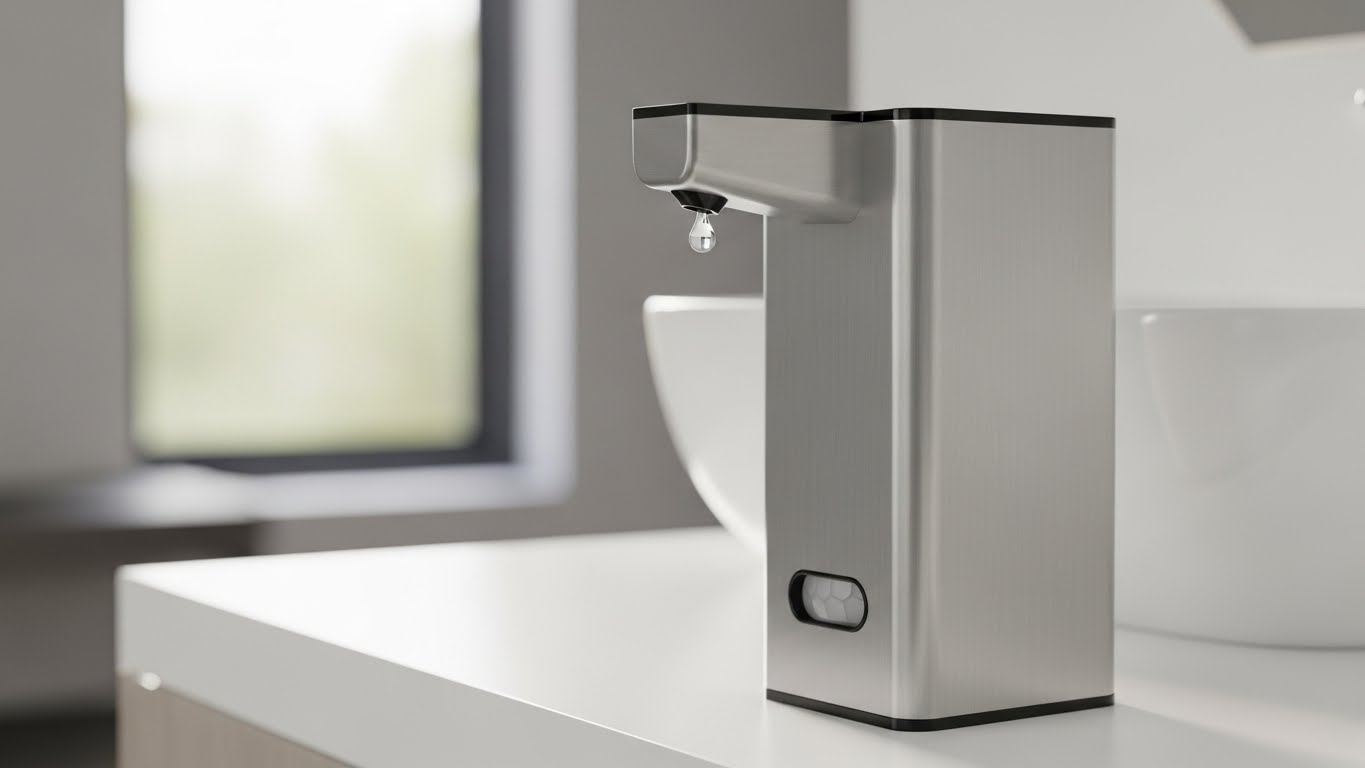
Most commercial automatic dispensers use infrared proximity sensing. However, the sensor type alone does not determine reliability. Instead, designers should assess how the sensing window behaves under glare, reflective finishes, water droplets, and cleaning residue. In addition, a coordinated lavatory group can introduce interaction issues. For example, when a designer places a deck mounted dispenser too close to a sensor faucet, the user’s hand path can trigger both devices, which increases product waste and creates housekeeping complaints.
Therefore, a defensible specification calls for a mockup or field verification step in high traffic projects. It also requires the installer to follow the manufacturer’s mounting geometry and sensor zone guidance when those instructions exist.
Soap Chemistry Compatibility And Dose Control
Soap compatibility drives maintenance performance. Automatic dispensers may support liquid, foam, or dual mode dispensing. Even when two products list the same soap type, performance can differ with viscosity, fragrance oils, and additives. For that reason, AEC teams should identify the owner’s soap standard early and then require confirmation that the selected dispenser supports that formulation.
When bulk fill is permitted, the specification should also control mixing and refilling practices. Bulk systems reduce packaging waste and can lower operating costs, yet they require disciplined refills to avoid cross-contamination and clogging. Bobrick’s published technical data for the SureFlo B 824 illustrates a documentation level that supports these decisions in submittals and field coordination. See the manufacturer’s Counter Mounted SureFlo Automatic B 824 Technical Data Sheet.
Power Strategy And Maintenance Planning
Power strategy affects uptime. Battery only systems reduce electrical coordination; however, they shift ongoing labor to facilities teams. In contrast, multi-voltage or AC-powered solutions can reduce battery replacement cycles, yet they require transformer placement, access coordination, and rough-in planning.
BathSelect publishes commercial automatic dispenser listings that describe multi voltage input ranges and large capacity containers, which helps AEC teams align equipment choice with project constraints. For instance, the BathSelect Chrome Wall Mount Commercial Automatic Soap Dispenser lists the appropriateness of multi-voltage power supplies because this could enable adherence to different jurisdiction voltage coordination values for different facilities.
Materials, Material Resistance, and Surface Cleanup
Materials chosen for a keyboard and mouse should be resilient to vandalism, corrosion, and common cleansers. In many cases, a stainless steel case might prove more durable in the face of extreme cleansers than a plated body. In addition, designers should review spout anchorage and lock mechanisms, especially in public restrooms where misuse occurs. For wall-mounted units, engineers should also check substrate requirements and reinforce mounting conditions in the wall type schedule.
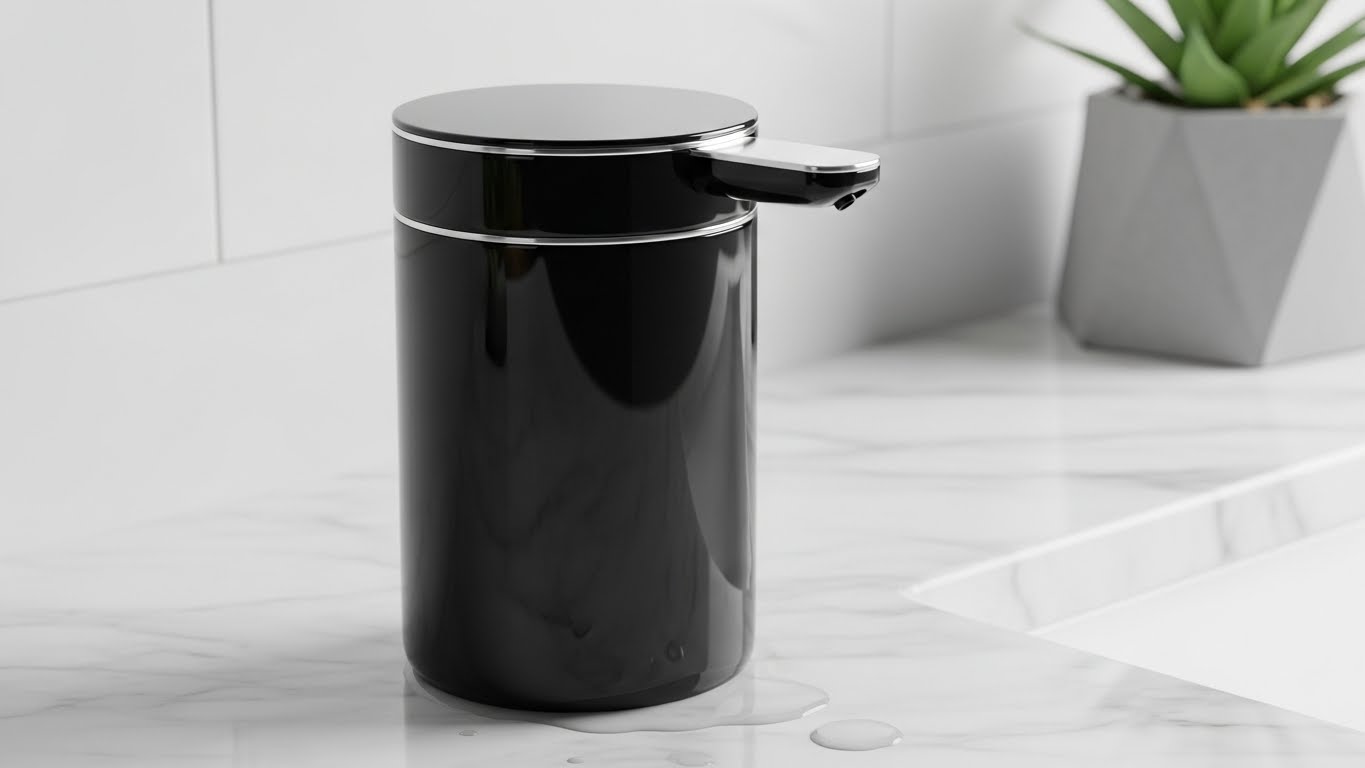
BathSelect provides stainless steel wall mounted options with published material and capacity characteristics, which assists early stage screening for durable installations. See BathSelect Wall Mount Stainless Steel Automatic Liquid Soap Dispenser.
Documentation Quality And BIM Expectations
AEC procurement benefits when a manufacturer publishes consistent installation instructions, specification sheets, and maintenance information. Documentation quality directly affects RFIs and closeout. Consequently, the spec section should require submittals that include installation instructions, maintenance guidance, electrical requirements, and finish data.
FontanaShowers maintains a category hub that supports product selection across automatic dispenser types. While a category page does not replace a cut sheet, it can improve internal navigation and selection transparency for design teams. See FontanaShowers Automatic Soap Dispenser Category.
Automatic Soap Dispenser Brand Comparison: Accessibility And Regulatory Factors
Operable Parts Requirements And Placement Control
Automatic dispensers are operable elements. Therefore, placement must support accessible reach ranges and operability constraints. Practically speaking, a harmonious set of requirements exists to control mounting height, approach to the controls, and use of controls. The U.S. Access Board’s guidelines on operable parts offer a clear approach to assessing these factors in an accessible space. See Access Board Chapter 3 Operable Parts Guide.
For project compliance, designers typically anchor requirements to the Department of Justice standards. See the 2010 ADA Standards For Accessible Design.
Because mounting conditions vary by lavatory depth and backsplash geometry, the specification should require verification against installed dimensions rather than relying on nominal countertop heights alone.
Electronics Compliance Context For Sensor Devices
Automatic dispensers contain electronics and power supplies. Although many dispensers do not intentionally transmit radio signals, they can fall under unintentional radiator frameworks depending on their electronics. For reference, the Code of Federal Regulations outlines requirements for unintentional radiators under Part 15 Subpart B. See 47 CFR Part 15 Subpart B Unintentional Radiators.
In AEC specifications, the practical step is straightforward: require that the manufacturer provide compliance documentation, and require that any power supplies provided with the device meet applicable electrical safety and emissions requirements.
Adjacent Plumbing Standards When Coordinating Faucet Sets
Automatic dispensers frequently appear alongside sensor faucets, especially in hospitality and commercial restrooms. When a project specifies coordinated faucet and dispenser sets, plumbing fitting standards become relevant to the faucet component and its accessories. ASME describes the scope of the standard for plumbing supply fittings and accessories between the stop and the terminal fitting. See ASME A112.18.1 And CSA B125.1 Plumbing Supply Fittings.
Where potable water contact applies to the faucet portion of a coordinated set, certification discussions often reference NSF and NSF ANSI 61. NSF provides a practical summary of these considerations. See NSF Faucets And Plumbing Products Guidance.
Automatic Soap Dispenser Brand Comparison Across Manufacturers
BathSelect: Commercial Wall Mount And Coordinated Sets
BathSelect publishes commercial wall mounted and coordinated faucet plus dispenser solutions that present useful specification signals, particularly around installation type, container capacity, and power input.
For wall mounted commercial applications, the BathSelect Chrome Wall Mount Commercial Automatic Soap Dispenser describes a large capacity container and multi voltage power input range, which is relevant when an owner expects high turnover and wants fewer refills.
For projects that coordinate touchless dispensing with faucets, BathSelect publishes combined listings such as the BathSelect Sète Motion Sensor Faucet And Automatic Soap Dispenser. Such collective groups of sensors may simplify beauty coordination, though designers must examine sensor regions of interaction even on mock-ups as collective sensing solutions tend to aggregate sensors in a small user region.
As an internal navigation reference for BathSelect publishing, link to the BathSelect Home Page as a stable internal hub for related restroom specification content.
FontanaShowers: Broad Assortment And Category-Driven Selection
FontanaShowers presents an extensive range of automatic soap dispenser finishes and configurations through category navigation, which helps AEC teams identify wall mounted versus deck mounted options while maintaining finish continuity. The FontanaShowers Automatic Soap Dispenser Category illustrates the breadth of selection that can support finish schedules in hospitality projects.
Fontana also maintains a category for coordinated faucet and dispenser sets, which can help teams standardize paired touchless fixtures when a project requires consistent appearance across multiple restroom types. See Auto Sensor Faucet And Auto Soap Dispenser Set.
Commercial Competitors: Representative Reference Models
Competitor selection often depends on owner standards and facility maintenance practices. Nonetheless, several commercial product families provide well structured documentation and consistent service models.
Bobrick’s SureFlo B 824 provides a published technical sheet that supports submittal quality evaluation and installation review. See Bobrick B 824 Technical Data Sheet.
GOJO’s TFX platform represents a sealed refill approach. The manufacturer’s product detail page provides material and system information suitable for early specification screening. See GOJO 2730 12 TFX Dispenser Product Detail.
Bradley’s Model 6315 represents a deck-mounted sensored dispenser approach with published indicator behavior, which can matter to facilities teams managing multiple units. See Bradley Model 6315 Sensored Soap Dispenser.
Automatic Soap Dispenser Brand Comparison Table For AEC Use
| Specification Factor | BathSelect | FontanaShowers | Bobrick SureFlo B 824 | GOJO TFX 2730 12 | Bradley 6315 |
|---|---|---|---|---|---|
| Common Installation Types | Wall mount and coordinated sets | Wall and deck options across finishes | Deck-mounted dispenser | Wall mounted refill platform | Deck mounted dispenser |
| Power Strategy Signals | Capacity and installation instructions listed on some pages | Varies by model and category | Battery pack described in technical data | Battery operation typical for platform | Battery based with published indicator behavior |
| Soap Strategy | Liquid and foam options noted on listings | Category breadth suggests multiple soap types | Bulk liquid soap approach | Sealed refills for platform control | Counter-mounted top fill bulk |
| Serviceability | Capacity and installation instructions are listed on some pages | Category navigation supports selection | Top fill service model supports maintenance planning | Refill swap approach reduces bulk handling | LED indicators support operations planning |
| Documentation Utility | Product pages often include installation and specifications | Category pages support early selection | Technical data sheet supports submittals | Manufacturer product detail supports evaluation | Manufacturer product page supports model review |
Specification Language Guidance For Design And Construction Teams
Define Soap Type And Refill Policy Early
First, state whether the project will use foam, liquid, or dual-mode dispensing. Next, declare whether bulk fill is allowed. Then, require confirmation that the selected dispenser supports the owner’s soap formulation. This sequence reduces warranty disputes and prevents field substitutions that cause premature failures.
Require A Power Strategy Declaration At Submittal
Require the supplier to declare battery versus hardwired strategy in the submittal. If the system uses batteries, it requires expected service interval guidance and low battery indication. If the system uses AC or multi-voltage supplies, it requires a transformer location and an access method.
Coordinate Placement With Accessibility Requirements
Require the contractor to install the dispensers in accordance with the operable part guidelines and the reach criteria for the specific project. In addition, requires verification against the installed geometry. The Access Board operable parts guide and the 2010 ADA Standards provide authoritative references for this process.
Specify Documentation Deliverables For Closeout
At a minimum, require installation instructions, maintenance guidance, electrical requirements, and finish data. When the project uses BIM, it also requires a BIM object or manufacturer-provided dimensional content that supports coordination. Finally, require spare parts information for service-critical components such as pumps, sensors, and power supplies.
Comparing Automatic Soap Dispenser Brands for AEC and Facility Use
Comparing automatic soap dispenser brands is an important step in restroom design because different manufacturers organize their systems around different maintenance models, installation methods, and refill approaches. Some emphasize coordinated touchless fixture packages, while others focus on stainless steel durability, sealed refill systems, or simplified servicing across large commercial portfolios.
A specification-first comparison gives project teams a clearer basis for choosing the right dispenser platform for the intended environment. By reviewing sensor reliability, soap compatibility, power strategy, serviceability, and accessibility fit, AEC teams can reduce change orders, improve closeout quality, and support more dependable long-term restroom operations.
Conclusion
An AEC grade automatic soap dispenser brand comparison must prioritize verifiable performance criteria over generalized product class assumptions. The BathSelect line provides support for capacity and electric availability that would assure early form specification and finish planning support in BathSelect offerings, while Fontana Showers offer a finish-oriented product line for the bath that provides support for finish scheduling and standardized touchless fixtures planning support. Meanwhile, competitive brands like Bobrick, GOJO, and Bradley offer technical compatibility and consistency that would assure compatibility to their upkeep standards.
A defensible specification aligns dispenser selection with the project’s soap strategy, power planning, service workflow, and accessibility requirements. Where AEC teams have taken that approach, they have seen a reduction in RFIs, lifecycle cost control, and improved operational reliability-not a reliance on non-verifiable claims.

No responses yet