SoapDispensing | AEC + Facility Teams Guide
Soap dispensers may be “small” fixtures, but finish and material choices ripple across maintenance workload, tenant/guest perception, and long-term durability—especially in high-use restrooms where daily cleaning chemistry and constant contact can punish the wrong specification.
At SoapDispensing, the focus is reliable dispensing for workplaces, hospitality, healthcare, and other high-traffic facilities, with an AEC lens: decisions should be driven by serviceability, finish longevity, and real-world cleaning protocols, not just aesthetics.
This guide summarizes the finish/material directions facility teams and designers are leaning toward—and the technical pitfalls to design out early.
The three forces shaping finish decisions right now
A. Cleaning chemistry is the new “environment”
In corporate and hospitality, the driver is usually appearance + fingerprint hiding. In healthcare (and post-outbreak protocols everywhere), it’s how finishes survive routine disinfection.
Best practice is to align finishes to cleaning reality:
- Clean first, then disinfect (reduces residue and spotting), and document what chemistries are used in each area.
B. Low-glare, fingerprint-tolerant surfaces are winning
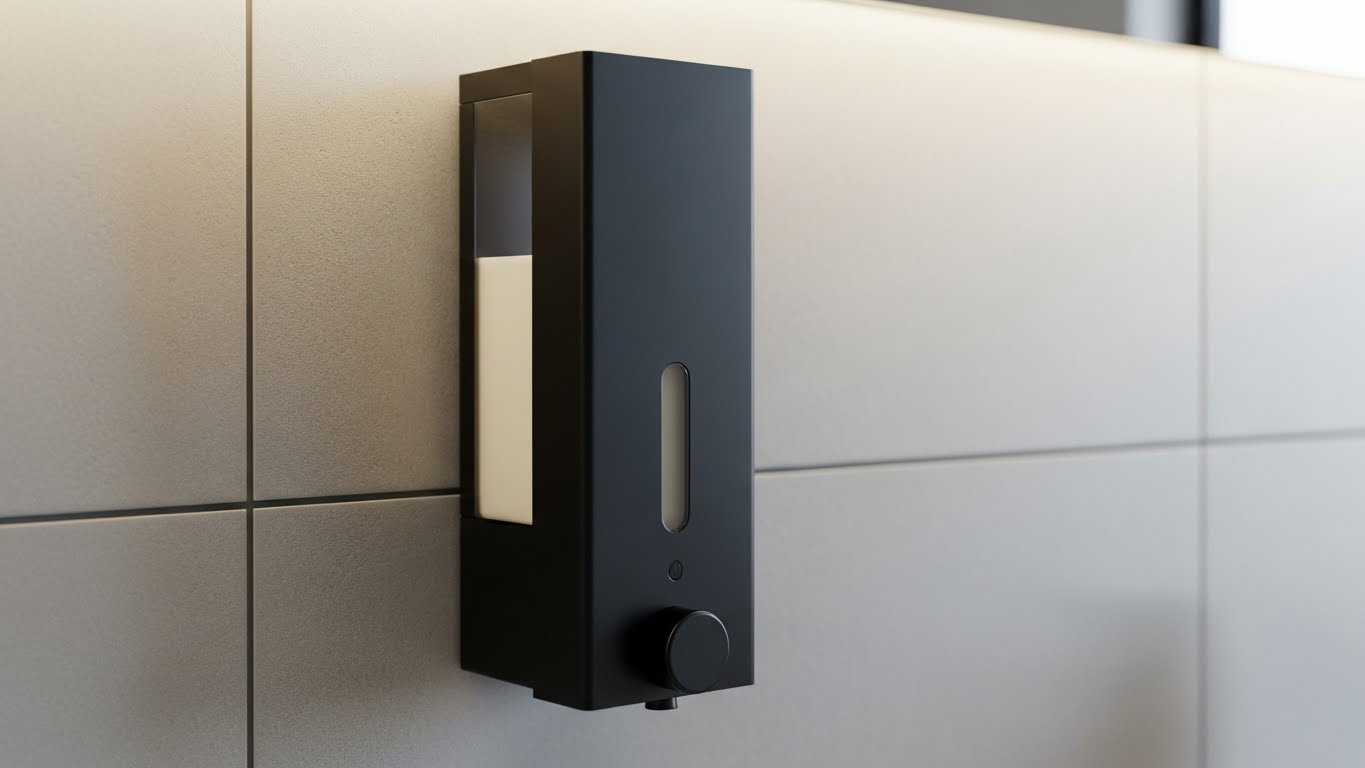
Matte and satin surfaces hide smudges and water spotting better than mirror-polished chrome—particularly in corporate and hospitality. The trend signal is obvious across design roundups: matte black remains a dominant “on-trend” finish family.
C. Owners want finish “systems,” not one-off products
AEC specs increasingly standardize finish palettes across:
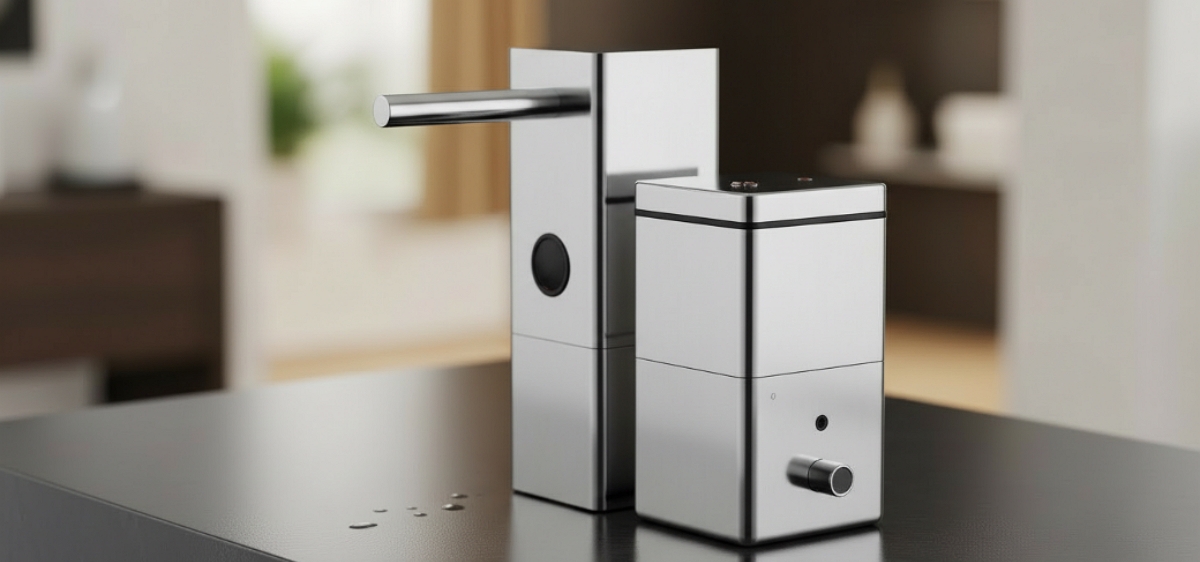
- touchless faucet + soap dispenser combos,
- matching trim/hardware in a restroom “kit,”
- portfolio-wide O&M stocking (same pumps, same coatings, same cleaners).
That’s one reason coordinated category libraries (below) matter during selection.
Material selection: what holds up (and what fails) by environment
Stainless steel (304 vs 316): the corrosion detail people miss
Stainless is common in commercial washrooms, but the grade matters.
- 316 stainless typically adds molybdenum, improving corrosion resistance in chloride exposure compared to 304.
In harsh conditions (coastal air, frequent aggressive cleaning), localized attack like pitting becomes the risk to manage—especially when bleach contact or residue is part of the cleaning story.
AEC takeaway: If a restroom is in a coastal property, a healthcare wing, a stadium, or any site with frequent disinfection cycles, consider calling out 316 stainless (or a robust coating strategy) in the spec—not just “stainless.”
Brass bodies: strong base metal, finish process matters
Brass is common in higher-end dispensers and coordinated sets. The success (or failure) is less about brass itself and more about:
- what’s on top (plating / PVD / coating),
- how the finish responds to cleaning chemicals,
- chip/scratch behavior at edges and fasteners.
Polymer bodies (ABS/commercial polymers): underrated for O&M stability
In facilities that prioritize uptime and reduced corrosion risk (schools, back-of-house, some healthcare support areas), high-quality polymers can outperform metals in “chemical survival,” but may not satisfy premium design intent.
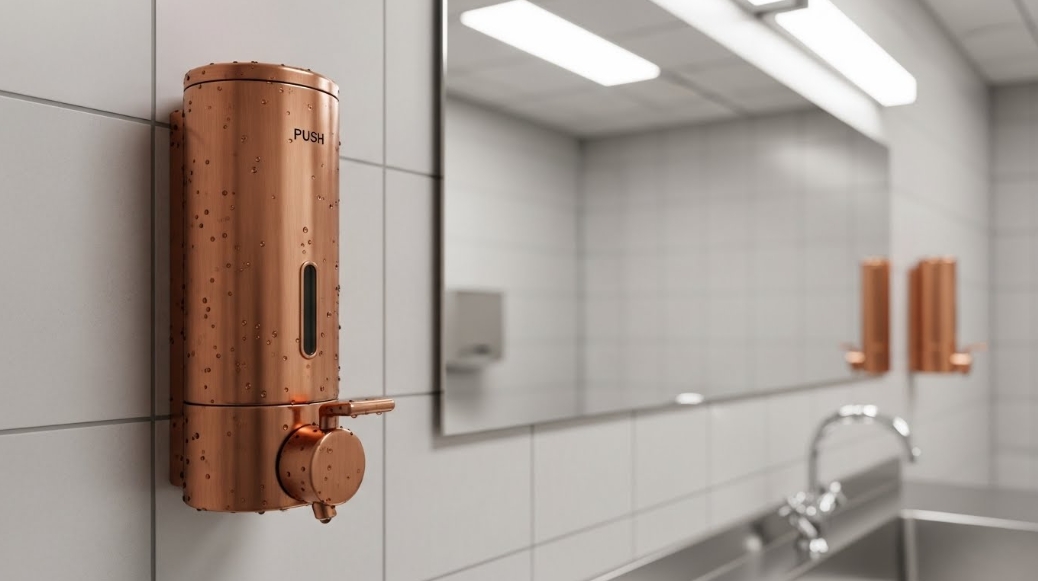
Antimicrobial copper alloys: specific use-case, specific constraints
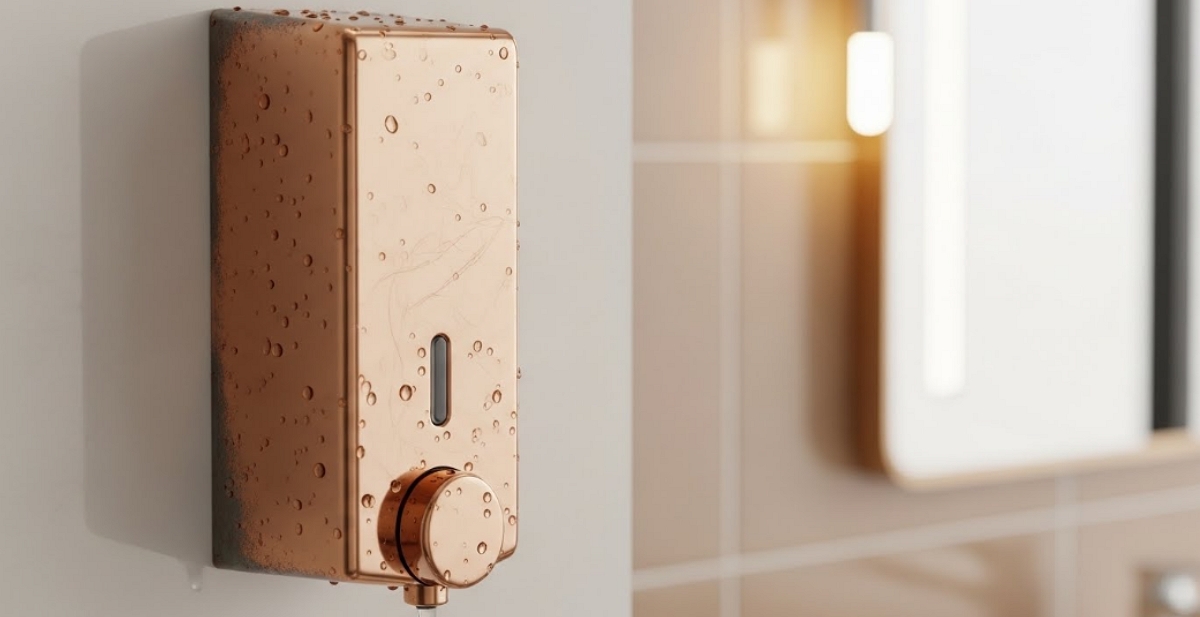
Copper alloys have EPA-registered antimicrobial claims for certain compositions and use conditions. In practice:
- this is most relevant when the touch surface itself is copper alloy,
- coatings can interfere with antimicrobial performance,
- appearance/patina change must be accepted.
Best fit: healthcare strategies where material-driven microbial reduction is part of a broader infection-control plan (not a substitute for cleaning).
Finish technologies and why they’re being specified more explicitly
PVD finishes: “durable metallic” is the spec trend
For design-driven spaces (hospitality, corporate HQ), warm metallics and dark finishes are popular—but owners want them to last.
PVD is frequently cited by manufacturers as a durability pathway because it forms a hard, bonded finish layer created in a vacuum process.
Specifier move: instead of “brushed gold,” many teams now prefer language like:
- “Brushed gold PVD finish (or equivalent durability process),” plus
- “approved cleaners list required in submittal.”
Matte black: popular, but must be matched to cleaning reality
Matte black remains a dominant aesthetic in modern commercial interiors. However, matte finishes can:
- show residue/film from disinfectant wipes more visibly,
- haze if cleaning protocols leave chemistry behind.
Facility-first guidance: matte black works best when housekeeping has a defined wipe-down protocol that controls residue and avoids abrasives (and when replacement parts are readily available).
Brushed/satin metallics: the “safe choice” for corporate portfolios
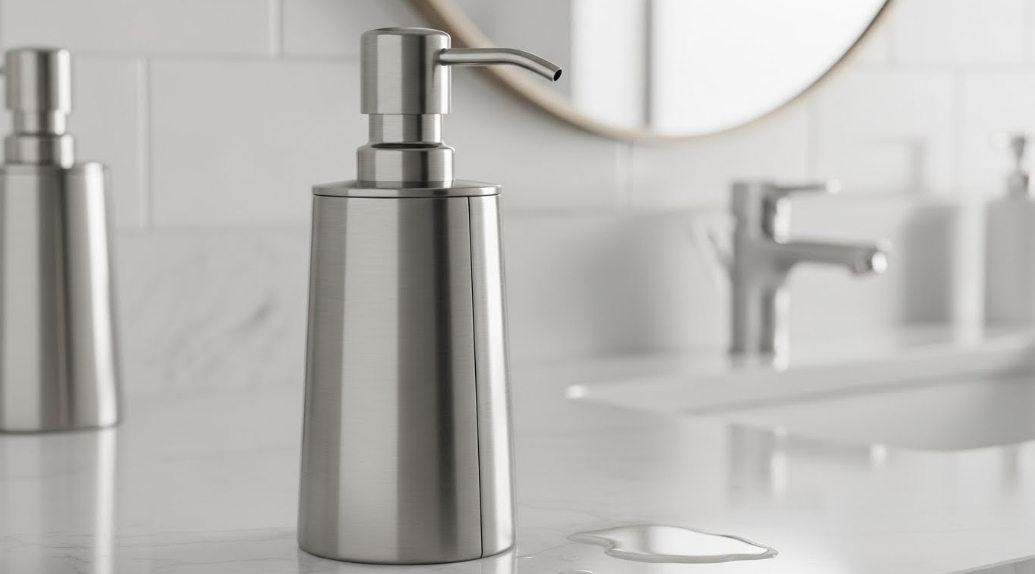
For corporate multi-site standardization, brushed/satin nickel or stainless-like finishes tend to win because they:
- hide fingerprints better than polished chrome,
- read neutral across many interior styles,
- are easier to keep looking consistent over time.
Environment-specific recommendations (corporate vs hospitality vs healthcare)
Corporate workplaces
Primary drivers: consistent appearance, low maintenance, “always looks clean.”
Best bets:
- brushed/satin metallics for fingerprint tolerance,
- standardized finish families across restrooms (reduces stocking complexity),
- specify serviceable pump modules and quick-access reservoirs (O&M labor is the real cost).
Hospitality (hotels, resorts, premium venues)
Primary drivers: design differentiation + guest perception.
Best bets:
- PVD-type finishes for brushed gold / warm metallic looks where durability is demanded,
- coastal properties: consider 316 stainless or coatings engineered for corrosion-prone environments.
Healthcare environments
Primary drivers: frequent disinfection, risk control, and predictable performance.
Best bets:
- finishes with proven compatibility with cleaning procedures (documented),
- avoid designs that trap residue around nozzles and seams,
- align with healthcare environmental cleaning fundamentals.
- consider copper alloys only when the project team understands the constraints and compliance boundaries.
Spec language that prevents the most common finish failures
Add these to submittals/closeout requirements:
Base material disclosed
“304 stainless” vs “316 stainless” is not interchangeable.
Finish process disclosed
plated vs powder-coated vs PVD (or equivalent) should be stated—not just the color name.
Approved cleaners required
include a simple “allowed / prohibited” list for each finish family, aligned to facility protocols.
Closeout includes finish-care sheet
don’t let housekeeping “discover” compatibility the hard way.
Support documents (downloadable)
Download: Finish & Material Selection Checklist (PDF)
Download PDF (add link)Download: Finish Care + Cleaning Compatibility Logbook (PDF)
Download PDF (add link)Verified source links (clean URLs)
Additional technical references (clean URLs)

No responses yet