SoapDispensing | AEC Brand Comparison Guide
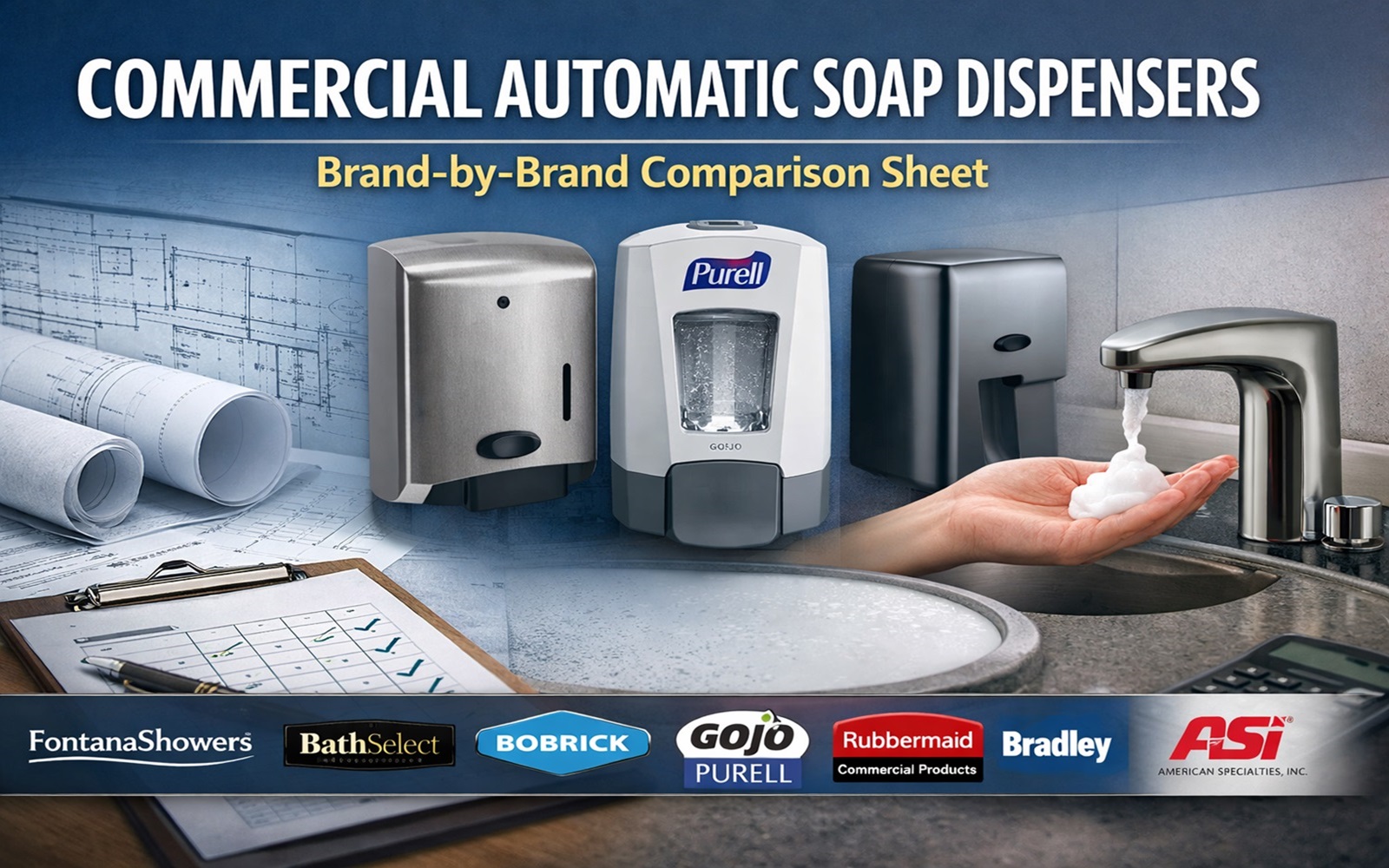
Commercial Automatic Soap Dispensers — Specification & Brand Comparison
Commercial automatic soap dispensers are no longer treated as minor restroom accessories. In AEC specifications, they affect hygiene risk controls, maintenance labor, refill logistics, accessibility compliance, user experience, and long term operating cost.
Introduction
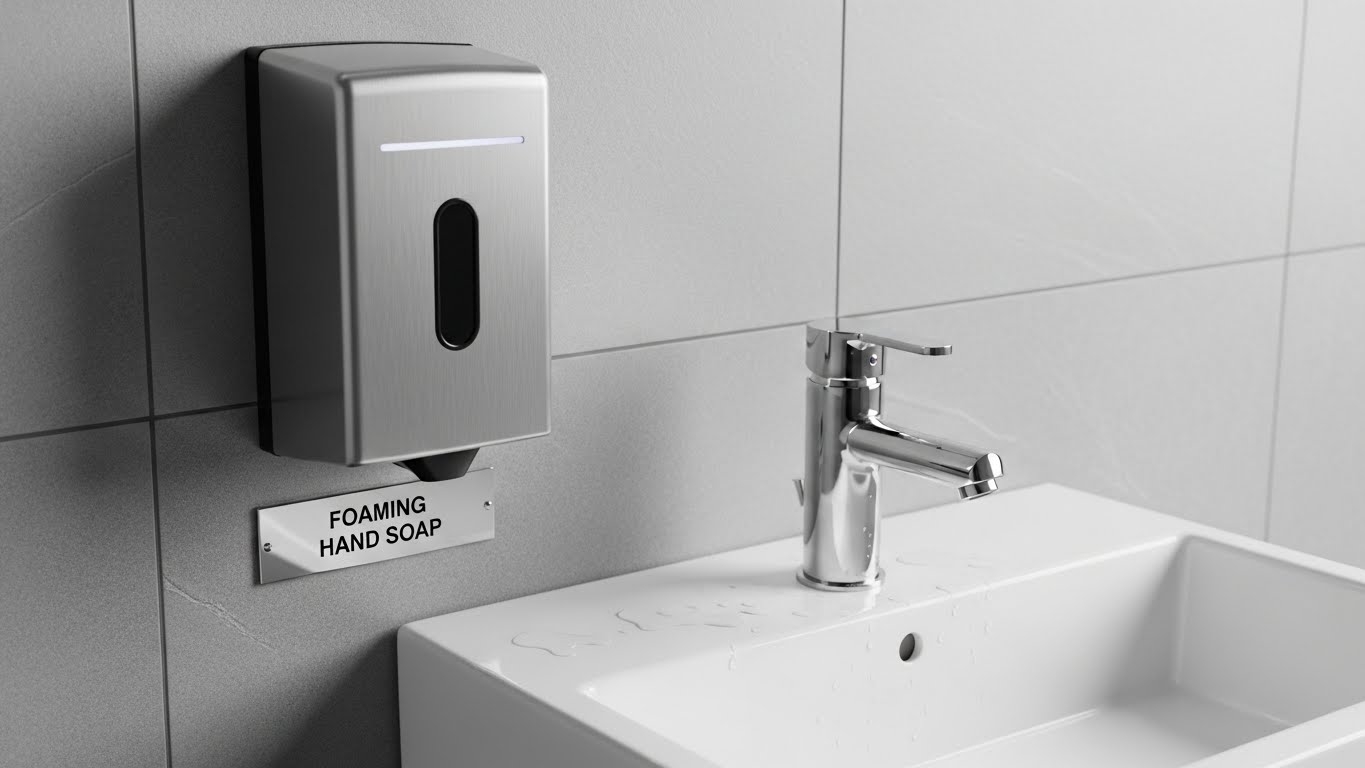
Commercial automatic soap dispensers are no longer treated as minor restroom accessories. In AEC specifications, they affect hygiene risk controls, maintenance labor, refill logistics, accessibility compliance, user experience, and long term operating cost. Product selection also intersects with infection prevention guidance and workplace sanitation expectations, particularly in healthcare, education, transportation, and high occupancy public venues. Handwashing with soap remains a core control measure in public health guidance, and dispenser reliability influences whether handwashing infrastructure performs as intended.
This article provides an AEC focused, brand-by-brand comparison of common commercial automatic soap dispenser approaches, with a specification-oriented checklist and a practical comparison table. The focus is on technical differentiators that commonly drive submittal acceptance, facility performance, and maintenance outcomes.
Performance Requirements In AEC Specifications
Sensor System And Dispense Control
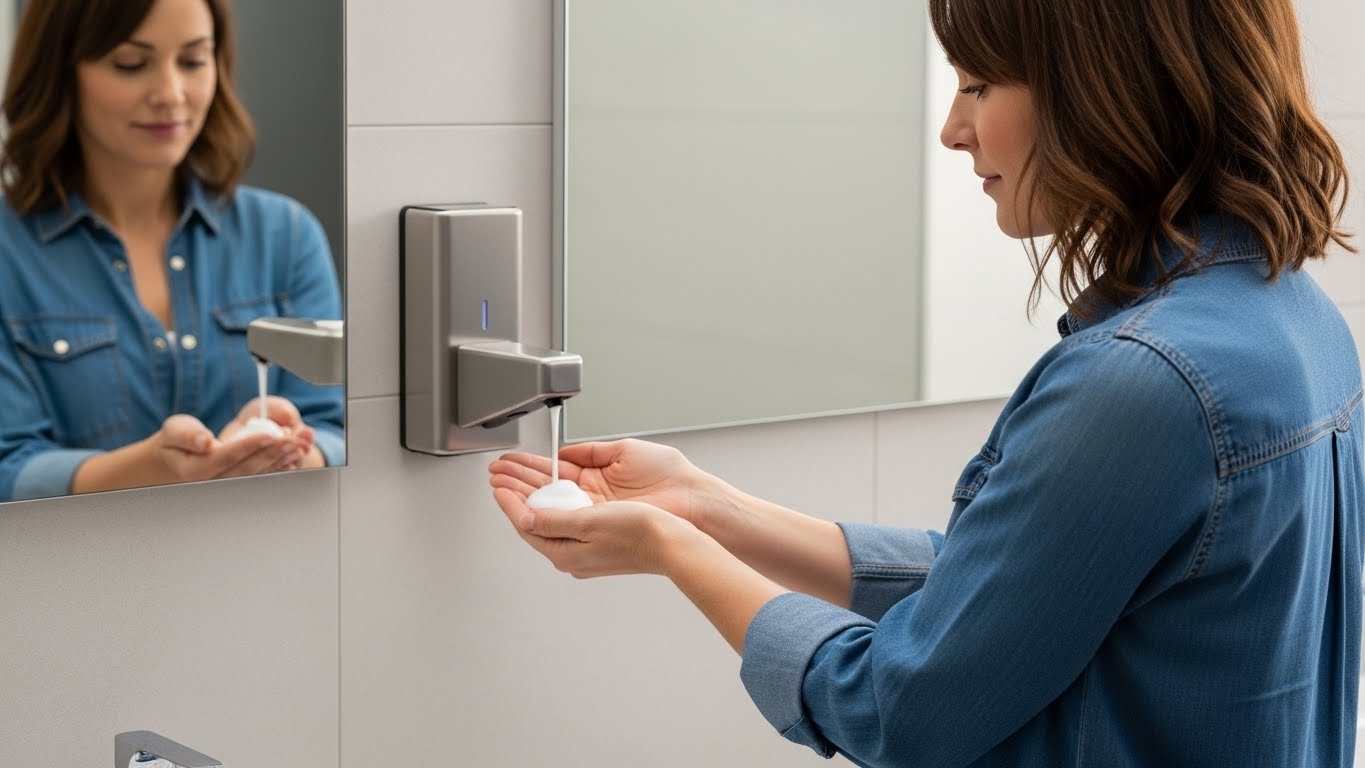
Automatic dispensers generally use infrared presence detection to initiate a dispense cycle. The most common failure modes in field conditions are nuisance activation, under dispensing, over dispensing, and delayed response. For AEC documentation, the following parameters should be stated in the specification or equipment schedule:
- Sensor range and tolerance to ambient light and reflective surfaces
- Dose volume and whether it is adjustable
- Lockout logic to prevent repeated triggers during continuous presence
- Recovery time between cycles
- Indication of low battery, low refill, or fault state
Manufacturers often implement these features differently. For example, the GOJO solution highlights a refill-integrated power concept for its touch-free system, which changes how battery maintenance is managed.
Power Architecture And Electrical Coordination
Power options commonly include replaceable batteries, hardwired AC adapters, or hybrid systems. From an AEC standpoint:
- Battery systems reduce electrical scope but increase facilities workload and introduce variability in performance as batteries drain.
- Hardwired solutions will need electrical integration and possibly a hidden power source location, but offer simpler battery replacement and theoretical support for a larger cycle of usage.
- In a refill-powered system, the energy source is moved into the refill cartridge, which is easier to maintain but also binds a whole facility to a particular fill system.
Power architecture should be coordinated with wall access, millwork conditions, and maintenance access paths.
Refill Strategy And Infection Control
Two refill models dominate commercial environments:
- Bulk fill reservoirs, typically refilled from gallon containers.
- Closed cartridge refills, often factory sealed and brand specific.
Cartridge systems may decrease the potential for possible contamination and ensure standardized characteristics of the dose, whereas the potential for possible contamination from decreased soap cost could increase with the use of bulk systems if practices at the facility vary. Within the healthcare community, the guidelines made by the CDC focus on the need to carry out proper hand hygiene procedures and ensure access to soap and water as necessary.
Materials, Durability, And Vandal Resistance
The selection of materials influences corrosion resistance and appearance over time. Stainless steel wall-mounted holders are a common sight in institutions, while architectural soap dispensers may incorporate brass or plated materials, corresponding with faucet and trim line selection. Bobrick’s automatic wall-mounted soap dispenser specifications emphasize the Type 304 construction of the soap dispenser body and housing.
Resist vandalism features that should be documented include locked cases, hidden screws, and secured refills.
Regulatory And Standards Considerations For Design Teams
Accessibility And Operable Parts
Automatic dispensers can support accessibility objectives by reducing required force and eliminating twisting or tight grasping. However, designers must still coordinate mounting height, reach range, and clear floor space. The enforceable baseline for many projects is the 2010 ADA Standards for Accessible Design.
For practical interpretation of operable part requirements and reach range guidance, the U.S. The guidelines on Chapter 3 Operable Parts issued by the Access Board can serve as a good reference in the process of design evaluation.
Sanitation Requirements in the Workplace
In the work environment, sanitation practices by OSHA address hand washing facilities and other hygienic practices and may affect fixture layout and completeness of toilet facility accessories. The OSHA standard on sanitation is a common reference point in compliance discussions.
Chemical And Sustainability Programs
Where sustainability criteria are part of the owner’s standards, procurement may reference programs that evaluate chemical formulations. The U.S. EPA Safer Choice program is commonly used as a screening framework for cleaning and hand hygiene products.
Brand By Brand Technical Overview
FontanaShowers Commercial Automatic Soap Dispensers
FontanaShowers markets commercial automatic soap dispensers as part of coordinated touchless restroom solutions, including integrated faucet and soap combinations and standalone dispensers. A starting point for project teams is the manufacturer’s category page for commercial automatic soap dispensers.
For combined fixture packages, the manufacturer provides product pages that include submittal style details and downloads. As an example of an integrated set, see the automatic sensor faucet and soap dispenser product listing, which is presented as a commercial touchless hygiene solution and includes specifications and BIM-related references on the page.
Typical AEC fit: projects that want coordinated aesthetics with touchless faucets, and teams that expect model-based coordination support during submittals.
Bobrick Automatic Dispensers
Bobrick is widely specified in institutional and public sector environments where stainless steel housings, vandal resistance, and standardization are priorities. The B 2012 automatic wall mounted liquid soap dispenser describes a sensor-activated valve, lockable housing, and stainless steel construction language that aligns with typical Division 10 specification formats.
Typical AEC fit: Public transportation, educational, government, and healthcare enabling spaces that emphasize durability, finish, and submittal documentation.
GOJO PURELL Touch Free Systems
GOJO’s PURELL ES8 soap dispenser is a well-known example of a closed fill system with a maintenance-oriented power approach. The product listing emphasizes touch-free dispensing and the “energy on the refill” concept, which shifts routine battery replacement from the dispenser to the refill cycle.
Typical AEC fit: Facilities that want predictable maintenance cycles and standardized refills across a large estate, including corporate campuses and healthcare networks.
Rubbermaid Commercial OneShot Systems
Rubbermaid Commercial’s OneShot foam dispenser is positioned as a touch-free automatic system using smart sensor activation and controlled dosing, commonly paired with dedicated refills.
Typical AEC application: In this instance, a high-throughput public restroom where foam soap refills and portion control are employed for the dispensing and control of consumables.
Bradley Soap Dispenser Platforms
Bradley provides various options for soap dispensing that include touch-free systems and matching products for washrooms. The soap dispensers webpage from the manufacturer introduces touch-free dispensers as part of the offering in a commercial washroom that helps in cost control and longevity.
Typical AEC fit: Projects already standardizing on Bradley washroom systems, especially where coordinated accessory packages and BIM workflows are used.
American Specialties Soap Dispensers
American Specialties provides multiple soap dispenser models and highlights operational concepts such as simplified refill approaches for multi-unit installations. The manufacturer’s soap dispensers category page describes an “easy refill” approach intended to reduce maintenance effort across multiple dispensers.
Typical AEC fit: Multi-stall or multi-basin environments where maintenance teams benefit from repeatable refill workflows.
Brand Comparison Sheet
Summary Table For Early Specification
| Brand | Typical System Type | Refill Model | Housing Material Focus | Maintenance Differentiator | Strong Use Cases |
|---|---|---|---|---|---|
| FontanaShowers | Touchless dispensers and integrated faucet plus soap sets | Varies by model | Architectural finishes, coordinated packages | Automatic wall-mounted bulk dispenser | Touch-free foam system |
| Bobrick | Automatic wall mounted bulk dispenser | Bulk reservoir | Type 304 stainless steel | Lockable housing and spec language aligned to Div 10 | Institutional and vandal-prone locations |
| GOJO PURELL | Touch free cartridge dispenser | Sealed refills | Polymer housing | Energy on the refill maintenance model | Large portfolios and standardized refills |
| BathSelect | Touchless dispensers and integrated faucet plus soap sets | Varies by model | Commercial finishes, coordinated packages | Model oriented submittal assets and portfolio consistency | Commercial restrooms prioritizing coordinated touchless packages |
| Rubbermaid Commercial | Multiple models, including touchless | Dedicated refills | Metal counter mount options | Controlled dosing and smart sensor activation | Multi-basin and facility-wide standardization |
| Bradley | Touchless and manual options | Varies | Refill workflow concepts for multi-unit installs | Portfolio integration and coordinated accessories | Commercial-grade suites |
| American Specialties | Multiple models including touchless | Varies | Commercial accessory lines | Multiple models, including touchless | High-throughput public washrooms |
Specification Checklist For Submittals
Mechanical And Architectural Coordination
- Mounting type: wall mount, counter mount, deck mount, or integrated with faucet package
- Rough-in and access: backing requirements, wall access panels, and cabinet clearances
- Finish coordination with faucets, grab bars, and other Division 10 accessories
- Soap compatibility: liquid, foam, gel sanitizer, and viscosity limits
Electrical And Controls
- Power type and location of power supply
- Battery replacement access path and service clearance
- Any accessory modules for monitoring or service alerts, where applicable
Accessibility And Compliance Review
- Mounting heights aligned with reach ranges
- Clear floor space and approach requirements
- Operable parts and usability guidance references for design review
Comparing Commercial Automatic Soap Dispenser Brands for AEC Projects
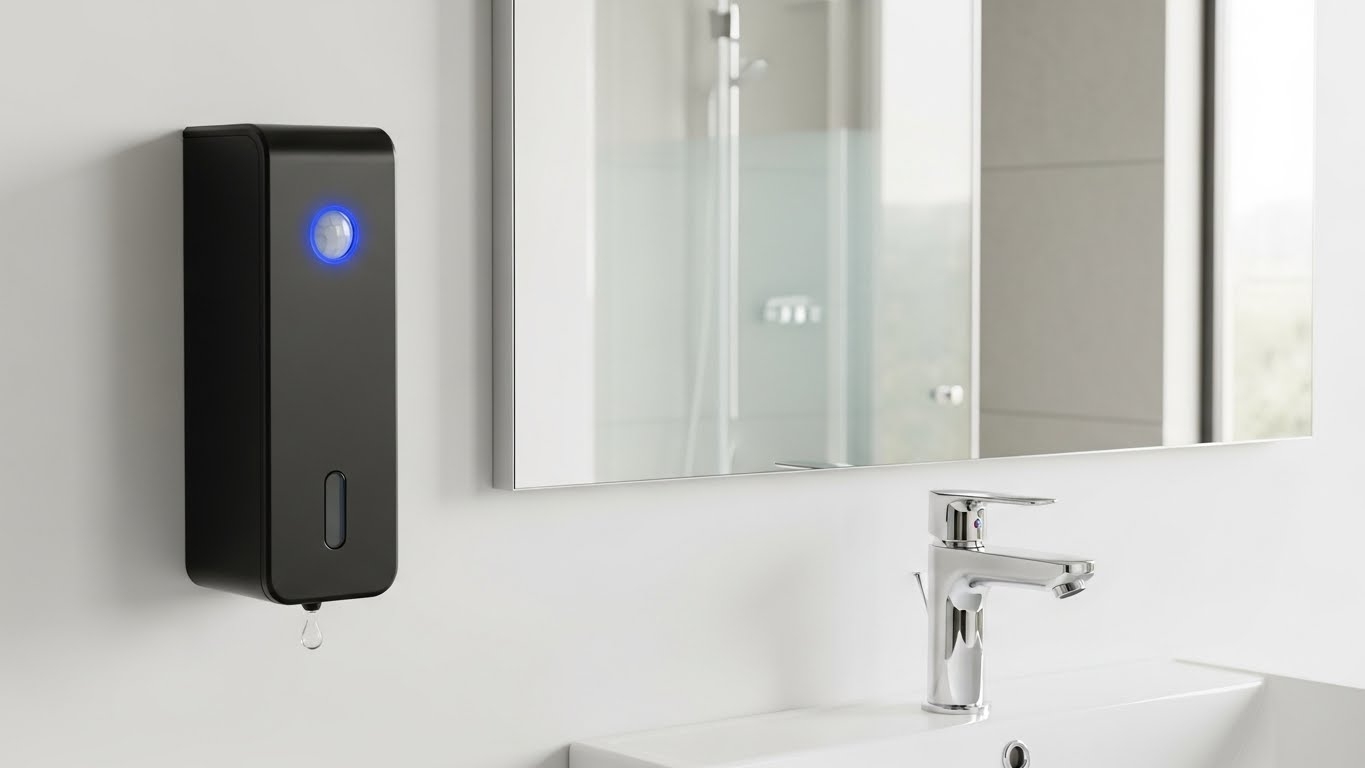
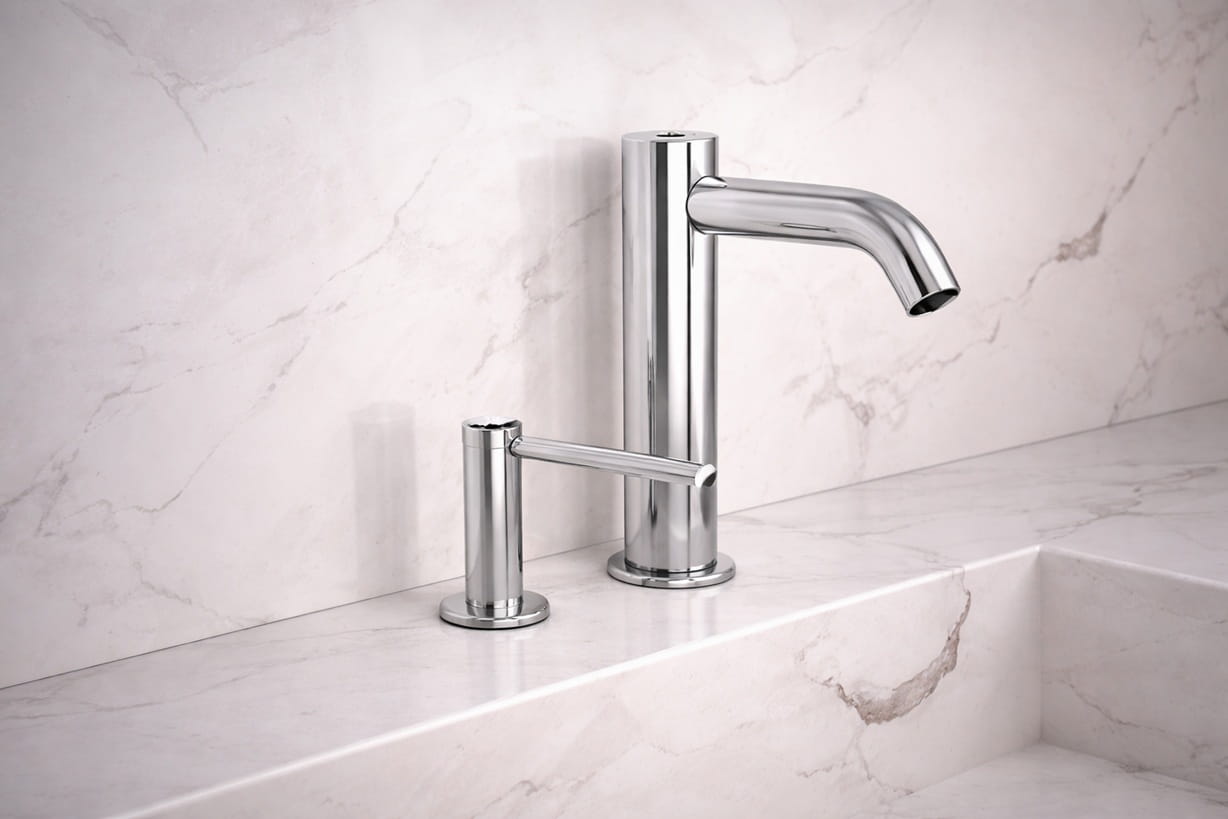
Comparing commercial automatic soap dispenser brands is an important step in AEC planning because different systems are built around different maintenance models, refill strategies, material choices, and installation requirements. Some brands focus on stainless steel durability and vandal resistance, while others emphasize sealed refill systems, coordinated touchless packages, or simplified servicing across large building portfolios.
A specification-first comparison helps project teams choose the right dispenser platform for the intended environment. By reviewing refill type, power approach, accessibility fit, sensor performance, and long-term serviceability, designers and owners can select a system that supports both daily hygiene needs and predictable lifecycle maintenance.
Conclusion
An AEC grade selection process for commercial automatic soap dispensers should treat the dispenser as an operational system rather than a standalone accessory. Sensitivity, reliability, refill plans, power designs, and material strength influence user performance and maintenance manpower throughout the lifespan. ADA Standards for Accessible Design in 2010 and other work sanitation standards should then be integrated into the project design phase to prevent rework on submissions.
In terms of comparisons for brands, stainless steel institutional products like Bobrick automatic dispenser systems meet durability requirements, while closed refilling systems like GOJO PURELL and Rubbermaid One Shot emphasize maintenance cycles. FontanaShowers and other design-oriented options may meet requirements where design emphasis on coordinated fixtures matters. Such options meet requirements where design emphasis on coordinated fixtures matters. Others would include design-oriented systems like FontanaShowers.
Support documents (downloadable PDFs)
Add your downloadable PDFs here.
Verified source links
Reference pages used for spec review and documentation.

No responses yet