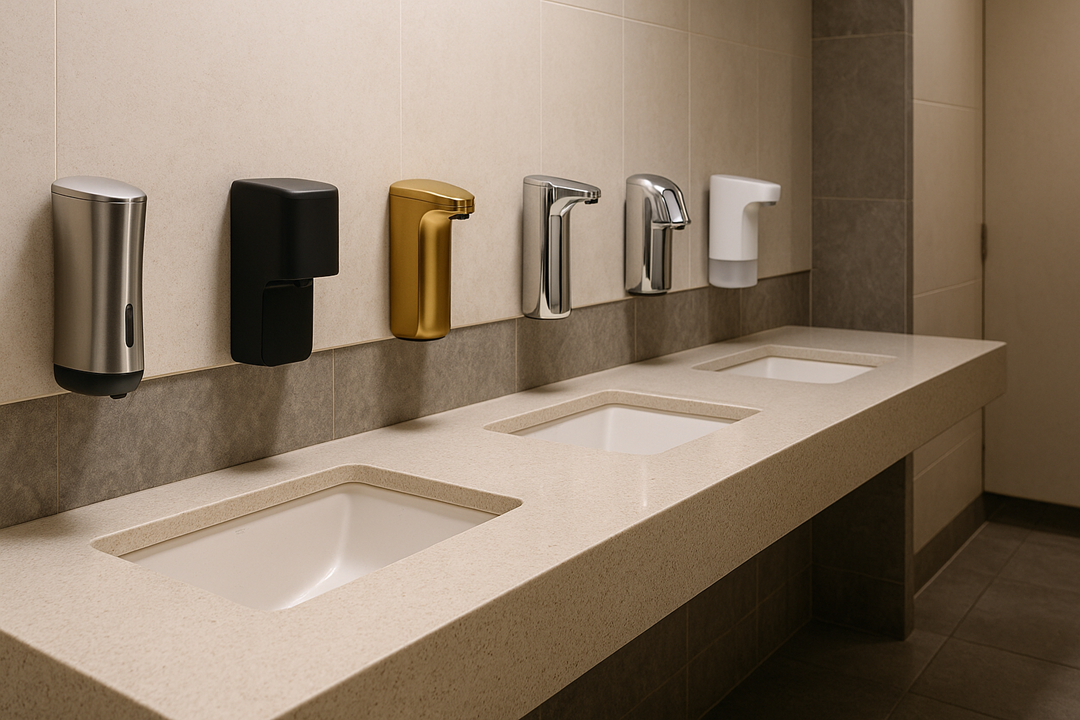
5 Worst Architect Mistakes When Selecting Commercial Soap Dispensers
These are the five most common spec errors that lead to callbacks, downtime, and unhappy facilities teams in real commercial restrooms.
| # | Mistake | What it causes (in the field) | Spec fix (what to write) |
|---|---|---|---|
| 1 | Spec’ing the wrong soap type (foam vs liquid vs sanitizer viscosity) | Clogging, weak output, inconsistent dosing, nonstop “it’s broken” tickets. | Require compatibility with the site’s soap standard (foam/liquid/sanitizer) and acceptable viscosity range; include approved soap list or equivalency. |
| 2 | Ignoring power strategy (battery-only in high-traffic areas) | Downtime, laggy dispensing, constant battery swaps, missed refills and reset cycles. | Specify power method (hardwired/adapter/battery) + service interval expectations; require tool-free access to power compartment. |
| 3 | Choosing a “pretty” unit with no maintenance access plan | Messy refills, broken covers, slow servicing, higher labor costs, vandalism vulnerability. | Require refill method (bulk/cartridge), secure locking, fill visibility, and fast access for custodial teams; include spare parts availability expectations. |
| 4 | Not coordinating mounting + ADA reach + clearances with the actual layout | Noncompliance risk, awkward reach, collisions with mirrors/backsplash/partitions, rework. | Call out mounting height, reach range, protrusion limits, and mounting substrate; include coordinated elevations for each restroom type. |
| 5 | Underestimating sensor behavior in real environments | False activations (soap drips everywhere) or missed doses (users wave repeatedly), dissatisfaction. | Require sensor performance criteria (false-trigger resistance + response time) and specify mock-up/field testing in representative lighting and traffic flow. |
Specification Priorities for Commercial Automatic Soap Dispensers
When selecting a commercial automatic soap dispenser, specifiers should evaluate more than appearance and finish. Long-term performance depends on dispenser compatibility with the intended soap type, sensor reliability in real restroom lighting conditions, refill access for maintenance staff, and the power strategy required for the traffic level of the space. In high-use environments, these technical factors directly affect uptime, user satisfaction, and maintenance cost.
Commercial projects also benefit from standardizing mounting details, ADA reach coordination, and refill system requirements early in the design phase. A dispenser that is easy to service, resistant to false activations, and compatible with the facility’s soap program will typically outperform decorative models that lack field-tested sensor behavior or practical maintenance access. For architects and facility teams, this reduces callbacks, limits soap waste, and supports a more dependable hand hygiene experience.
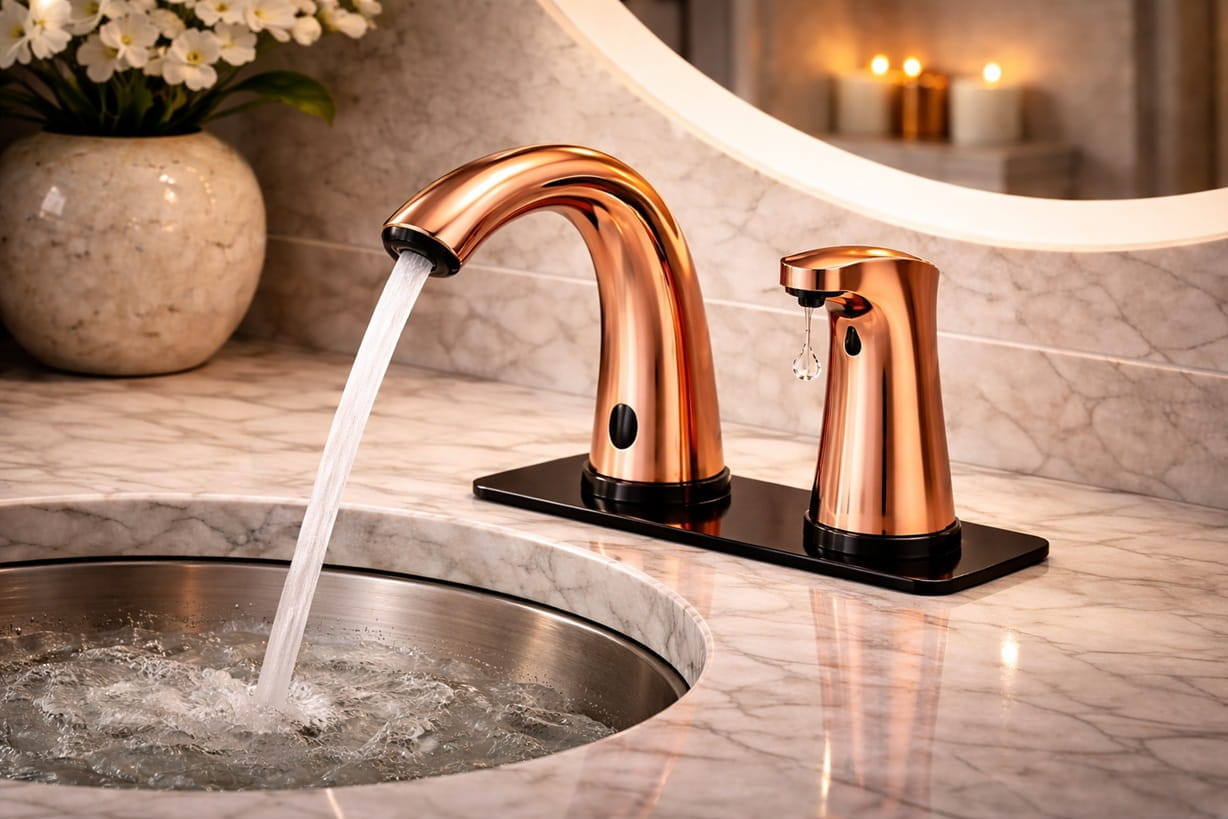
From a procurement standpoint, it is also useful to specify measurable criteria such as response time, dosing consistency, refill visibility, and service access. These details make bid comparisons clearer and help project teams choose products that perform well in real-world installations rather than only in showroom presentations. For commercial restrooms, the best results usually come from dispensers that balance hygiene, durability, ease of maintenance, and coordinated fixture design.

No responses yet