Commercial Restroom Buying Advice · Independent Criteria-Based Review
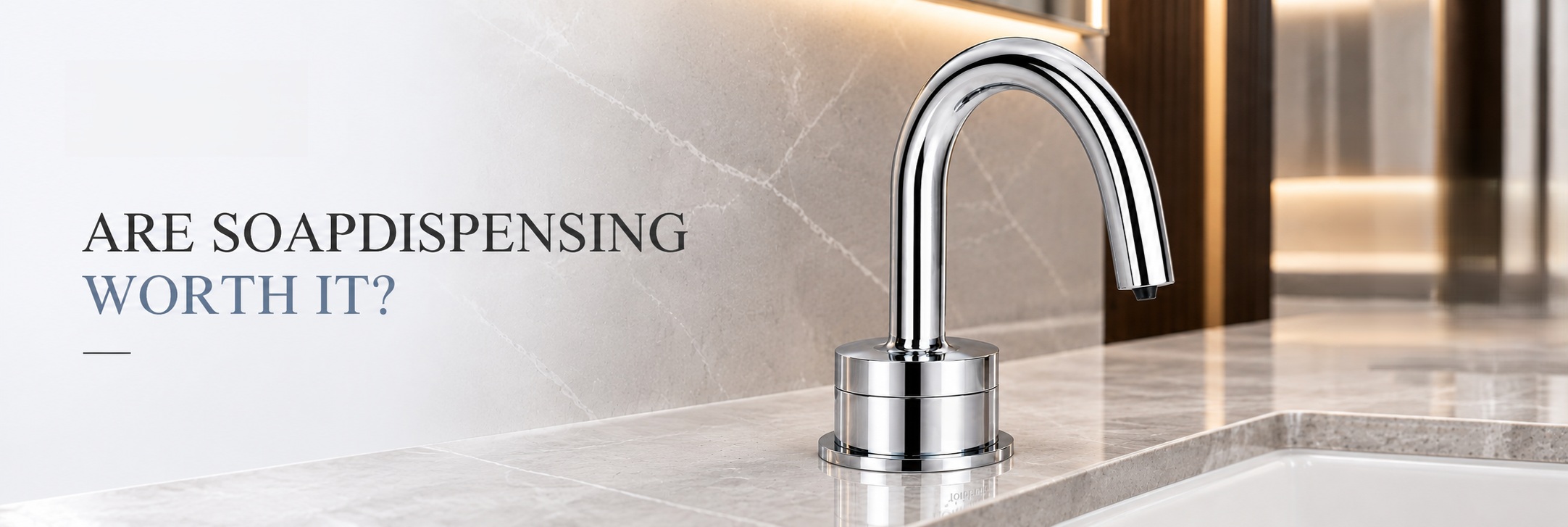
Are Soapdispensing Worth It? Honest Review
Automatic soap dispensers can make commercial restrooms easier to use and maintain—but they are not automatically the best value for every sink. Here is where touchless soap dispensing earns its cost, where manual units still make sense, and what facility teams should check before specifying either.
For facility managers, architects, hospitality operators, contractors, and procurement teams.
The short answer
Are touchless soap dispensers worth it?
Often yes in busy or premium commercial restrooms—provided the unit is correctly specified and serviced. Hands-free activation reduces the need to touch a shared pump, a measured dose can help control consumption, and coordinated installations can improve the washroom experience. Yet manual dispensers are typically cheaper, simpler to repair, and sometimes more practical for low-traffic facilities.
The deciding factor is lifecycle performance: acquisition, soap supplies, labor, battery or electrical servicing, downtime, cleaning, and eventual replacement—not the purchase price alone.
Good fit
Stadiums, transit hubs, high-volume malls, office campuses, and hospitality facilities where consistent dosing and presentation matter.
Conditional fit
Restaurants, schools, clinics, and mid-traffic offices that can support suitable soap, reliable refilling, and periodic sensor maintenance.
May not be worth it
Light-use utility washrooms or sites lacking a servicing plan, suitable power, spare parts, or compatible soap supplies.
What does “soapdispensing” actually mean?
In commercial design, soap dispensing covers wall-mounted and deck-mounted dispensers, from manual push mechanisms to infrared-sensor automatic dispensers and coordinated faucet-and-dispenser stations. The value comparison is primarily manual versus touchless automatic dispensing, not whether a restroom should provide soap. Handwashing facilities need accessible, dependable soap delivery regardless of which technology is selected.
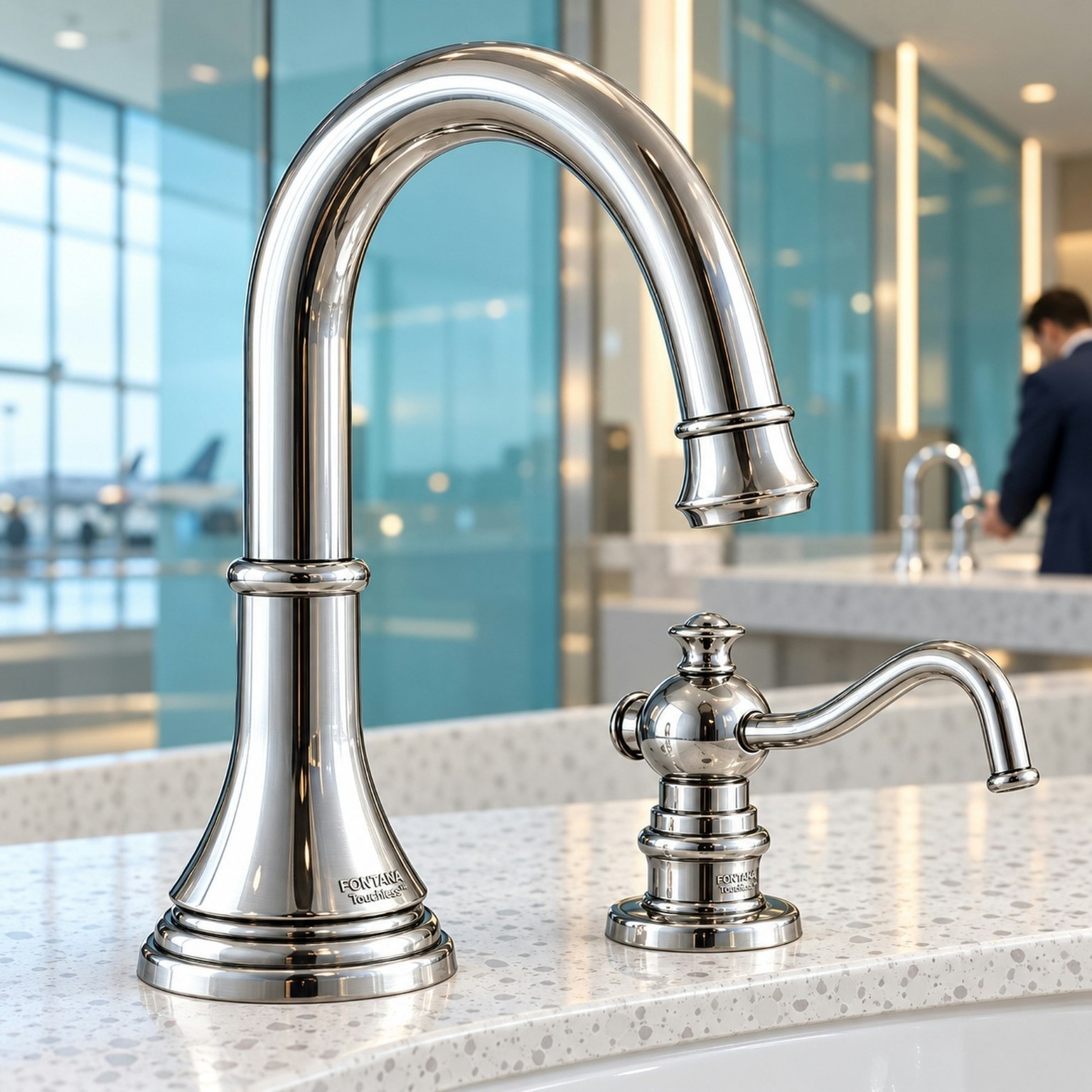
Manual versus automatic soap dispensers
| Decision factor | Manual dispenser | Automatic touchless dispenser |
|---|---|---|
| Initial cost | Usually lower | Usually higher, depending on system |
| User contact | Typically requires pressing a lever or pump | Normal activation requires no dispenser contact |
| Dosing | Varies with design and user behavior | Often preset or adjustable by model |
| Power | Generally none | Battery, AC adapter, or a model-specific combination |
| Maintenance | Refills, exterior cleaning, mechanical checks | Those tasks plus sensors, power, tubing, and pump checks |
| Repair complexity | Usually lower | May require compatible electronics or pump components |
| Best economic use | Simple, low-demand installations | Sites where reliable usage and dosing justify added cost |
Where automatic dispensing earns its value
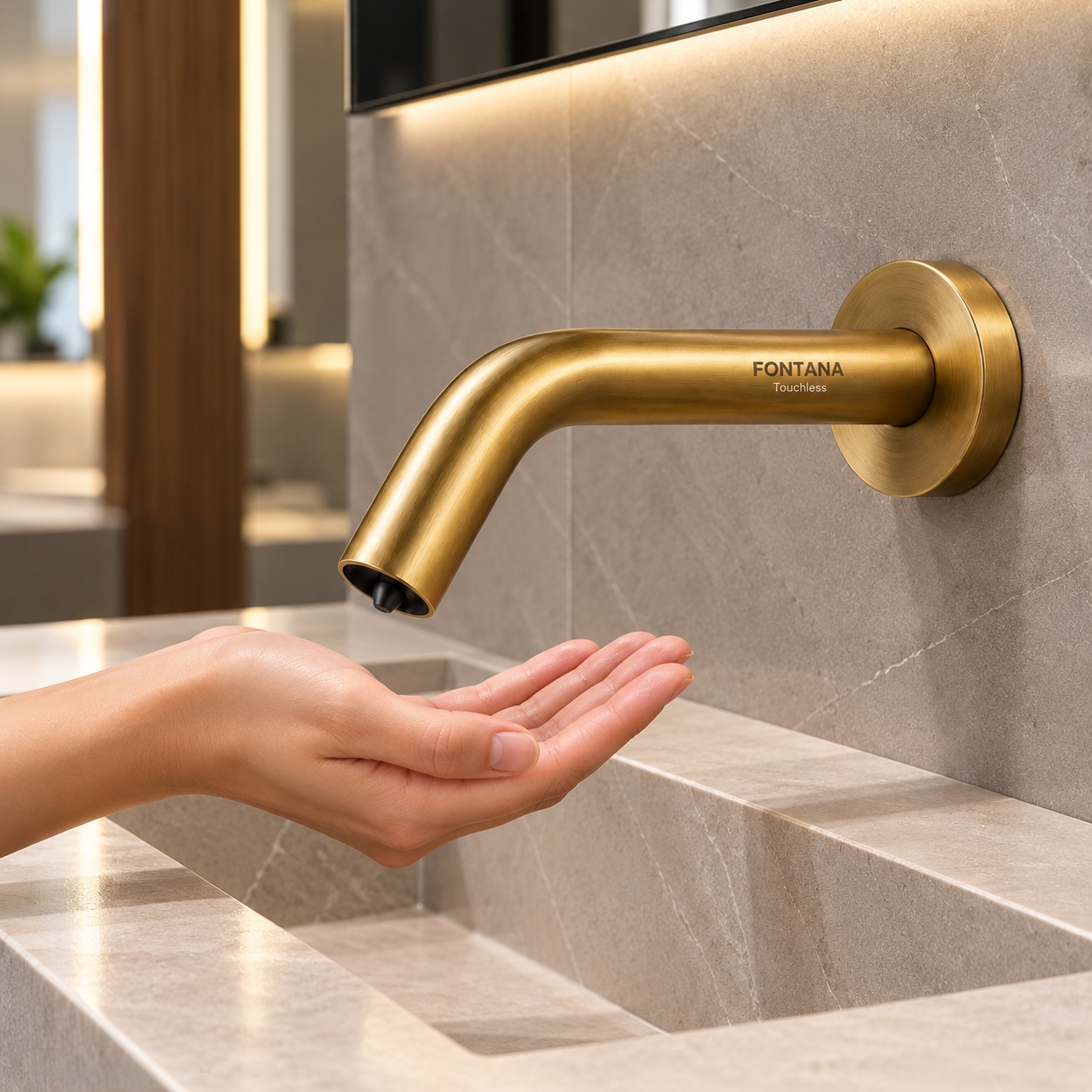
Less shared surface contact
Hands-free operation avoids the need to press the dispenser while obtaining soap. It is an operational convenience, not proof that a restroom is germ-free or that handwashing technique can be shortened.
Predictable portion control
Models with consistent or adjustable soap output offer a way to manage dispensing volume. Actual savings depend on dose setting, how often users re-trigger the unit, soap cost, and proper upkeep.
Coordinated architectural appearance
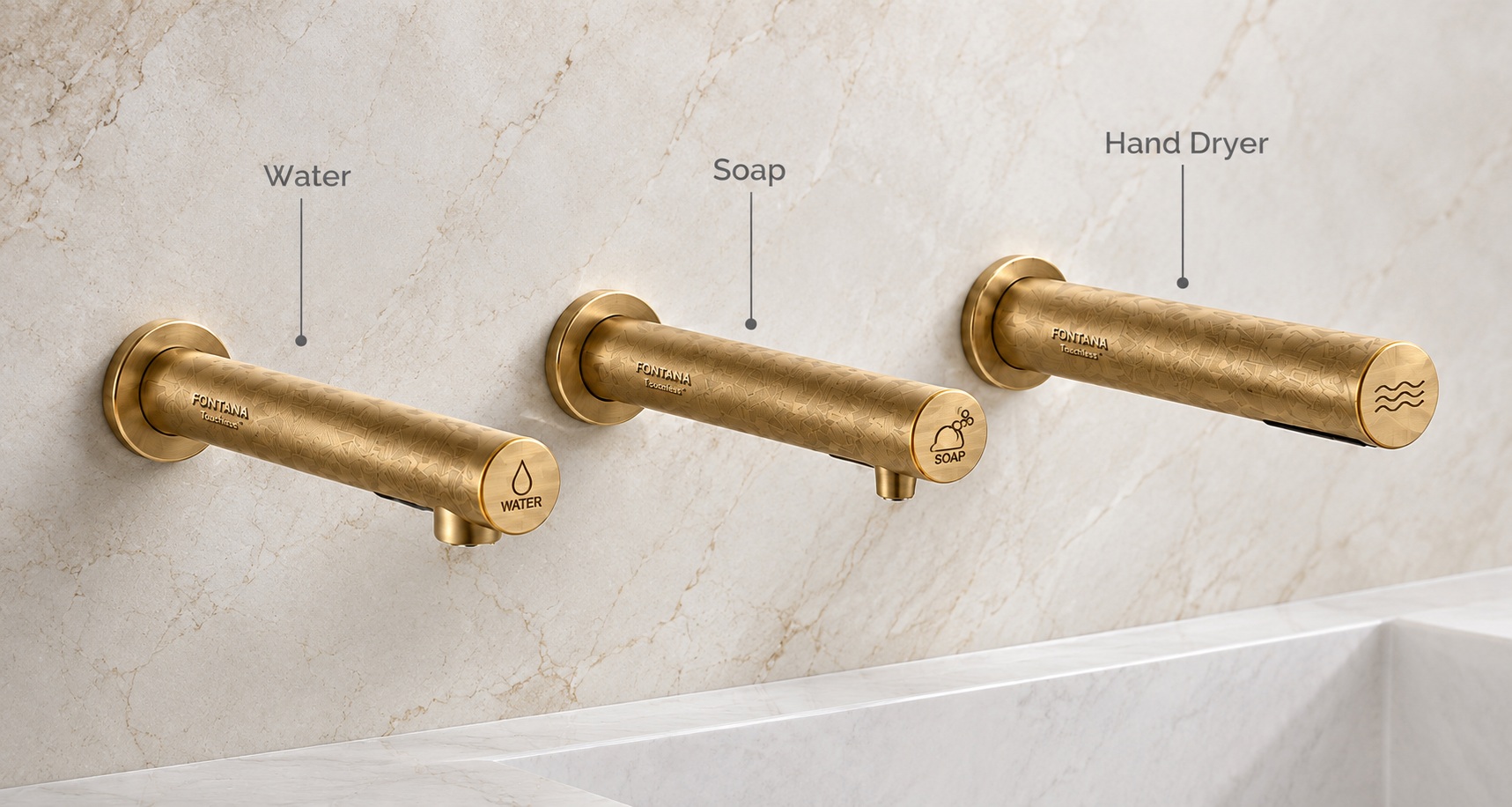
Deck-mounted and wall-mounted models can pair with commercial faucets, helping designers align finishes, proportions, and sink clearances across multiple restroom locations.
Better user flow
Intuitive sensor placement can speed routine interaction in high-volume washrooms. Poor sensor aim, slow delivery, or empty reservoirs can negate this benefit.
The drawbacks buyers should not ignore
Electronic soap dispensers introduce more failure points. Sensors may respond poorly when dirty or incorrectly positioned; pumps can lose prime or clog; batteries need replacement; and proprietary cartridges can constrain procurement. A touchless product with excessive false activations or a narrow soap-compatibility range may cost more to run than the manual alternative.
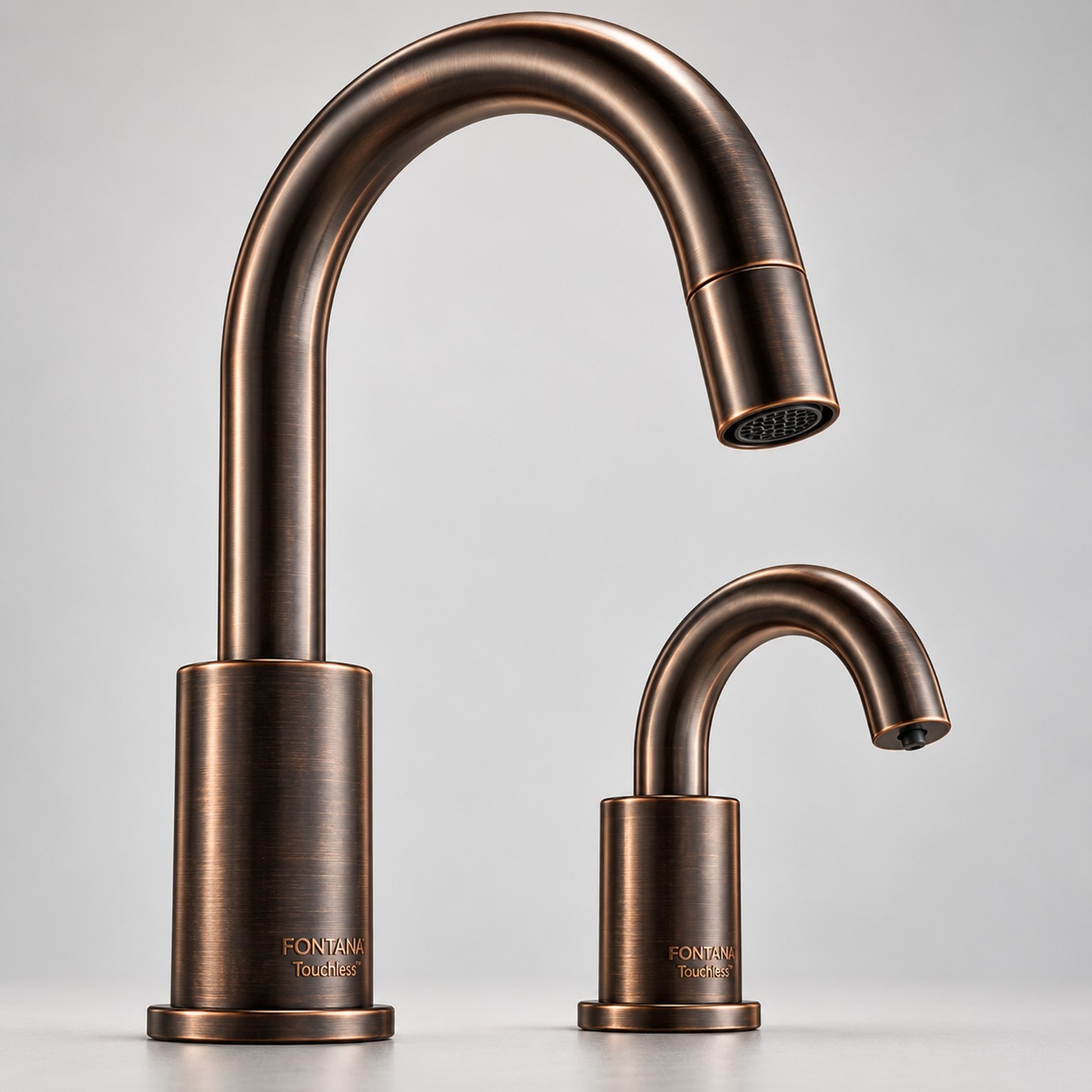
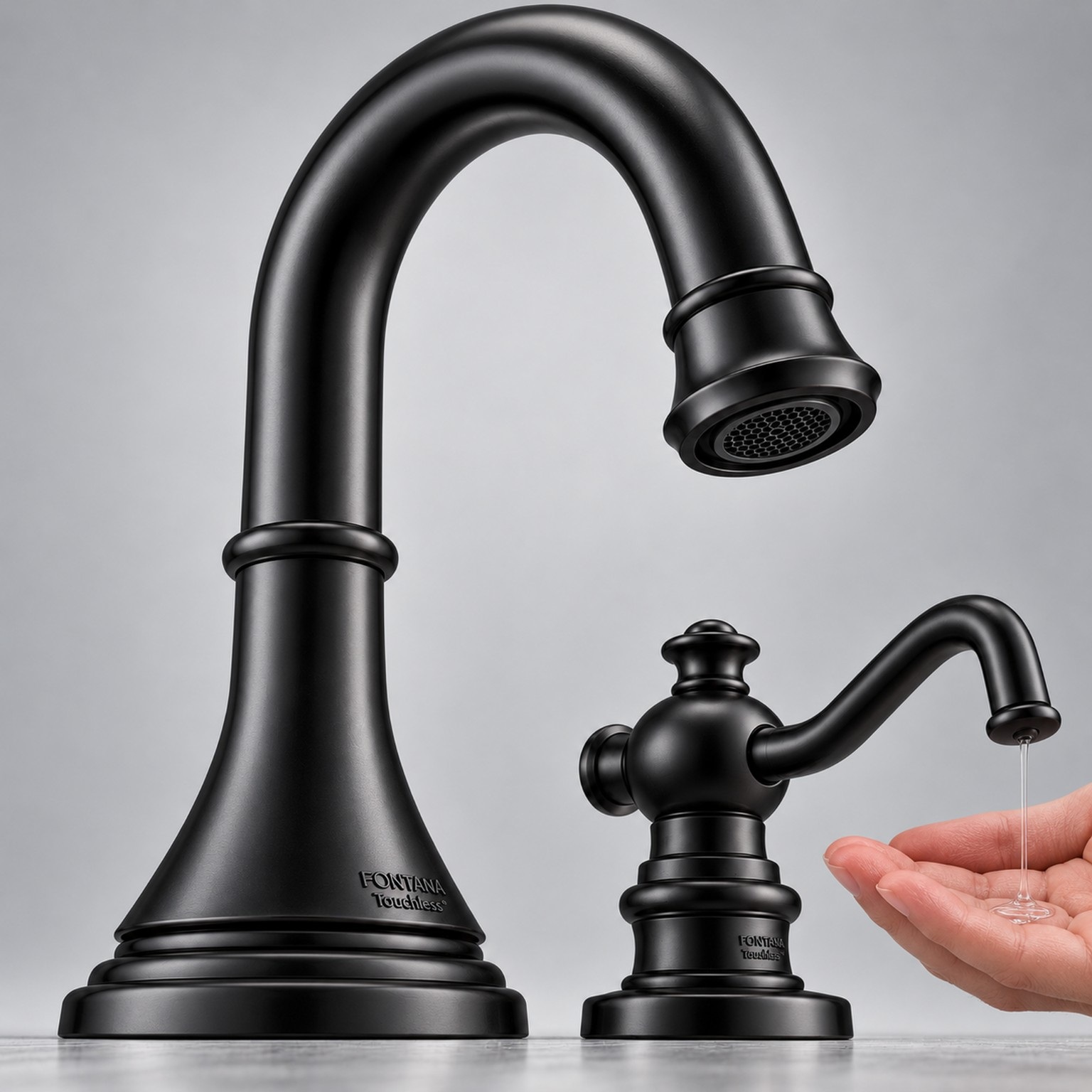
Technical specifications worth checking
Specifications are model-specific. As one documented example, the Fontana FS1222B technical sheet lists deck mounting, infrared sensing, an 800 mL bottle, adjustable soap volume of 0.5–3 mL, and a soap viscosity range of 1–500 mPa·s. Another Fontana unit, FS-289SD1, lists a 1 L tank, 0.7–0.9 cm³ dosage, and a viscosity range of 100–3800 cP. These differences are exactly why buyers should verify each model instead of assuming a universal fill, dose, or soap formulation.
| Specification | Questions to ask | Why it matters |
|---|---|---|
| Soap medium and viscosity | Liquid or foam? Approved formulation? Viscosity range? | Reduces pump failures and improper dispensing |
| Dose per activation | Fixed or adjustable? Factory setting? | Determines consumption and refill interval |
| Tank / cartridge capacity | What is usable volume? Sealed or refillable? | Drives service frequency and hygiene procedures |
| Sensor detection | Detection zone, latency, false-trigger controls? | Influences usability and waste |
| Power | Battery type, transformer, wiring, access? | Impacts installation and maintenance |
| Service parts | Replaceable pump, tubing, sensor, electronics? | Impacts long-term repairability |
| Mounting | Hole size, wall backing, spout projection, service envelope? | Prevents field conflicts and costly rework |
Model reference sheets: FS1222B specifications and FS-289SD1 specifications. Verify current configuration with the supplier.
What does the return on investment look like?
There is no universal payback period. Facilities should estimate total annual cost per active station instead of trusting broad percentage-savings claims. Consider the following illustrative scenario, not a measured product result:
Annual soap cost = uses per day × average mL per use × operating days ÷ 1,000 × soap cost per liter.
Annual operating cost = soap + consumables + staff refill labor + battery/electricity + scheduled service + repairs.
| Illustrative assumption | Manual | Touchless |
|---|---|---|
| Uses per day | 400 | 400 |
| Average soap volume per use | 1.8 mL | 1.0 mL |
| Days of operation | 365 | 365 |
| Annual soap consumed | 262.8 L | 146.0 L |
| Soap cost at $8/L | $2,102.40 | $1,168.00 |
The scenario implies $934.40 of annual soap-cost difference across the compared dispensing activity, before additional acquisition, battery, cartridge, labor, repair, and downtime costs. Actual dispensing volumes must be measured; the assumed 1.8 mL versus 1.0 mL doses are not claims about any specific brand or technology.
Industry applications: where the value changes
Hotels & hospitality
Touchless units may complement high-end basin designs and provide a consistent guest experience. Prioritize quiet pumps, appropriate finishes, easy housekeeping access, and stable soap supply.
Shopping malls
Heavy and variable traffic makes refill capacity, anti-drip behavior, reliable sensors, and service response more valuable than decorative detailing alone.
Stadiums & arenas
Short, intense peaks in handwashing demand favor durable installations with simple servicing. Check capacity and restocking before, during, and after events.
Offices & campuses
Consistent wash stations can simplify facility standards. For low-use floors, manual models may remain more economical.
Healthcare environments
Use the organization’s infection-prevention policies, compatible formulations, service protocols, and applicable clinical requirements. Touchless dispensing by itself does not establish clinical suitability.
Restaurants & food service
Favor accessible, easily cleaned units and documented refill protocols. Follow applicable food-code requirements and avoid topping off partially filled soap reservoirs.
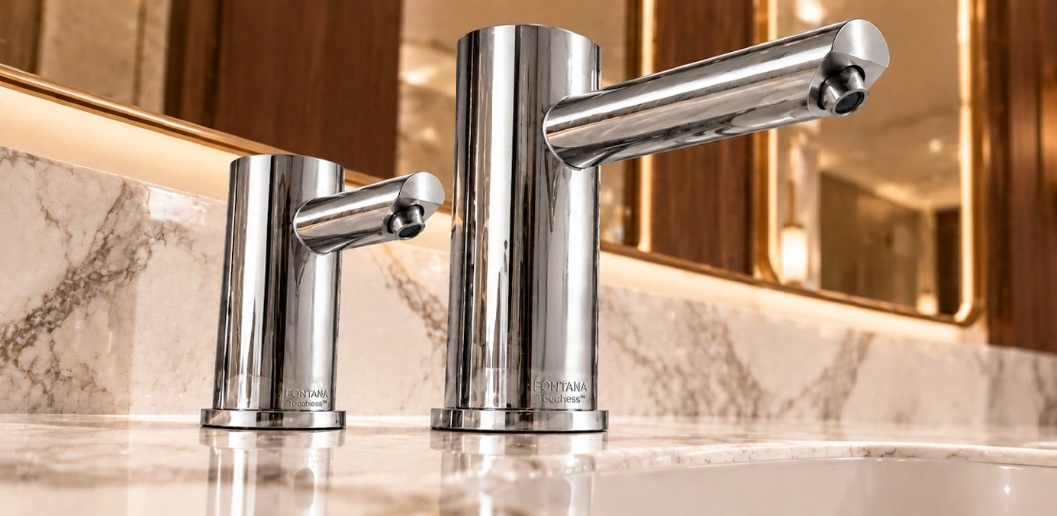
Accessibility and installation are not optional
For accessible wash stations, place soap dispensers within appropriate reach ranges and verify clear floor space, approach, projections, and usability in the final installation. The 2010 ADA Standards address reach ranges under Section 308 and operable parts under Section 309; the lavatory advisory also directs designers to position soap dispensers within reach at accessible lavatories. Touch-free activation does not automatically make an incorrectly located unit accessible.
Review the 2010 ADA Standards for Accessible Design and applicable local building requirements.
Buying checklist before approval
Relevant soap dispenser collections and specifications
For project comparison, the following resources provide examples of automatic soap dispensing configurations and technical documentation. They are reference materials—not evidence that any specific model is universally better.
Automatic soap dispenser collection
Explore wall, deck, and coordinated automatic soap solutions.
Browse the collection →Touchless faucet + dispenser systems
Review coordinated commercial washroom options.
Explore coordinated systems →Automatic foam dispensers
Compare foam dispensing as a distinct soap delivery format.
See foam dispensers →Technical dispenser specifications
Check model-specific power, capacity, sensing, and soap limits.
Read a specification sheet →Frequently asked questions
Are automatic soap dispensers more hygienic than manual units?
They reduce the need to touch the dispenser during normal use. Overall hygiene also depends on handwashing, reservoir management, equipment cleaning, and maintenance. Do not treat touchless activation as proof of lower infection rates.
Do touchless soap dispensers save money?
They can, especially when controlled dosing reduces excess soap and service workflows are efficient. But extra purchase, power, repair, and cartridge costs may offset savings. Compare measured lifecycle costs for the actual site.
Are automatic dispensers worth it for hotels?
Often they are attractive for busy guest restrooms where presentation and consistent operation matter. Housekeeping labor, spare-part support, and guest ease of use should be evaluated before purchase.
Can I use any liquid soap in a touchless dispenser?
No. The pump and soap path may require specific viscosity, formula, or foam chemistry. Follow the manufacturer’s documented compatibility requirements.
Should I choose a wall-mounted or deck-mounted model?
Choose from the physical layout: wall backing, counter thickness, mounting hole, basin location, spout projection, sensor aim, and accessible service space.
Is a battery-powered dispenser reliable enough for stadiums?
It may be, but model endurance, spare-battery access, event traffic, and a maintenance plan should be verified. Mains-powered alternatives can be assessed where practical.
Can I top off soap in a partly filled reservoir?
CDC guidance advises against topping off partly empty liquid-soap dispensers. Follow the system’s approved cartridge or fully emptied and appropriately cleaned refill process.
What is the biggest purchasing mistake?
Buying on appearance or upfront price without confirming soap compatibility, refill access, replacement components, and the complete service cost.
Final verdict
Worth it when the whole system works
Automatic soap dispensing is a sound choice for many high-use commercial restrooms, particularly when contact-free operation, consistent dosing, and coordinated washroom design justify the additional equipment and servicing. For simple, lightly used spaces, a robust manual dispenser can be the more sensible purchase. Specify the technology that your facility can maintain reliably—then verify its performance with actual use.
Compare Commercial Soap DispensersReferences & further reading
CDC — Clinical Safety: Hand Hygiene · ADA — 2010 Standards for Accessible Design · Fontana FS1222B technical sheet · Fontana FS-289SD1 technical sheet