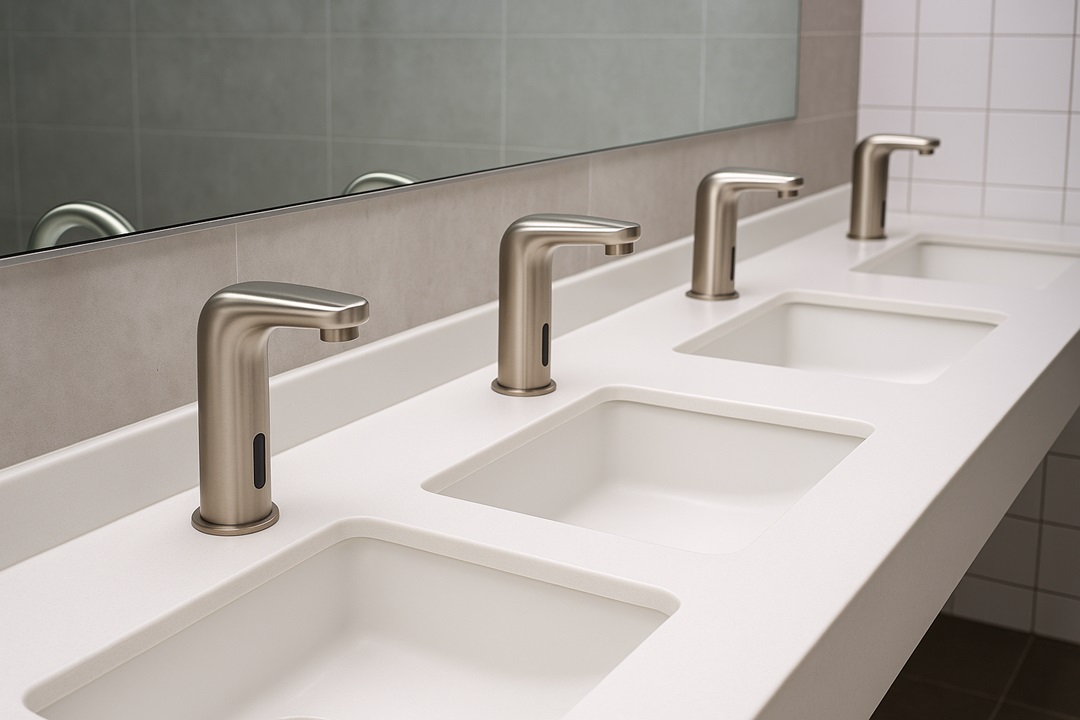
Automatic soap dispensers are now standard in many health care, hospitality and transport projects. They influence hygiene performance, accessibility, service space, power distribution, and digital coordination in BIM. For architects and engineers, they are no longer small details; they are coordinated devices that must align with basin geometry, touchless faucets, cleaning regimes and building information models.
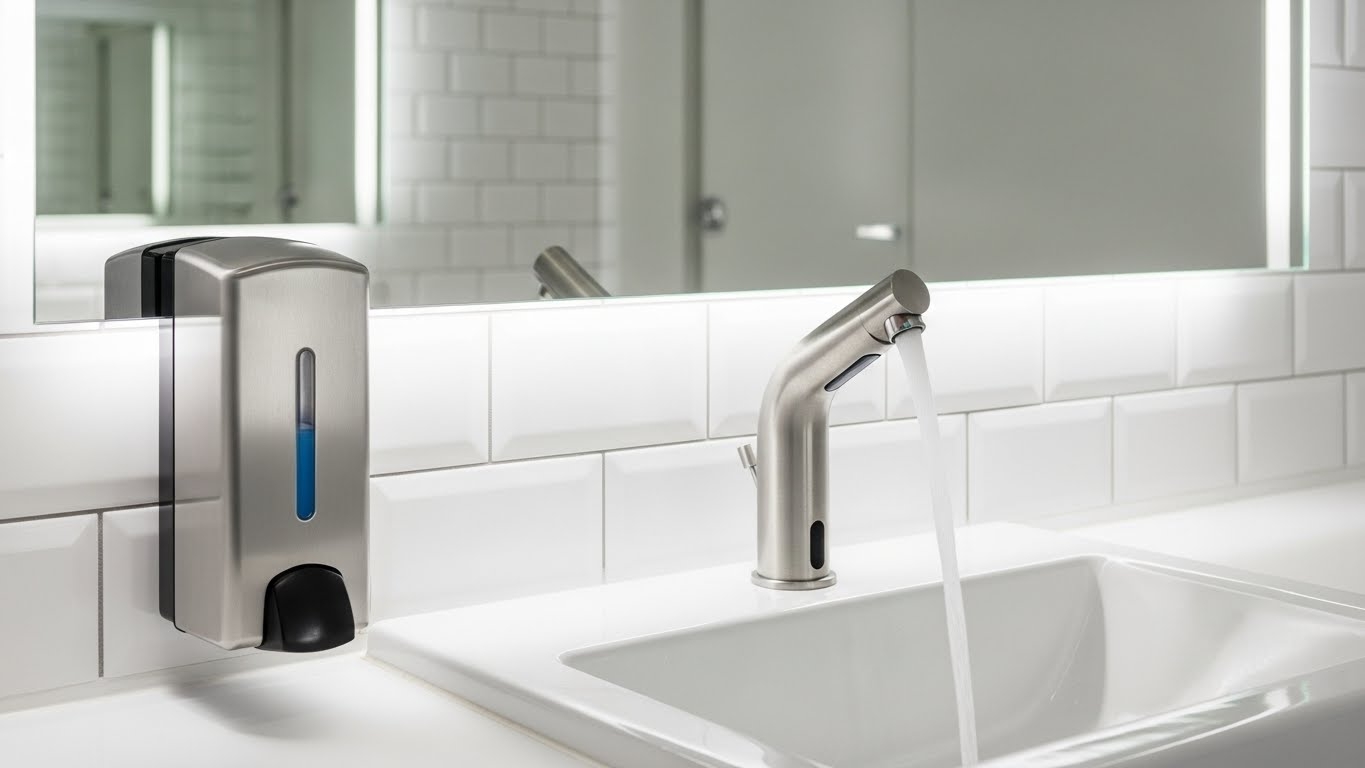
This guide sets out a structured approach for specifying automatic soap dispensers in professional projects. It focuses on technical drivers, BIM and model family requirements, and the integration of dispensers into coordinated restroom systems.
1. Hygiene drivers, codes and project context
Hand hygiene is a primary driver for automatic soap dispensers in health care and public environments. The Centers for Disease Control and Prevention guideline on hand hygiene in health care settings links consistent hand cleaning to a measurable reduction in health care associated infections.
Project teams can support these goals by selecting proven devices and documenting them clearly. Resources such as the CDC guideline for hand hygiene in health care settings provide a technical foundation that can be cited in the specification and in client briefing documents.
In parallel, market sources such as the SoapDispensing stats and case studies on automatic soap dispensers in commercial settings give up to date data on adoption, dosing performance and contamination risk, which can be referenced when clients ask for evidence that supports automatic dispensing over manual solutions.
2. Mounting options and coordination with fixtures
Mounting choice affects reach ranges, service access and the visual composition of the basin wall zone.
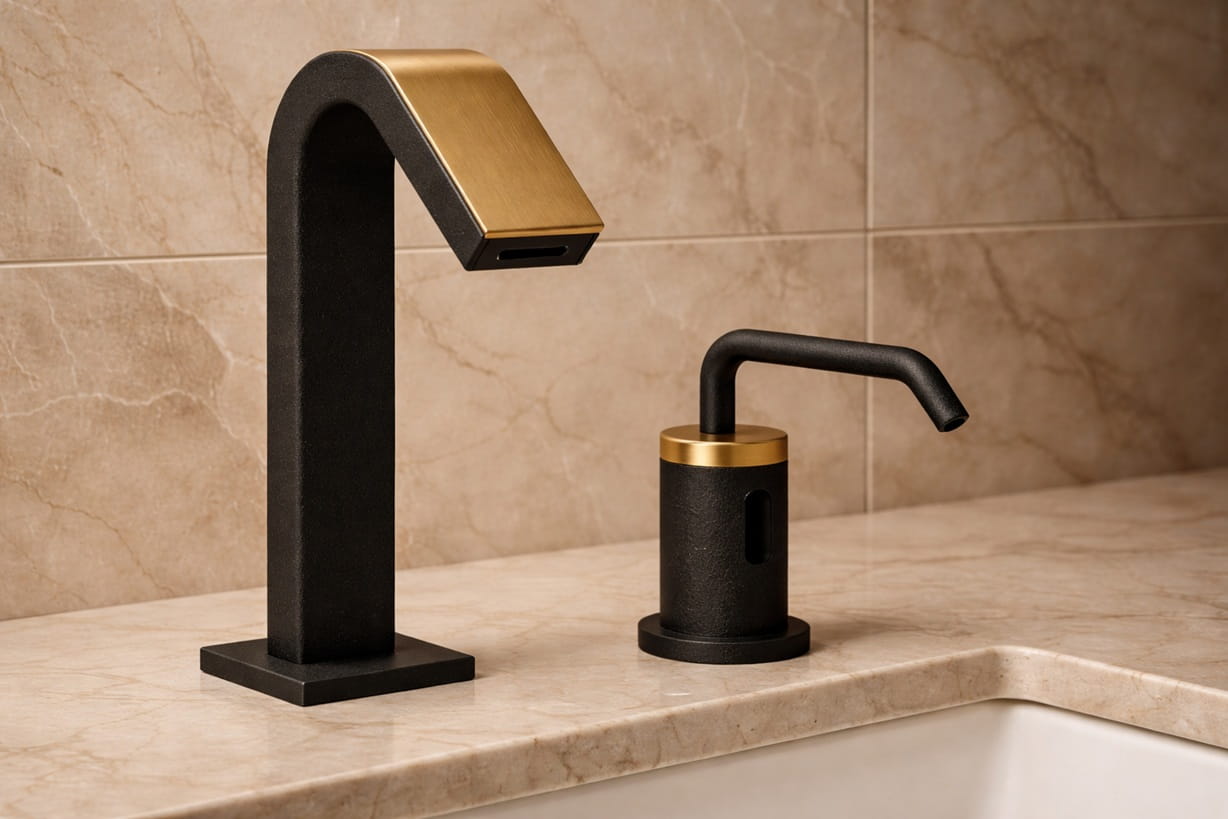
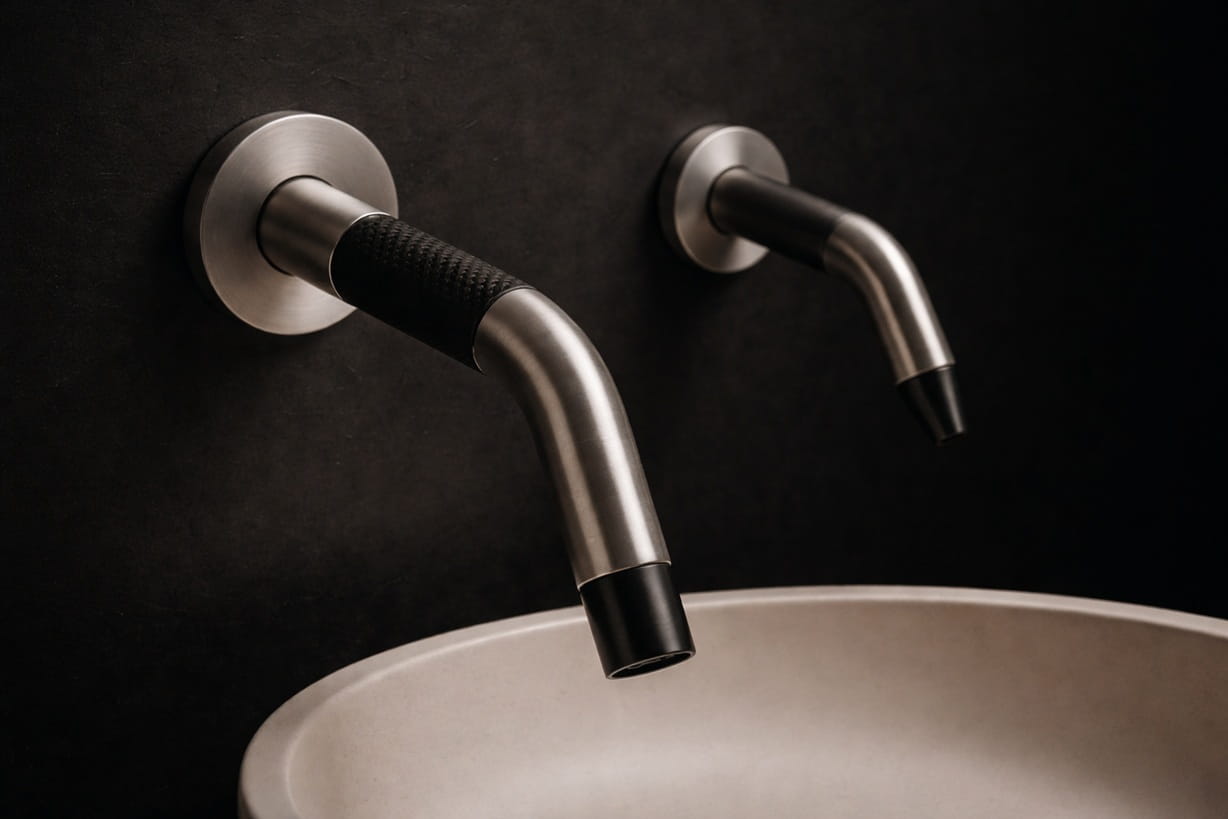
- Deck mounted dispensers place the spout at the countertop, often beside a separate touchless faucet. They suit solid surface or stone tops with under counter access.
- Wall mounted dispensers free the counter surface and can be aligned with mirrors and lighting, but need careful placement to satisfy accessibility and splash management.
Manufacturers such as FontanaShowers and BathSelect provide commercial dispensers in both formats. The FontanaShowers commercial automatic soap dispensers category groups wall-mounted and deck mounted products intended for high-traffic restrooms. The BathSelect Hospitality Touchless Bathroom Faucets and Automatic Soap Dispensers Range is designed for hotels and mixed-use projects that require coordinated faucets and accessories.
In the BIM model, dispenser families should align with the centerlines of basins and faucets. This prevents the need for last-minute adjustments when conflicts between sensor zones, splash patterns, and mirror edges are revealed by field conditions.
3. Soap type, refill strategy and maintenance
Soap strategy is often driven by facilities management, but it must be supported by the design.
The Soap Dispensing Engineering Guide for Specifying BathSelect Soap Dispensers in Global Projects shows how sealed cartridges, approved soap viscosities, and documented refill intervals promote consistent maintenance and hygiene results.
From a specification viewpoint, the following items should be defined for each automatic soap dispenser type
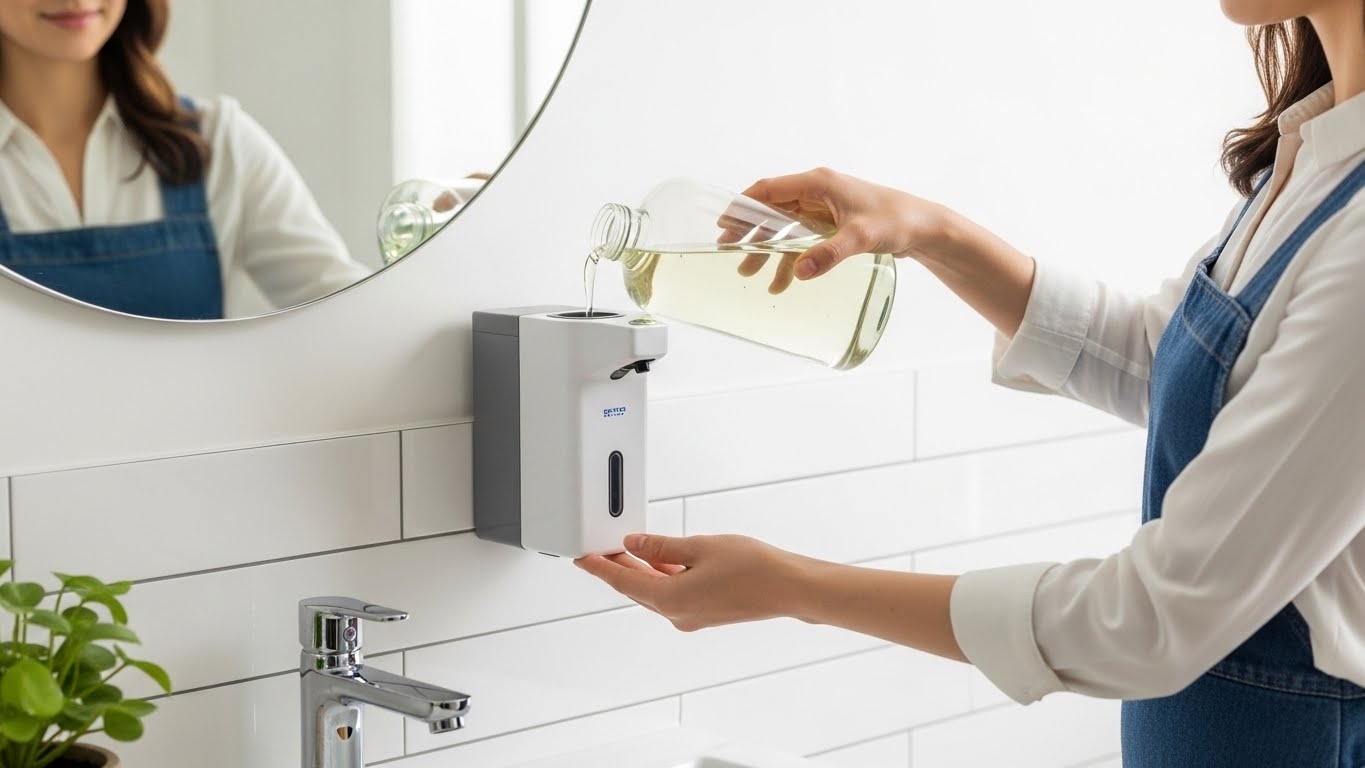
- Intended soap type, such as standard liquid, foam or sanitizer
- Cartridge or bulk fill strategy
- Reservoir capacity and the target refill interval at design occupancy
- Compatibility with approved cleaning agents for the project
In the model family, parameters for soap type, nominal dose and reservoir volume allow planners to estimate consumption and service frequency. Guidance and statistics from SoapDispensing smart soap dispensing solutions can support these calculations.
4. Power and low voltage coordination
Automatic soap dispensers use either internal batteries or a low voltage power supply.
Battery powered units minimise wiring and can suit retrofit work, but intensive commercial use often leads to frequent replacement. For long running commercial restrooms, it is usually preferable to specify low voltage powered dispensers supplied from accessible transformers, especially where many stations run side by side.
In the BIM environment, each dispenser family should include
- A clear indication of power type and voltage
- Connector definitions for electrical coordination where low voltage power is used
- Space reservations for transformers, junction boxes and access panels
Combinations such as the FontanaShowers dual function automatic faucet and soap dispenser assemblies illustrate how power and sensor logic can be shared across faucet and dispenser in one coordinated fitting.
5. BIM content and Revit families for automatic soap dispensers
For many firms, the quality of manufacturer supplied families is now a formal selection criterion. Poor geometry or missing parameters create rework, while good families speed up coordination, costing and visualisation.
FontanaShowers publishes dedicated Revit families for automatic soap dispensers, built specifically for projects that require touchless dispensers in commercial restrooms. The broader BIM data and Revit families for FontanaShowers fixtures page consolidates touchless faucets, dispensers, showers and flush valves.
Independent platforms also host content. The BIMobject manufacturer page for FontanaShowers BIM objects allows teams to source consistent families for multiple fixture types across a project. (BIMobject®)
When evaluating any family for a project, architects should confirm that
- Dimensions and reference planes match the manufacturer submittal
- Origin and insertion point work with the office template
- Parameters cover material, finish, mounting height, soap type and power supply
- Classification fields align with the office standard and CSI section used in the specification
6. Integration with touchless faucets and solid surface design
Automatic soap dispensers rarely stand alone. They form a coordinated assembly with basins, touchless faucets, mirrors and lighting.
Product sets that include both faucet and dispenser, such as those in the FontanaShowers commercial automatic soap dispensers and touchless faucet program, simplify finish matching and sensing distances, since they are engineered as pairs. BathSelect follows a similar approach in its hospitality touchless bathroom faucets and automatic soap dispensers catalog, which supports unified finish palettes across basin, wall and accessories.
In the model, logical grouping of faucet and dispenser into consistent types helps maintain alignment when layouts change. Arrays of multi station solid surface counters benefit from type based control of offsets between faucet and dispenser centerlines.
7. Model family parameters and lifecycle planning
Model families for automatic soap dispensers can carry more than simple geometry. Correct parameterisation supports lifecycle analysis and FM planning. Building on strategies shown in the SoapDispensing engineering guide to specifying BathSelect soap dispensers in global projects, design teams can request families that include
- Estimated use per station per day based on design occupancy
- Nominal dose volume per activation
- Calculated daily consumption for each dispenser type
- Recommended inspection and refill frequencies
Where the client expects formal referencing of evidence, the model notes can point to background sources such as the CDC guideline for hand hygiene in health care settings and the SoapDispensing stats and case studies on automatic soap dispensers.
8. Telemetry and building management integration
A growing set of automatic soap dispensers can provide telemetry for soap level, activation count and, where battery-driven, battery status. These devices can feed a building management system or a cloud dashboard.
Although not yet universal, this capability is moving in parallel with the broader smart restroom market that is evident in commercial product lines from brands featured in SoapDispensing smart soap dispensing solutions.
If the client is considering telemetry either now or in a future phase, the architect should ensure that
- Space exists for gateways and control boxes in accessible but secure locations
- Conduits or pathways for data cabling are reserved in the model where required
- Device identification parameters are included in dispenser families to support commissioning and monitoring
In documentation, it is helpful to state whether telemetry is included in the current contract or allowed for in a future upgrade, so that bidders understand the scope.
9. Specification checklist for architects
The following checklist summarises the key items that an architectural specification and BIM package should cover for automatic soap dispensers
- Defined model numbers for each dispenser type and location set
- Mounting method, finish, material and compatible basins
- Soap type, cartridge strategy and reservoir capacity
- Power supply, including transformer location where low voltage power is used
- Requirement for manufacturer-supplied BIM content that meets the office standard
- References to hygiene guidance such as the CDC hand hygiene guideline, where relevant for the client sector (CDC)
- Links to manufacturer technical resources, such as the FontanaShowers BIM data and Revit families download center, and the Revit families for automatic soap dispensers from FontanaShowers (Fontana Showers)
10. Conclusion
Automatic soap dispensers have become critical components in contemporary restrooms. They link hygiene strategy, accessibility, visual design and digital coordination in BIM. A clear and precise specification, supported by high-quality BIM families and evidence-based references, allows architects and engineers to control risk and performance across the life of the building.
Project teams can select systems that align with both design intent and operational requirements by relying on manufacturers that invest in commercial automatic soap dispensers for professional projects and curated technical resources, such as SoapDispensing’s smart soap dispensing solutions.
Why BIM-Ready Soap Dispenser Families Improve Coordination
In professional restroom design, automatic soap dispensers should be treated as coordinated building components, not as generic accessories added late in the project. A BIM-ready family helps the design team manage mounting height, centerline alignment, service clearance, power type, reservoir size, and finish coordination in the same way they would review faucets, basins, mirrors, and accessory hardware. This reduces coordination issues during documentation and helps avoid last-minute field adjustments after millwork, stone tops, and backing locations are already fixed.
Well-structured dispenser families also support better communication between architects, engineers, contractors, and facility teams. When a model includes clear parameters for soap type, refill method, transformer access, and expected service intervals, it becomes easier to compare products, review submittals, and plan for long-term operations. In healthcare, hospitality, workplace, and transport projects, that level of detail can improve both installation accuracy and lifecycle performance.
For large commercial projects, the value of BIM content is not limited to geometry. It also supports specification clarity, coordinated procurement, and future replacement planning. A properly documented automatic soap dispenser family gives the project team a more reliable basis for design control, maintenance forecasting, and consistent restroom standards across multiple room types and building phases.

No responses yet