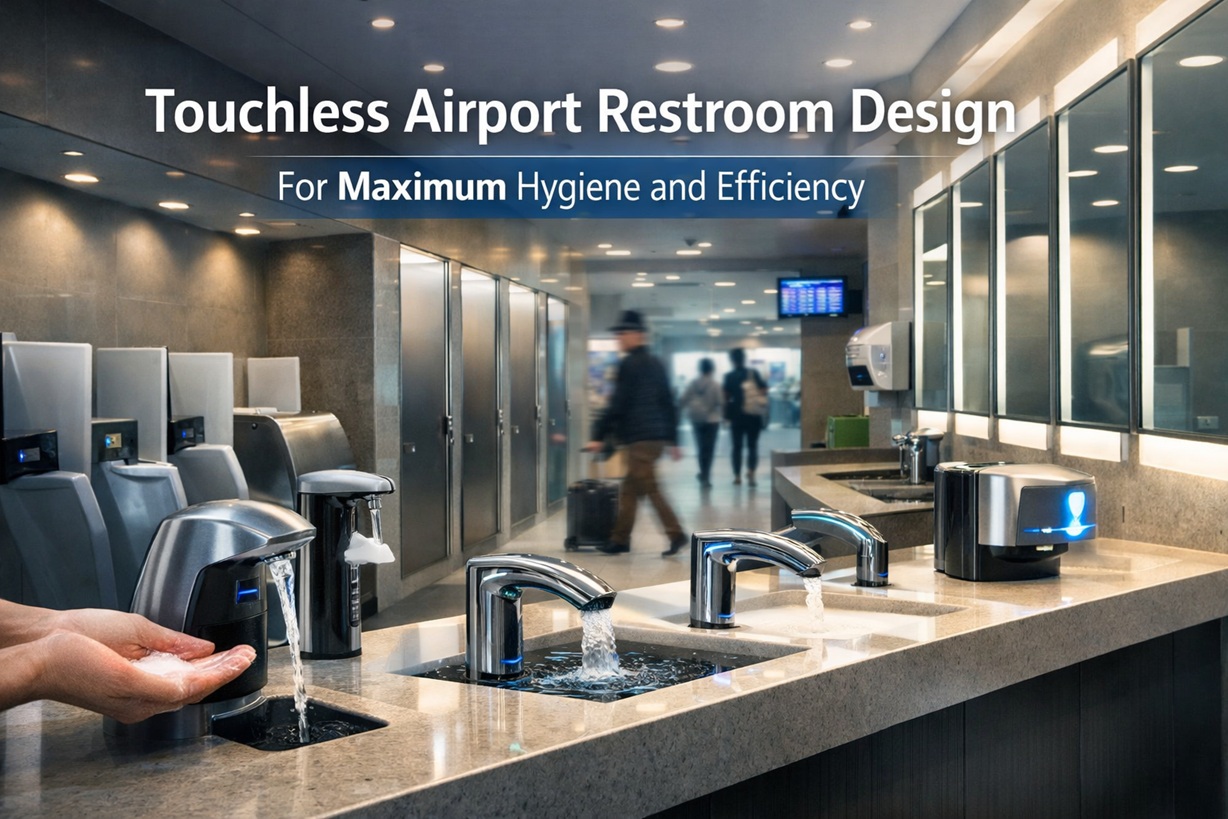
Touchless Airport Restroom Design for Maximum Hygiene & Efficiency
Touchless Airport Restroom Design for Maximum Hygiene and Efficiency
Discover how modern airport restrooms use touchless technology to improve hygiene, reduce contamination, and enhance operational efficiency in high-traffic environments. From sensor faucets to automatic soap dispensers, explore the future of commercial restroom design with data-backed insights and expert recommendations.
- Why Touchless Technology Matters in Airport Restrooms
- Key Features of Modern Airport Restroom Design
- Automatic Faucets and Sensor Systems
- Touchless Soap Dispensers
- Smart Layout and Durable Materials
- Manual vs Touchless: A Data-Driven Comparison
- Enhancing Operational Efficiency
- Improving Passenger Experience
- ADA Compliance & Accessibility Standards
- Maintenance Planning for High-Traffic Terminals
- Sustainability and Resource Optimization
- Frequently Asked Questions
- Conclusion
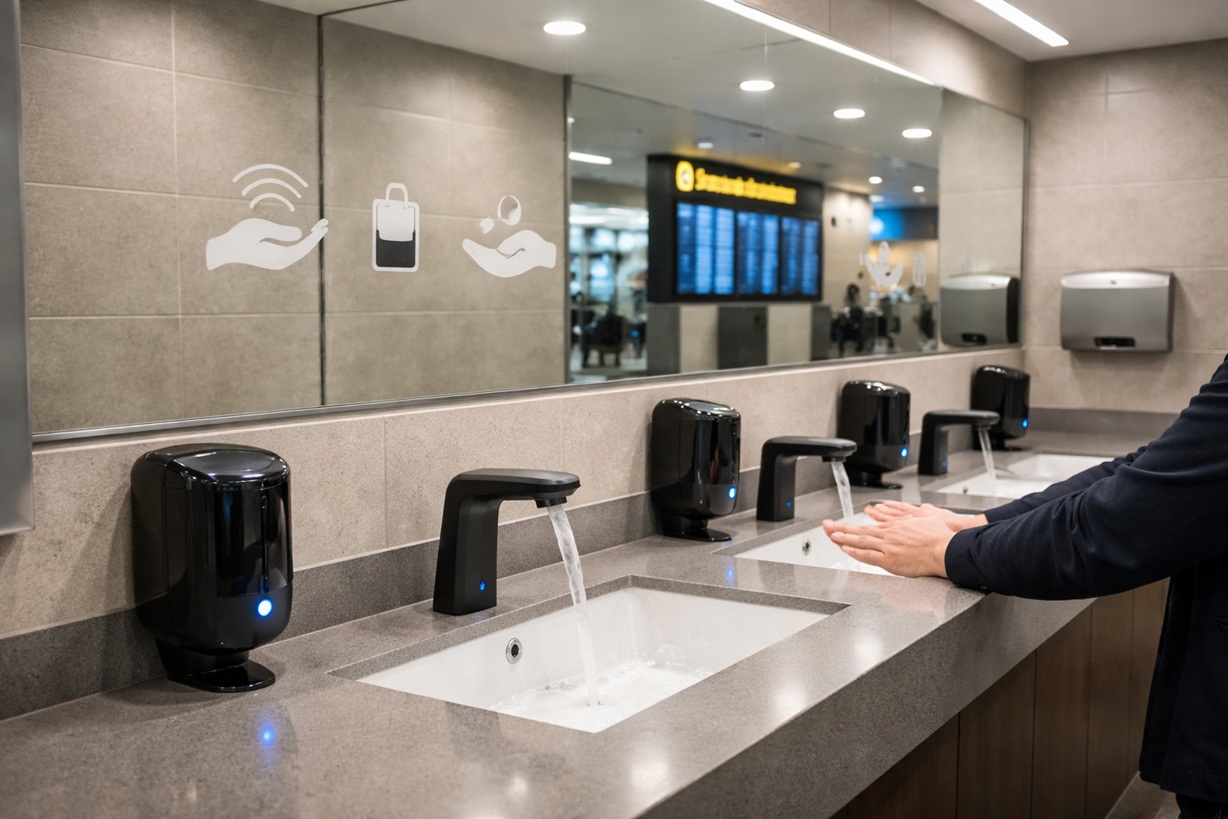
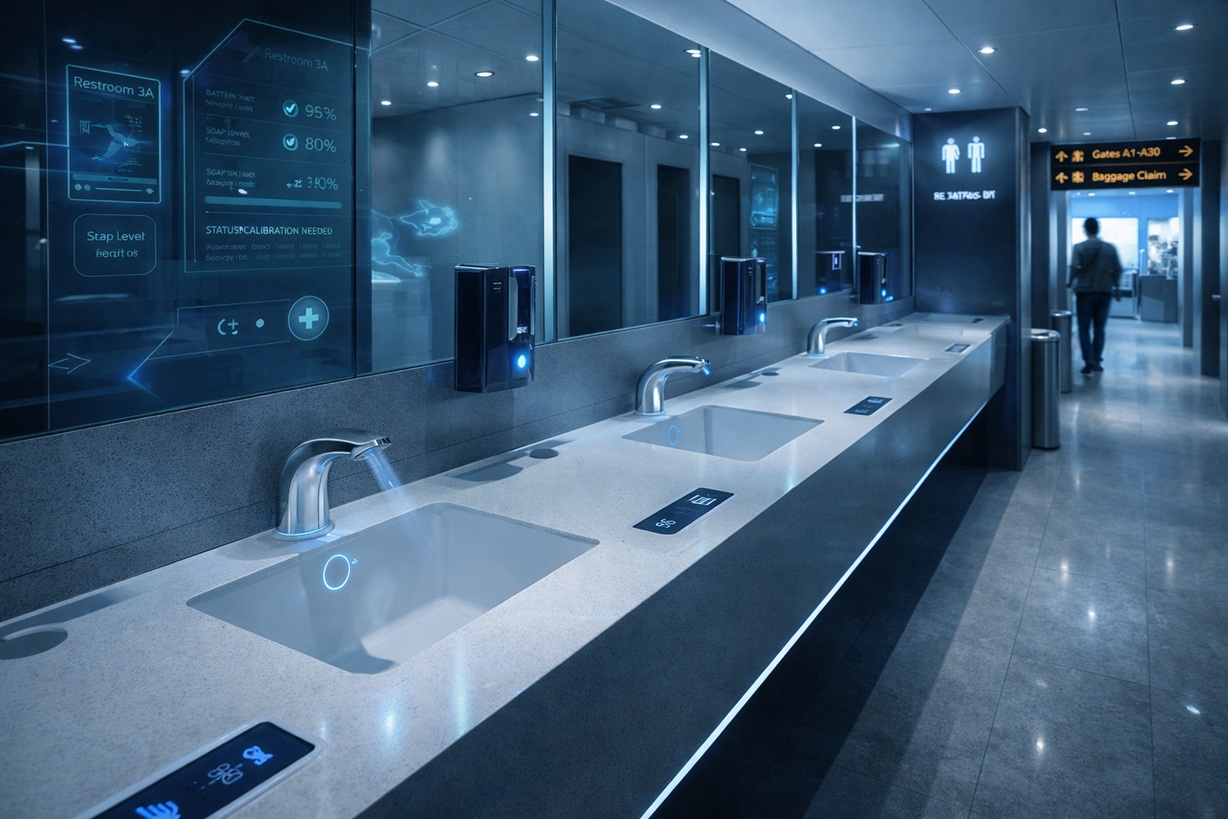
Modern touchless airport restroom featuring integrated sensor technology for optimal hygiene and operational efficiency
Why Touchless Technology Matters in Airport Restrooms
Airports serve thousands of passengers daily, making restroom hygiene a critical operational priority. Touchless restroom technology has emerged as a fundamental solution for maintaining sanitation standards in these high-traffic environments. Unlike traditional fixtures that require physical contact, touch-free systems eliminate a primary vector for germ transmission.
According to CDC hand hygiene guidelines, touchless systems can reduce cross-contamination risks by up to 98% compared to manual alternatives. By integrating sensor-based fixtures, airports can significantly improve public health outcomes while enhancing the passenger experience.
Key Features of Modern Airport Restroom Design
Modern commercial restroom environments incorporate advanced solutions designed for durability, hygiene, and user convenience. These systems are specifically engineered to withstand the demands of high-traffic facilities while maintaining consistent performance. Below are the essential components of contemporary airport restroom design.
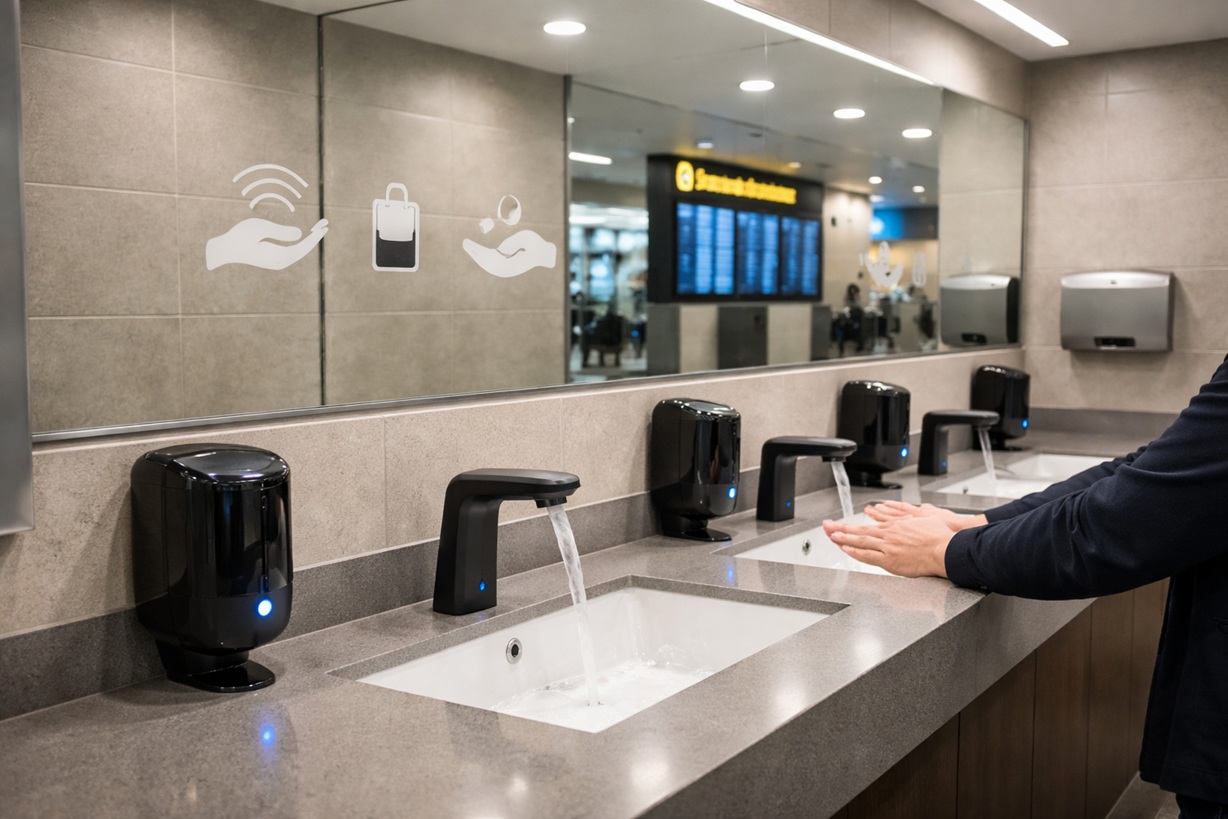
Automatic Faucets and Sensor Systems
Sensor faucets represent the cornerstone of modern touchless restroom design. These systems use infrared technology to detect hand presence, activating water flow only when needed. This functionality provides multiple benefits:
- Reduced water consumption: Sensor faucets eliminate unnecessary water flow, reducing usage by up to 70% compared to manual faucets [EPA].
- Enhanced hygiene: No physical contact means no transfer of bacteria between users.
- Consistent operation: Advanced sensors maintain reliable activation even in high-traffic conditions.
For airport applications, commercial-grade sensor faucets feature vandal-resistant construction, easy-clean surfaces, and long-lasting battery or hardwired power options.
Touchless Soap Dispensers
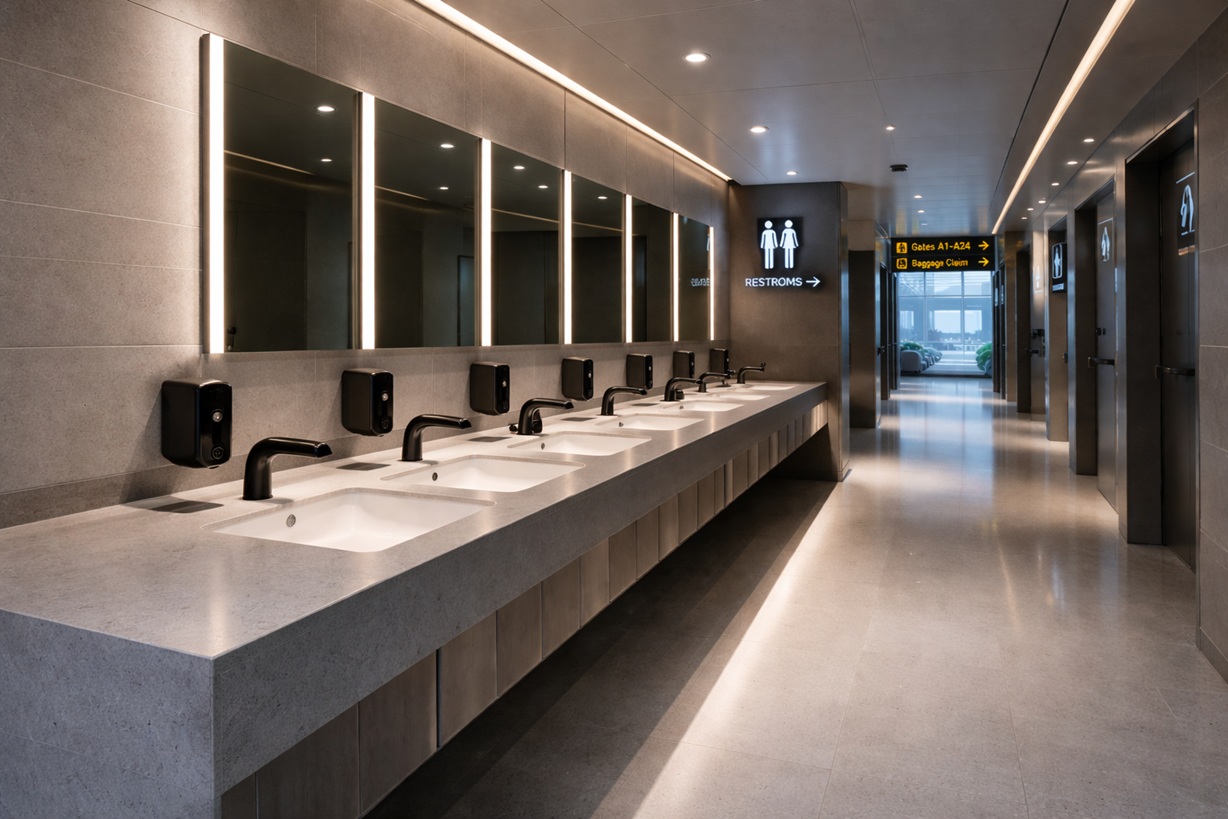
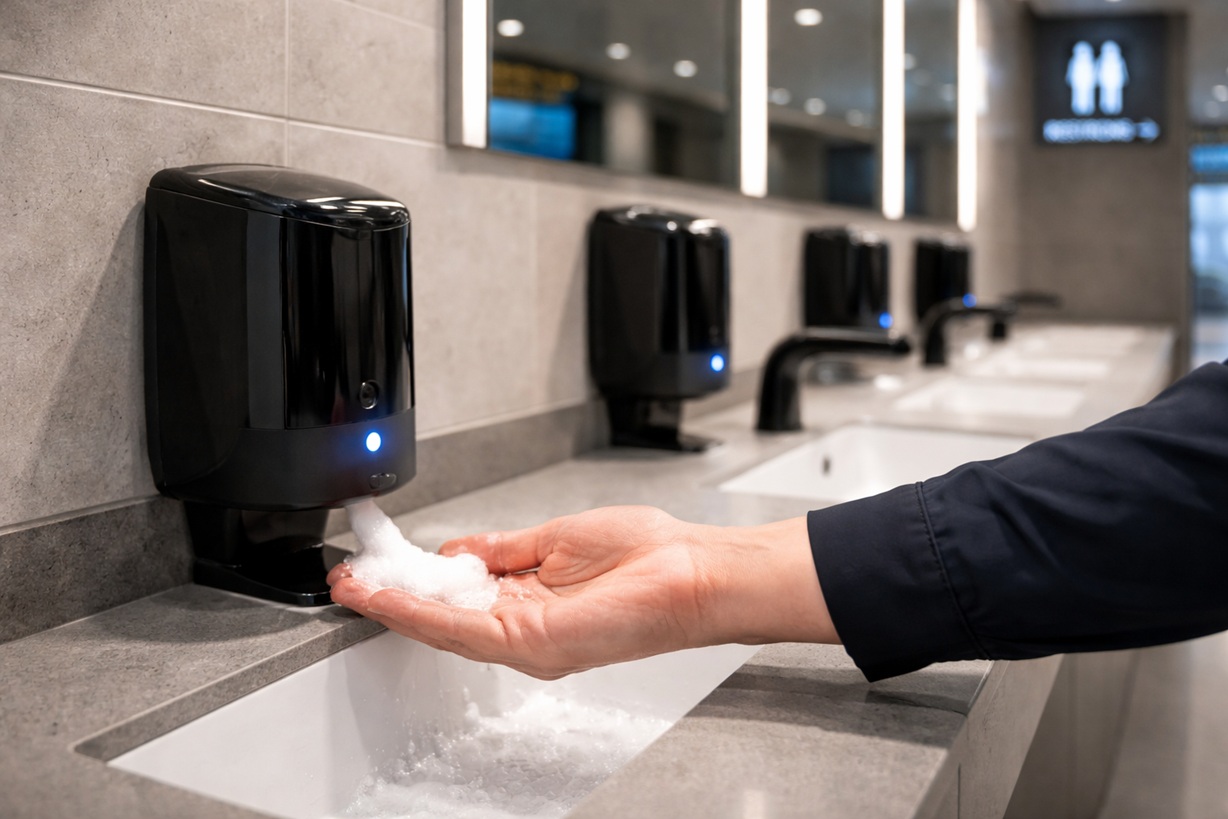
Automatic soap dispensers provide a hands-free experience that complements sensor faucets perfectly. These systems ensure proper sanitation without requiring users to touch any surface, completing the touchless handwashing cycle. Modern touchless soap dispensers offer:
- Precision dosing: Adjustable soap output (0.5-2.5 ml per activation) reduces waste by up to 40%.
- High-capacity reservoirs: 1500-2000ml refill options minimize maintenance frequency in busy airport restrooms.
- Vandal-resistant construction: Commercial-grade materials withstand heavy daily use and prevent tampering.
For airport facilities, integrating commercial automatic soap dispensers with sensor faucets creates a complete touch-free handwashing station.
Smart Layout and Durable Materials
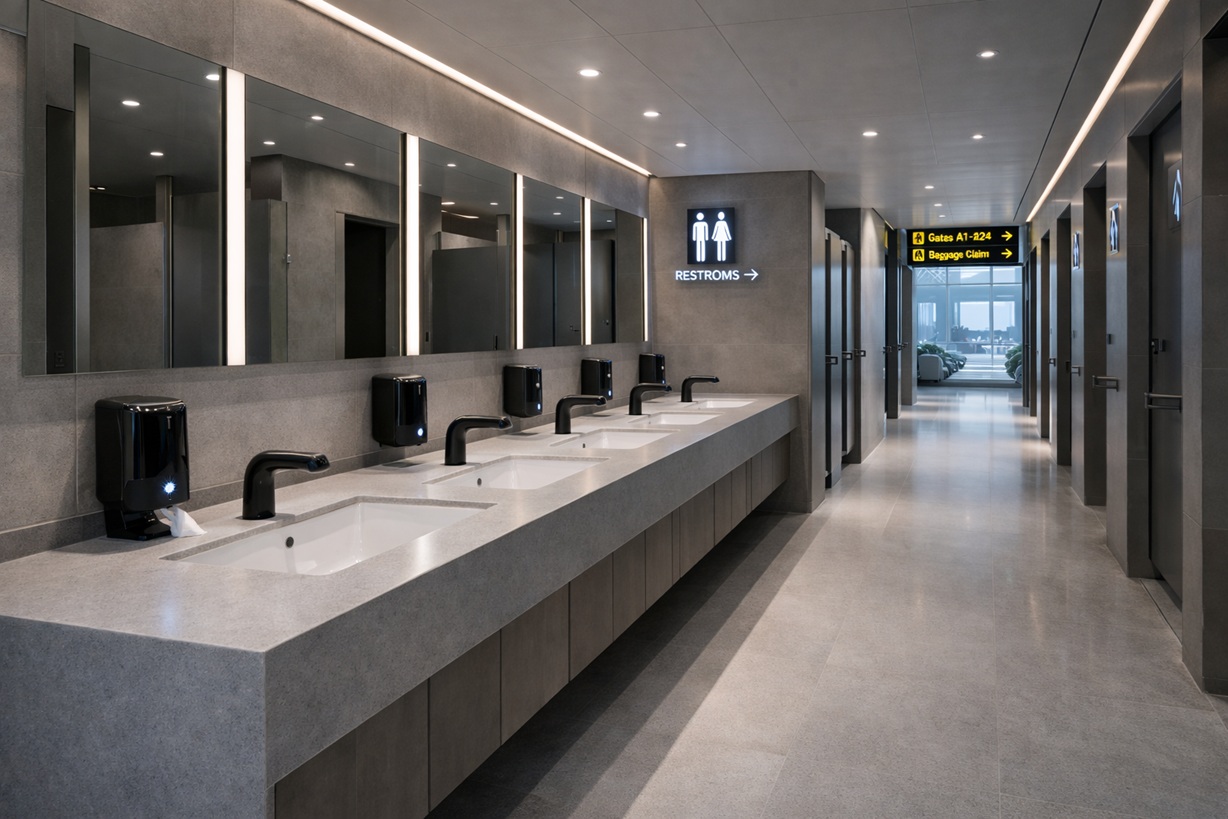
Beyond fixtures, airport restroom design incorporates strategic layout planning and material selection. Efficient layouts with seamless countertops, stainless steel fixtures, and easy-to-clean surfaces significantly improve maintenance outcomes. Key considerations include:
- ADA compliance: Mounting heights of 42-48 inches AFF ensure accessibility for all passengers.
- Durable finishes: Chrome and stainless steel resist corrosion and simplify cleaning protocols.
- Optimized spacing: Adequate clearance between fixtures reduces congestion and improves traffic flow.
Manual vs Touchless: A Data-Driven Comparison
When specifying fixtures for airport restrooms, understanding the performance differences between manual and touchless systems is essential:
| Criteria | Manual Fixtures | Touchless Fixtures |
|---|---|---|
| Cross-Contamination Risk | High – direct surface contact required | Low – no physical contact needed |
| Water Consumption | Baseline (100%) | Up to 70% reduction |
| Soap Waste | Inconsistent dosing, up to 40% waste | Precision dosing, minimal waste |
| Maintenance Frequency | Daily cleaning required | Reduced by 50-60% |
| User Satisfaction | Moderate | High – perceived as cleaner |
The data clearly shows that touchless fixtures deliver superior outcomes across all key performance indicators, making them the recommended choice for modern airport facilities.
Enhancing Operational Efficiency
Modern restroom solutions are designed to reduce maintenance workload and improve operational performance. For airport facility managers, this translates directly into cost savings and more effective resource allocation. The advantages of smart restroom solutions include:
⚡ Faster Cleaning Processes
Touch-free fixtures reduce cleaning time by up to 50% by minimizing soap residue and water spots.
💧 Reduced Waste
Precision dosing reduces soap waste by 40% and water consumption by 70%.
💰 Lower Operational Costs
ROI typically achieved within 2-3 years through reduced consumption and extended fixture lifespan.
📊 Data-Driven Maintenance
Smart systems provide usage data to optimize refill schedules and maintenance intervals.
Improving Passenger Experience
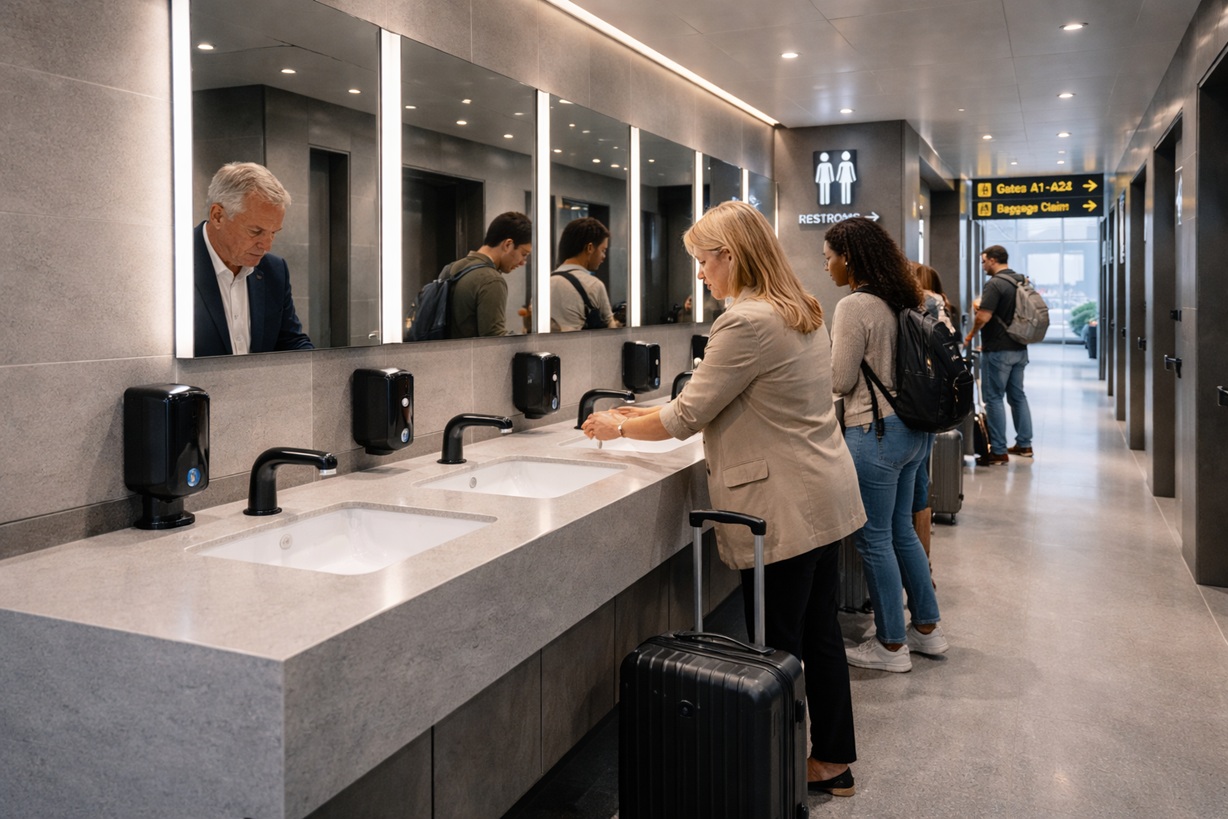
A clean and modern restroom significantly enhances the overall airport experience. Travelers consistently rate restroom cleanliness among their top priorities when evaluating airport quality. According to Skytrax Airport Ratings, restroom cleanliness directly impacts overall satisfaction scores.
- Convenience: No need to touch potentially contaminated surfaces.
- Speed: Faster handwashing cycles reduce wait times during peak hours.
- Comfort: Consistent, reliable operation creates a sense of safety and care.
- Trust: Visible investment in hygiene technology reinforces passenger confidence.
ADA Compliance & Accessibility Standards
Airport restrooms must meet strict accessibility requirements under the Americans with Disabilities Act (ADA) and similar international standards. Key considerations for touchless fixture specification include:
Mounting Height
Fixtures must be installed at 42-48 inches above finished floor (AFF) for accessible reach ranges.
Activation Force
Touchless systems eliminate activation force requirements, providing effortless operation for all users.
Clear Floor Space
Sufficient clearance around fixtures ensures wheelchair accessibility and ease of use.
Visual Indicators
Clear signage and visual cues help all passengers locate and operate touchless fixtures.
Proper ADA compliance not only ensures legal conformance but also enhances the passenger experience for travelers with disabilities.
Maintenance Planning for High-Traffic Terminals
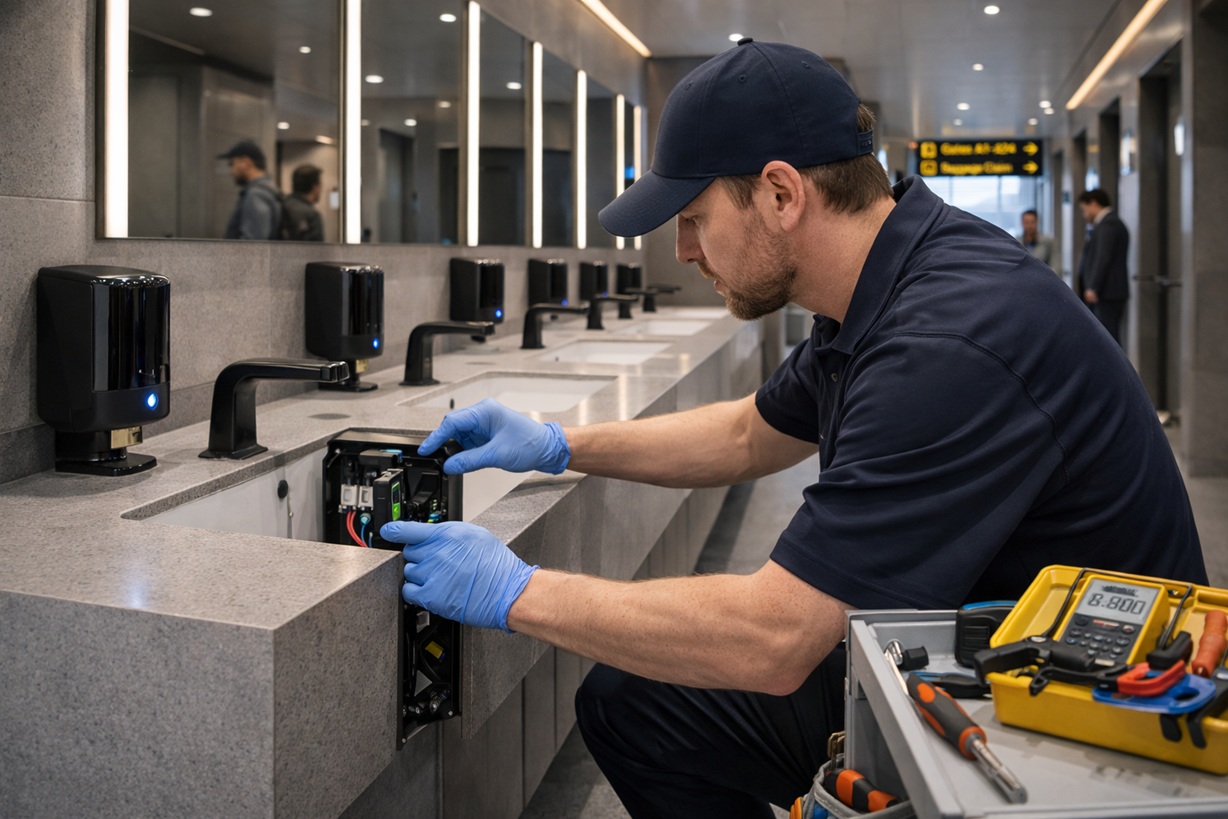
Effective maintenance planning is critical for ensuring consistent performance in airport restrooms. A comprehensive preventive maintenance program should include:
- Quarterly sensor calibration: Ensures accurate activation and prevents false triggers.
- Monthly lens cleaning: Infrared sensors must be cleaned with isopropyl alcohol to maintain sensitivity.
- Battery replacement schedule: C-cell batteries typically last 10,000-15,000 cycles (12-18 months in high-traffic facilities).
- Soap refill tracking: Monitor usage patterns to optimize refill schedules and prevent service interruptions.
Sustainability and Resource Optimization
Touchless technology supports environmental goals by optimizing resource usage across airport facilities. Sensor-based systems help achieve sustainability targets while maintaining operational excellence:
Water Conservation
Sensor faucets reduce water consumption by up to 70%, supporting LEED certification.
Soap Reduction
Automatic dispensers reduce soap waste by up to 40%, minimizing chemical usage.
Energy Efficiency
Low-voltage systems consume minimal power while delivering reliable performance.
Longer Lifespan
Commercial-grade fixtures reduce replacement frequency, lowering embodied carbon.
Frequently Asked Questions
Conclusion
The integration of touchless technology in airport restroom design is no longer optional—it is essential. By combining advanced hygiene standards, operational efficiency, and sustainability, these modern solutions redefine the expectations for commercial restroom environments. Airports that invest in smart restroom solutions demonstrate a commitment to passenger safety, environmental responsibility, and facility excellence.
From sensor faucets to automatic soap dispensers, every component works together to create a seamless, hygienic experience that meets the demands of modern air travel. As passenger expectations continue to rise, touchless restroom technology will remain a cornerstone of airport facility management.
Ready to upgrade your airport restroom facilities?

No responses yet