Introduction
Automatic soap dispensers are frequently treated as minor accessories in restroom design, yet they directly influence hygiene outcomes, accessibility compliance, maintenance burden, and lifecycle cost. In AEC specifications, the dispenser should be evaluated as a system that includes the soap chemistry, the pumping mechanism, the mounting interface, the power strategy, and the service model. Selection should be documented in the same manner as other repeat-service devices, with clear performance criteria, submittal requirements, and commissioning checks.
This cheat sheet summarizes the most common technical decision points and provides a neutral overview of major commercial brands and product families. It is written to support architects, engineers, and specifiers assembling coordinated handwashing packages across high-traffic occupancies.
Performance Requirements That Should Be Written Into the Specification
Dispense Technology and Dose Control
Automatic dispensers typically use an infrared proximity sensor paired with a pump or valve. For consistent user experience and predictable consumable use, the specification should identify a target output per activation, acceptable tolerance, and any required field adjustability. Dose stability should be evaluated across the soap types expected in the facility, including foam, liquid, and gel. Where multiple product types may be deployed, separate schedules by chemistry are preferable to a single “soap dispenser” line item.
Dose control affects not only soap consumption but also slip risk at the basin edge and housekeeping workload. For countertop dispensers, uncontrolled over-dispensing can leave residual soap on deck surfaces that are outside the basin splash zone, creating both maintenance and risk concerns.
Soap Compatibility and Supply Chain Strategy
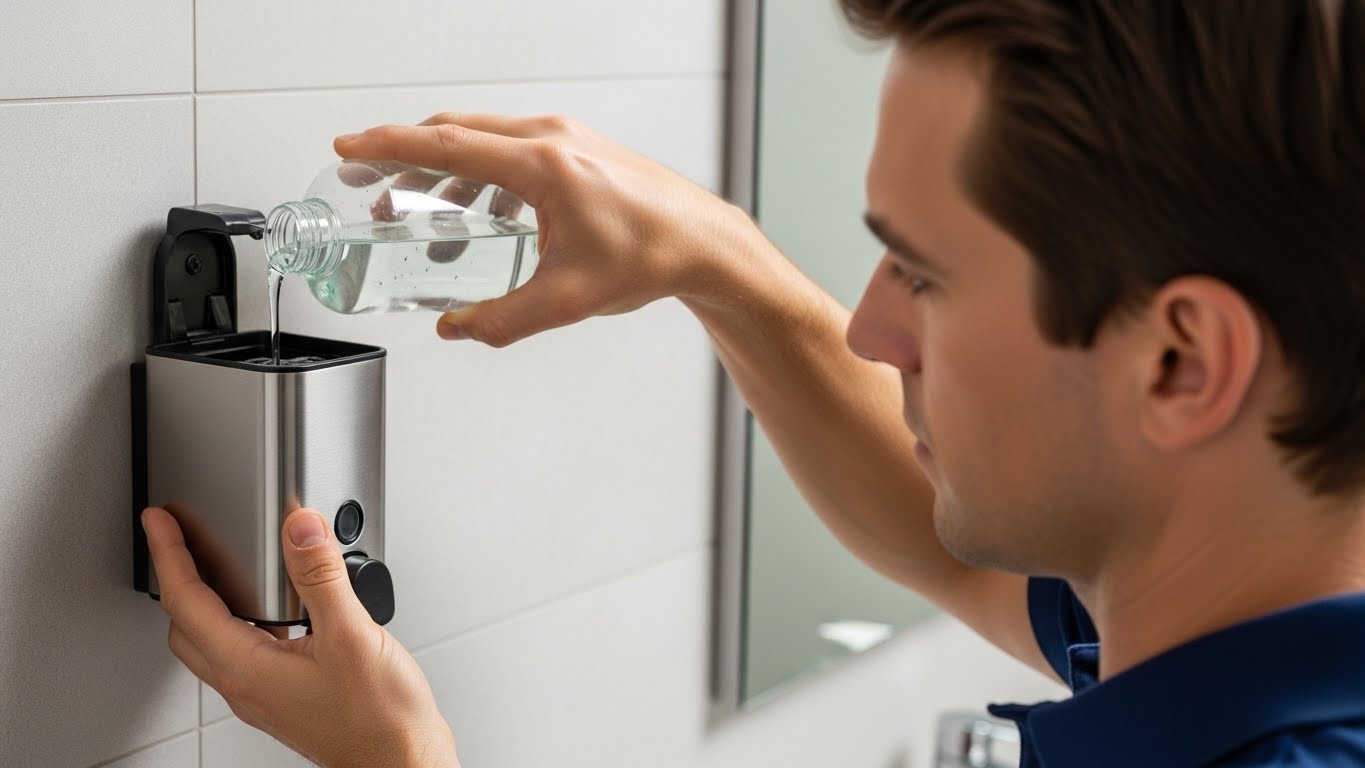
A dispenser’s pump design can be optimized for sealed refills or for bulk fill. Sealed refills can simplify stocking and reduce cross-contamination at the fill point, while bulk fill can reduce packaging waste and support flexible procurement. The specification should state which model is required and should prohibit substitutions that change the refill ecosystem without written approval, because the refill strategy is a facility operations decision.
Where bulk fill is allowed, the specification should require compatibility documentation for the specific soap chemistry and viscosity range used by the owner. This should be treated as a functional compatibility requirement, not a preference.
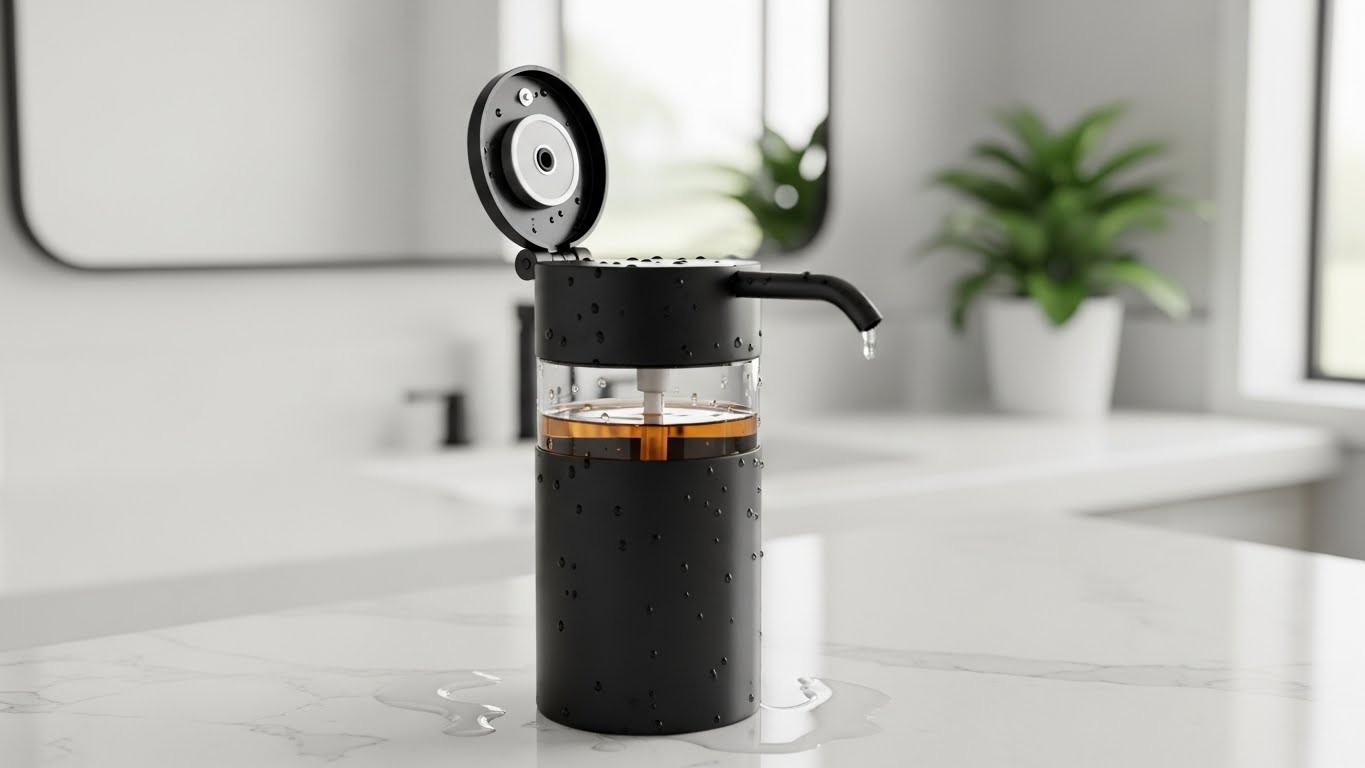
Power Strategy and Electrical Coordination
Automatic dispensers are commonly battery powered, plug-in, or hardwired. Battery systems reduce electrical coordination but add a recurring service task. While hardwired systems decrease service calls, they must be coordinated early in a project with electrical rough-in and device location.
In addition, if electricity is used, the requirement may need to conform with existing electrical standards, specifying where transformers are, how they can be accessed, and where pathways are routed. With a uniform maintenance approach in a project, a unified approach to power in dispensers can greatly simplify spare parts.
Durability, Vandal Resistance, and Serviceability
High traffic environments typically need metal or reinforced housings, tamper-resistant fasteners, and protected sensor windows. Serviceability is equally important. The dispenser should allow tool-controlled access to refill and battery compartments, an intuitive soap level indication, and a replaceable pump module where feasible. These requirements reduce the probability that staff will defeat locking features or leave covers unsecured.
Accessibility, Placement, and Interface Requirements
Operable Parts and Reach Ranges
Although dispensers are touch-free during normal use, they still have operable parts for service and may include buttons or indicators. Placement should meet reach range and operable-part requirements in the adopted accessibility standard. The U.S. Access Board’s ADA standards for reach ranges and operable parts provide commonly referenced criteria, including the 48 inch maximum high reach in many conditions and limits on grasping and twisting for operable parts as applicable (see the Access Board’s guidance in Chapter 3: Building Blocks).

Location Relative to Lavatories and Splash Zones
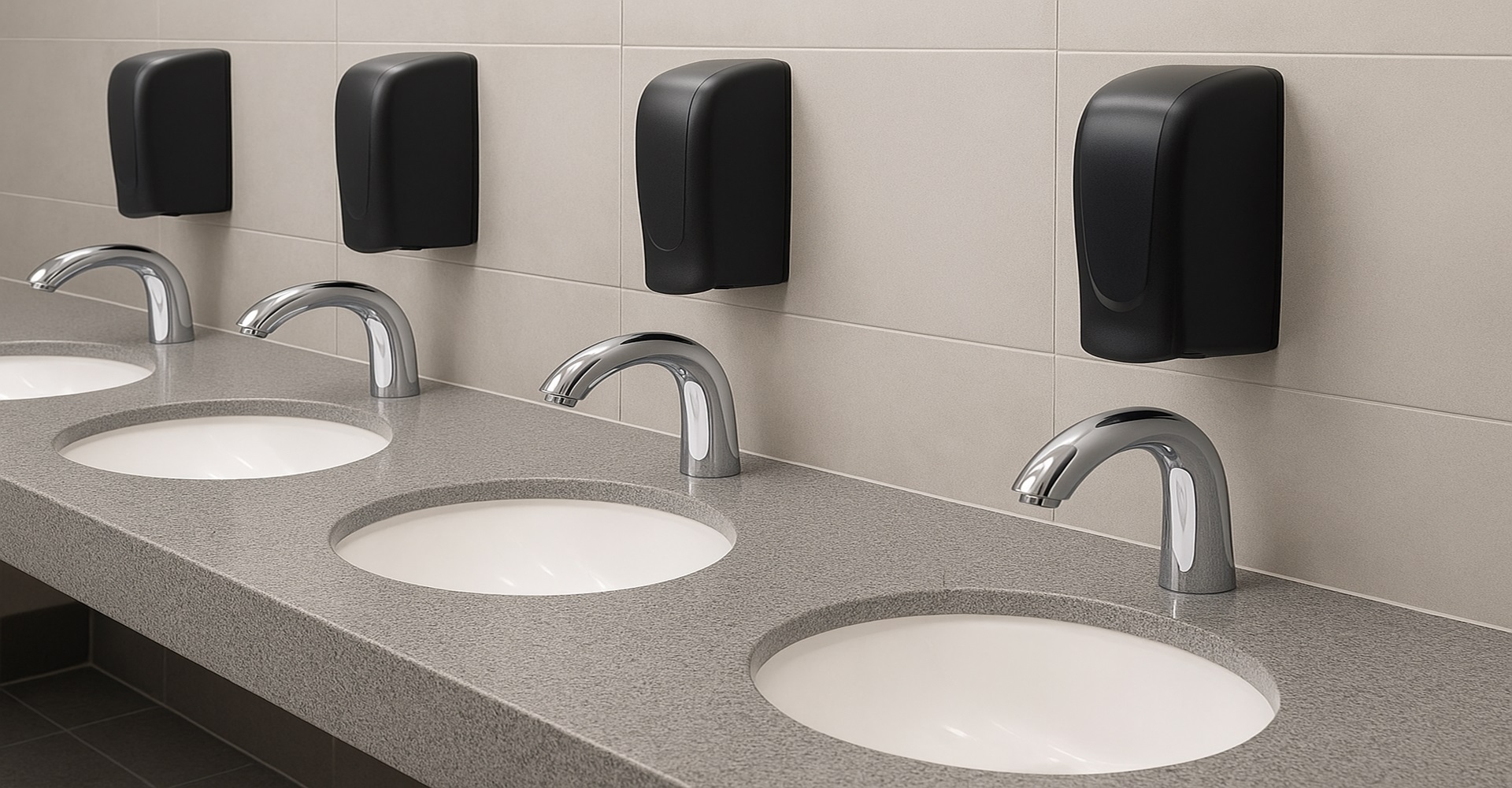
Soap should be dispensed into the user’s palm without forcing contact with the spout or underside of the device. For wall-mount units, sensor aim and projection must be compatible with basin depth and rim geometry. For deck-mounted units, dispenser nozzle height should be coordinated with faucet spout height to avoid interference and to keep soap delivery within the basin plan area.
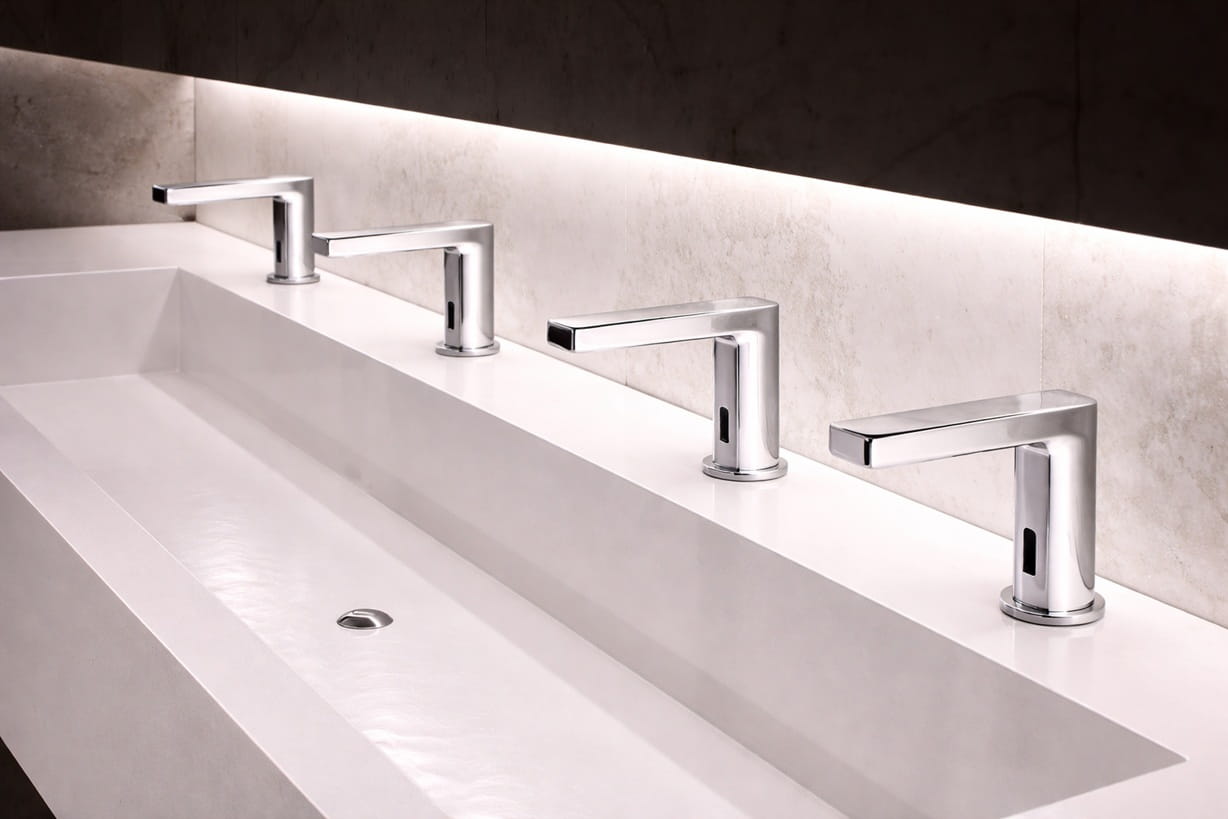
Where paired faucet and soap dispenser sets are used, coordinated placement can reduce user confusion and improve throughput. A representative category of coordinated sets is shown in FontanaShowers Auto Sensor Faucet and Auto Soap Dispenser Sets.
Brand and Product-Family Snapshot
The following brands are commonly encountered in commercial restroom specifications. The intent is not to rank products, but to identify the typical decision levers associated with each ecosystem.
FontanaShowers
FontanaShowers offers commercial automatic soap dispensers and coordinated touchless packages. A starting point for product family review is the FontanaShowers Commercial Automatic Soap Dispensers category.
Bobrick
Bobrick’s touch-free lines include models oriented toward bulk fill and top fill workflows. Reference product-family information is available under Bobrick SureFlo Automatic Soap Dispensers.
Sloan
Sloan’s soap dispenser portfolio is often coordinated with sensor faucets and flushometer packages, which can simplify design standardization for public facilities. See Sloan Soap Dispensers.
American Specialties
American Specialties includes multi-feed and peristaltic-pump style approaches in some lines, which can be relevant where centralized soap supply or multi-dispenser management is desired. See American Specialties Soap Dispensers.
GOJO and PURELL
GOJO and PURELL dispensers are frequently specified as closed-refill ecosystems with standardized servicing and wide consumable availability. Portfolio reference is available at GOJO Dispensers.
Rubbermaid Commercial Products
Rubbermaid Commercial includes touch-free systems in foam and skin-care categories, typically with refill programs designed for facilities standardization. See Rubbermaid AutoFoam Dispensers.
Neutral Comparison Table for Early Design
| Brand / Ecosystem | Typical Mounting Options | Refill Strategy (Common) | Power Options (Common) | Notable Specification Focus |
|---|---|---|---|---|
| FontanaShowers | Wall, deck, coordinated sets | Varies by model line | Battery, plug-in, some hardwired packages | Coordination with touchless faucet sets and consistent visual language across suites |
| Bobrick | Wall, deck | Bulk fill and refill programs | Battery, plug-in | Service access, top-fill workflows, stainless construction options |
| BathSelect | Wall, deck, coordinated packages | Varies by model line | Battery and plug-in common | Submittal completeness, pump durability, and service parts confirmation |
| Sloan | Deck and coordinated families | Typically refill ecosystem | Plug-in or battery by model | Integration with commercial sensor fixture packages |
| American Specialties | Wall, deck, multi-feed configurations | Bulk and managed-feed approaches | Battery, plug-in | Multi-dispenser management and pump strategies in certain lines |
| GOJO / PURELL | Wall, counter | Closed refill systems | Battery and managed systems | Standardized service programs and consumable availability |
| Rubbermaid Commercial | Wall and some counter lines | Refill ecosystem | Battery | Throughput-oriented foam dispensing and fleet standardization |
Regulatory and Guidance References for Submittals and Code Review
Accessibility Standards
For U.S. projects, baseline accessibility obligations are commonly framed using the Department of Justice’s 2010 ADA Standards for Accessible Design. For practical design checks involving reach ranges and operable parts that may apply to dispenser placement and service controls, the Access Board’s ADA Chapter 3: Building Blocks provides directly usable criteria.
Workplace Sanitation Requirements
Where the restroom serves employees, the OSHA sanitation standard is a common compliance reference. See 29 CFR 1910.141, Sanitation, for requirements on washing facilities and related provisions.
Hand Hygiene Guidance
For hygiene program documentation and operations manuals, CDC guidance can be referenced for basic soap-and-water handwashing expectations. See When & How to Wash Your Hands.
Why Specification Details Matter for Automatic Soap Dispensers
Automatic soap dispensers perform best when they are specified as part of a complete hygiene system rather than added as a generic restroom accessory. In commercial and institutional projects, factors such as soap compatibility, dose consistency, power type, and service access can directly affect maintenance workload, user satisfaction, and long-term operating cost. A clearly written specification helps reduce substitutions and supports more reliable performance after installation.
For architects, engineers, and facility teams, well-coordinated dispenser selection also improves sink-area functionality and supports cleaner, more efficient restroom design. When paired correctly with lavatories, faucets, and refill strategies, touchless soap dispensers can enhance hygiene, reduce mess around the basin, and create a more dependable handwashing experience in high-traffic environments.
Automatic Soap Dispenser Specification and Maintenance
Conclusion
An automatic soap dispenser should be specified as an integrated, serviceable hygiene device rather than a generic accessory. The most consequential decisions are refill strategy, soap compatibility, dose stability, power approach, and durable service access. Placement must be coordinated with lavatory geometry and must support applicable accessibility reach and operable-part requirements. A disciplined schedule and submittal structure reduces substitutions that disrupt consumable supply chains and helps facility teams sustain reliable operation over the full building lifecycle.
‘Commercial Restroom Design Resource Center
Professional Resources for Automatic Soap Dispenser Brand Selection in Commercial Restrooms
Successful commercial restroom design depends on selecting automatic soap dispenser systems that balance hygiene, accessibility, maintenance efficiency, finish coordination, and lifecycle performance. Architects, engineers, contractors, and facility managers should evaluate sensor technology, refill strategy, mounting configuration, serviceability, and compatibility with touchless faucets to create reliable, specification-ready handwashing environments. :contentReference[oaicite:0]{index=0}
Commercial Soap Dispenser Collections
Integrated Touchless Restroom Systems
Installation & Technical Resources
Specification & Design Resources
Featured Commercial Restroom Design Solutions
Commercial Wall Mount Soap Dispenser
A commercial-grade automatic dispenser designed for dependable touch-free operation, consistent soap delivery, and simplified maintenance in high-traffic restroom environments.
View Model FS9818 →Commercial Sensor Faucet
Coordinate automatic soap dispensers with commercial infrared faucets to create hygienic, specification-ready touchless handwashing stations.
View Commercial Sensor Faucet →Integrated Faucet & Soap System
Design coordinated commercial washrooms with integrated touchless faucet and automatic soap dispenser systems that improve hygiene and simplify facility maintenance.
Explore Integrated Systems →3-In-1 Touchless Washroom System
A complete commercial restroom solution combining a sensor faucet, automatic soap dispenser, and hand dryer for modern, high-performance hygiene environments.
View 3-In-1 System →