
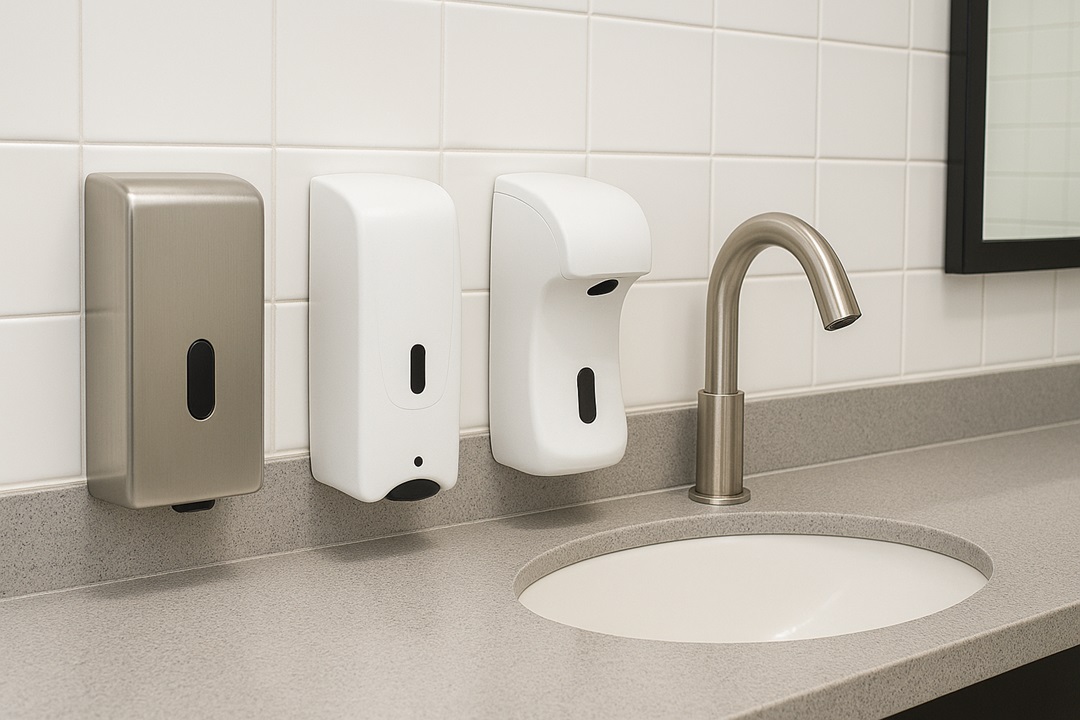
Automatic soap dispensers can be routinely specified to reduce contact points, standardize dosing, and support consistent hand hygiene outcomes in commercial restrooms. For AEC teams, the dispenser should not be regarded as a minor accessory, but rather a maintainability component. Selection affects refill labor, consumable logistics, vandal resistance, user satisfaction, and long-term operating cost. This guide compares common brand approaches and provides a performance-based framework suitable for Division 10 restroom accessory specifications and coordinated lavatory packages.
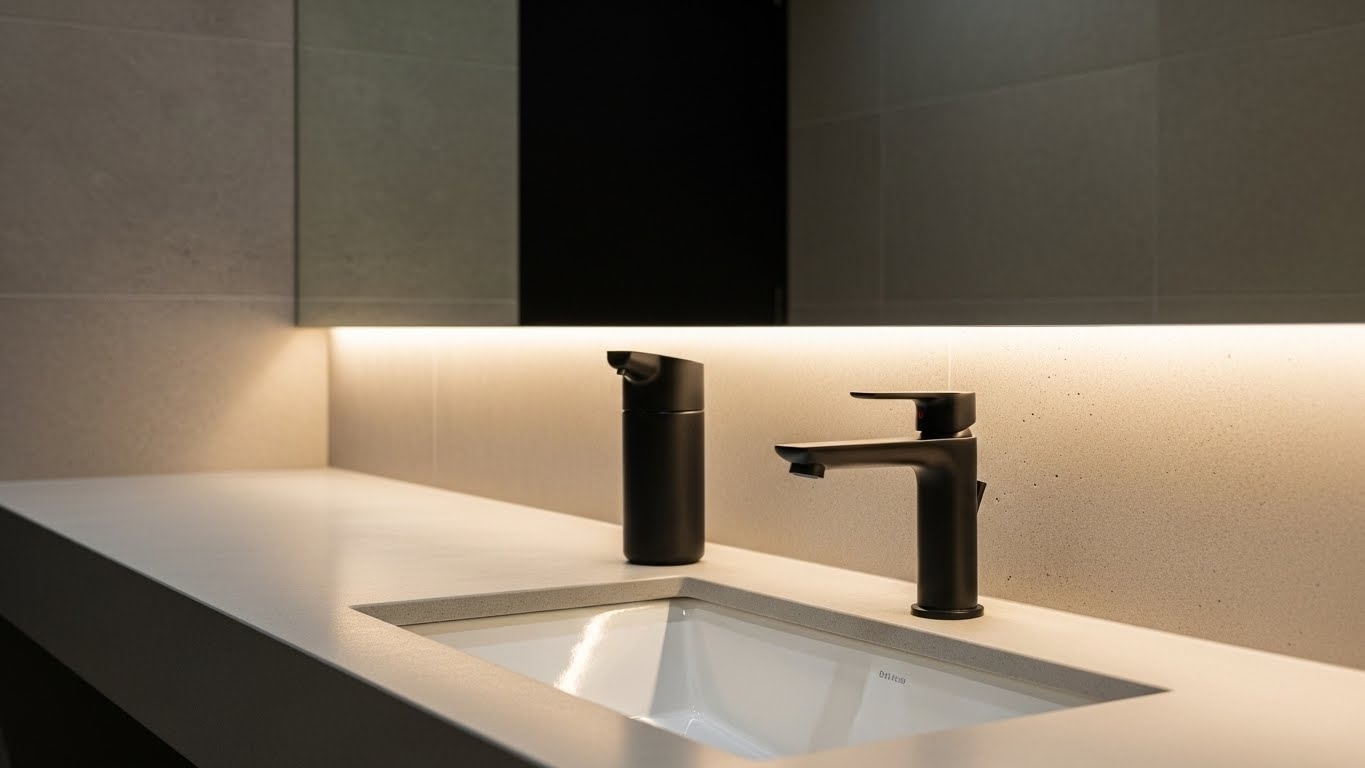
1) How to compare brands by performance criteria
Sensor performance and stability of activation
Sensor-operated dispensers shall be operable under reflective basins, dark countertops, bright daylight, and high-traffic conditions. Specify stable activation with few false triggers, consistent shutoff and appropriate sensing range relative to basin geometry. For models offering adjustable sensing distance or timed output, specify that adjustments are accessible only to authorized staff to prevent tampering.
Dose control, product compatibility, and clog resistance
Repeatability of dose directly impacts the consumption of soap and user satisfaction. Foam systems can minimize dripping and cleanup; liquid systems can support a wider range of formulation if the path of the valve is designed for resistance to clogging. Confirm if the dispenser is intended for proprietary refills, sealed bottles, or bulk fill. Bulk fill can decrease refill cost; it increases the risk of compatibility and can increase calls for maintenance whenever the viscosity of soap or its additives results in valve fouling.
Power strategy and service intervals
Battery-powered units reduce electrical scope but shift lifecycle labor to battery replacement and troubleshooting. In selecting brands, favor published expected cycles per battery set, the availability of battery types, and a clear low battery indicator without opening the housing. Hardwired options can reduce service visits but require clear transformer, access, and routing requirements coordinated with millwork, wall construction, and service clearances.
Housing durability and vandal resistance
In public venues, vandal resistance is a primary selection driver. Prefer lockable housings, robust mounting systems, and impact-resistant windows. Stainless steel housings are common in transit, stadium, and education projects because they combine durability with cleanability.
Accessibility coordination and operable parts
Touch-free activation supports accessible operation by minimizing force and dexterity requirements, but installation height, reach, and protrusion must still be coordinated. Align detailing with the 2010 ADA Standards for Accessible Design and related guidance on operable parts to ensure the dispenser is located within accessible reach ranges and does not create circulation hazards. The authoritative resources are the U.S. Department of Justice standards at the 2010 ADA Standards for Accessible Design and the U.S. Access Board guide for Chapter 3 Operable Parts.
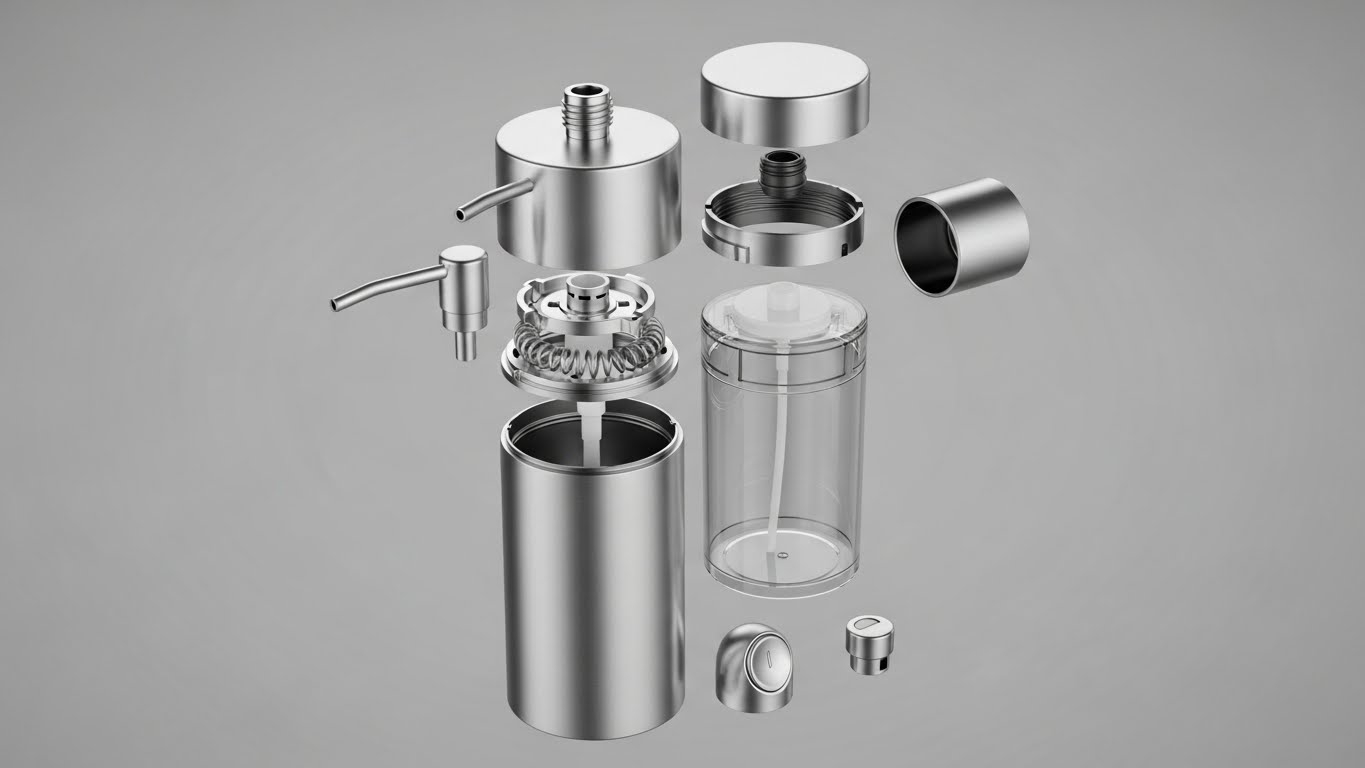
2) Brand architectures and what they imply for operations
Brands differentiate less by “touchless versus manual” and more by refill architecture, serviceability, and ecosystem support. The categories below reflect how many facilities actually operate dispensers across a portfolio.
A) Sealed cartridge systems for standardized maintenance
Sealed cartridge systems typically reduce contamination risk and simplify training because the pump path is refreshed with each refill. They also improve level visibility and reduce the chance of product incompatibility. A widely specified example is the PURELL dispensing ecosystem, including the PURELL ES8 dispensing system, which is selected most of the time when portfolios value consistent refills and optional monitoring.
B) Sealed bottle systems with broad institutional adoption
Sealed bottle systems generally strike a balance between hygiene control and predictable service routines, with broad distributor availability. For projects where sealed refills and modern dispenser design language are key drivers, the Tork Intuition sensor skincare dispenser represents a representative example of this kind of approach.
C) Sealed bottle systems with widespread institutional adoption
Some owners prefer a dispenser platform that integrates into a broader hygiene program, including chemical selection, training, and service support. Where that approach is preferred, review a platform such as the Ecolab Nexa hand hygiene dispenser, including how the dispenser and refill packaging are intended to reduce waste and simplify servicing.
D) High-capacity cassette systems to reduce refill frequency
In facilities where labor availability is constrained, high-capacity cassette-style refills can reduce service intervals. For example, the Scott Pro electronic skin care dispenser publishes long battery life performance targets and compatibility within its refill family.
E) Closed bag and pump systems aimed at hygiene and foam quality
Closed systems that contain the pump, bag, and nozzle can reduce exposure during servicing and help deliver consistent foam. A representative example is the GP PRO enMotion automated touchless soap and sanitizer dispenser, frequently considered when foam feel, hygiene controls, and standardized refills are priorities.
F) Commercial general-purpose platforms with strong channel availability
Some brands are selected primarily for availability, familiarity, and broad compatibility within janitorial procurement channels. A common example is the Rubbermaid AutoFoam dispenser platform, which is often evaluated as a practical default for many commercial applications.
G) Architectural accessory brands for coordinated stainless and deck mount conditions
When a project requires coordinated restroom accessories or robust stainless construction, architectural accessory brands are frequently included in the basis of design comparisons. Typical selection drivers are stainless steel construction, locking, and integration into a broader accessory package. Examples include the Bobrick B-2012 automatic soap dispenser, the Bradley soap dispensers, deck mount sensor options such as the Sloan Optima ESD-250, and multi-feed approaches such as the American Specialties soap dispensers category.
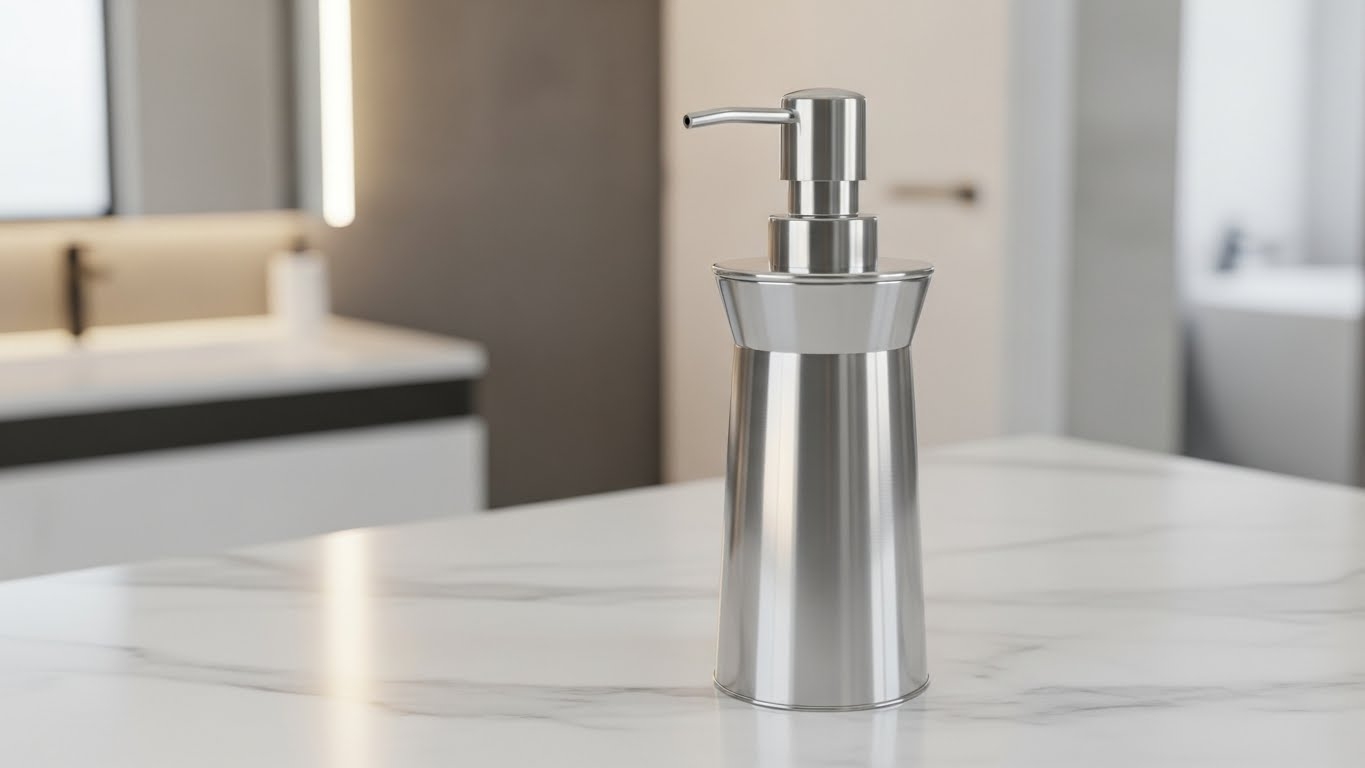
3) Specifier-oriented comparison matrix
| Selection driver | What to prioritize | Brand architecture that often fits |
|---|---|---|
| Portfolio standardization | Stable refill SKUs, consistent service method, optional monitoring | Sealed cartridge ecosystems |
| Hygiene controls | Sealed refills, protected pump path, minimized exposure during servicing | Sealed bottle, closed bag and pump |
| Multi-lavatory efficiency | High capacity refills, clear indicators, extended battery life or hardwire | Cassette systems, hardwired deck mount |
| High abuse environments | High capacity refills, clear indicators, extended battery life, or hardwire | Architectural accessory brands |
| Stainless housing, locks, tamper-resistant features | Central reservoir, simplified refill procedures | Low-service labor |
4) Total cost of ownership variables that should be specified
Consumables and procurement risk
A low unit cost dispenser can become a high cost asset if refill pricing, availability, or SKU changes disrupt operations. When a proprietary refill strategy is used, require documentation of refill availability and distributor coverage, and include an approved equals process for functional equivalents.
Labor time per refill event
Refill events drive cost more than the dispenser purchase price in many portfolios. Require submittals to include refill steps, estimated refill time, and whether any components are replaced with each refill.
Downtime and user experience
Missed activations, drips, and empty dispensers increase complaints and raise janitorial call volume. Require visible level indication, low battery status indication, and a refill method that does not require special tools beyond the supplied lock key.
Hygiene intent and owner policy alignment
If the owner uses soap and water as the primary hygiene method, confirm that product selection supports intended soap type and dose. For hygiene context that facility teams recognize, the CDC Clean Hands program provides clear baseline guidance through CDC information on handwashing with soap and water.
5) Where FontanaShowers and BathSelect may be specified
For projects that benefit from coordinated touchless fixtures and finish continuity, a curated selection can simplify interior design alignment and submittal review. For example, the Fontana catalog pages for automatic soap dispensers and touchless faucets and soap dispensers support early selection, while BathSelect provides commercial options such as the BathSelect chrome wall mount commercial automatic soap dispenser.
6) Performance-based specification language for Division 10
Provide sensor activated automatic soap dispensers suitable for continuous commercial service. Dispensers shall provide touch free activation, consistent dispense shutoff, and controlled dose output. Provide lockable housing and tamper resistance appropriate to occupancy. Provide visible indication for low soap level and low power status without opening the housing. Provide dispenser type compatible with the specified soap formulation and viscosity, including documentation of approved refills or refill cartridges. Coordinate installation height, reach, and projection for accessibility compliance in accordance with the 2010 ADA Standards for Accessible Design and the U.S. Access Board guidance on operable parts.
Submittals shall include product data, power requirements, refill type, refill part numbers, dose information, service access clearances, mounting template, warranty, and spare parts list.
7) AEC submittal review checklist
- Activating method of the sensor, range of sensing, and false trigger mitigation
- Dose delivered, actuation, and adjustment method, if applicable
- Refill architecture and refill part numbers, including approved soap formulations
- The source of power, the service interval to be expected, and the visibility of a low-power indicator
- Housing material, lock type, and mounting method
- Service clearance requirements, including the refill access to adjacent accessories
- Accessibility coordination, mount height, and projection allowances
- Warranty term and documented replacement parts availability
Why Brand Architecture Matters in Automatic Soap Dispenser Selection
Automatic soap dispenser performance is shaped not only by sensor quality, but also by the brand’s refill architecture, service model, and long-term parts support. In commercial projects, these differences affect how often staff need to refill units, how easily maintenance teams can standardize supplies, and how reliably the dispensers perform under daily use. A brand comparison based on operating logic rather than appearance helps specifiers make better decisions for schools, offices, healthcare facilities, and other high-traffic environments.
For facility owners and AEC teams, comparing systems by refill type, housing durability, accessibility coordination, and maintenance workflow creates a more useful basis for selection. This approach supports stronger Division 10 specifications, reduces lifecycle uncertainty, and helps align restroom accessories with broader hygiene, operational, and durability goals across the building.
Automatic Soap Dispenser Brand Comparison
Specifier Brand Comparison Resource Center
Professional Resources for Comparing Automatic Soap Dispenser Brands
Specifiers comparing automatic soap dispenser brands should evaluate sensor reliability, dosing accuracy, refill systems, finish durability, ADA coordination, installation flexibility, maintenance access, warranty support, and lifecycle operating value. These resources help architects, engineers, contractors, and facility managers make informed decisions for commercial restroom hygiene systems.
Commercial Soap Dispenser Collections
Integrated Touchless Restroom Systems
Installation & Technical Resources
Brand Evaluation Resources
Featured Specification-Ready Commercial Solutions
Commercial Wall Mount Soap Dispenser
A commercial-grade automatic dispenser designed for reliable touch-free operation, consistent dosing, simplified servicing, and long-term restroom performance.
View Model FS9818 →Commercial Sensor Faucet
Pair automatic soap dispensers with commercial infrared faucets to compare full touchless handwashing performance across restroom systems.
View Commercial Sensor Faucet →Integrated Faucet & Soap System
Coordinate touchless faucets and automatic soap dispensers within one specification-ready commercial restroom hygiene system.
Explore Integrated Systems →3-In-1 Touchless Washroom System
A complete commercial hygiene solution combining sensor faucet, automatic soap dispenser, and hand dryer for full restroom specification planning.
View 3-In-1 System →