Audience: architects, engineers, contractors, facility managers, and owners planning high-traffic restrooms in office buildings, airports, malls, universities, and healthcare facilities.
From Product to System: How AEC Teams Should Think About Touchless Soap
Instead of treating soap dispensers as late-stage hardware selections, they should be part of early-stage restroom planning—on par with fixtures, lighting, and ventilation. A good touchless soap design considers:
- Reach & ergonomics – Can users intuitively find and reach soap with one motion after turning on the faucet?
- Sightlines – Is the dispenser visually obvious, or does it “disappear” against mirrors and stone?
- Power strategy – Battery, hardwired, or hybrid? Where are controllers, transformers, or access points?
- Maintenance paths – How will staff inspect, refill, and service units daily?
- Future-proofing – Is there space and routing available to upgrade to a multifeed system later?
1. Layout & Placement: Getting the Basics Right
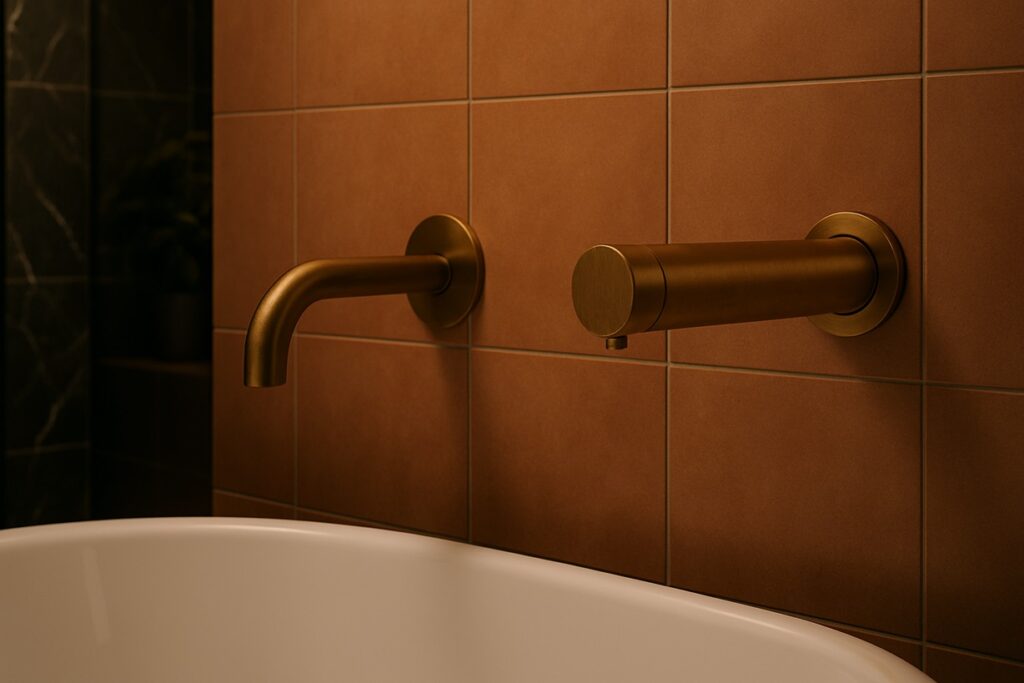
User experience starts with basic questions like “Where do I put my hands?” and “Where does the soap come from?” Users should be able to easily move from soap to water to drying with as little reaching and dripping on the counter as possible.
Best-practice placement rules
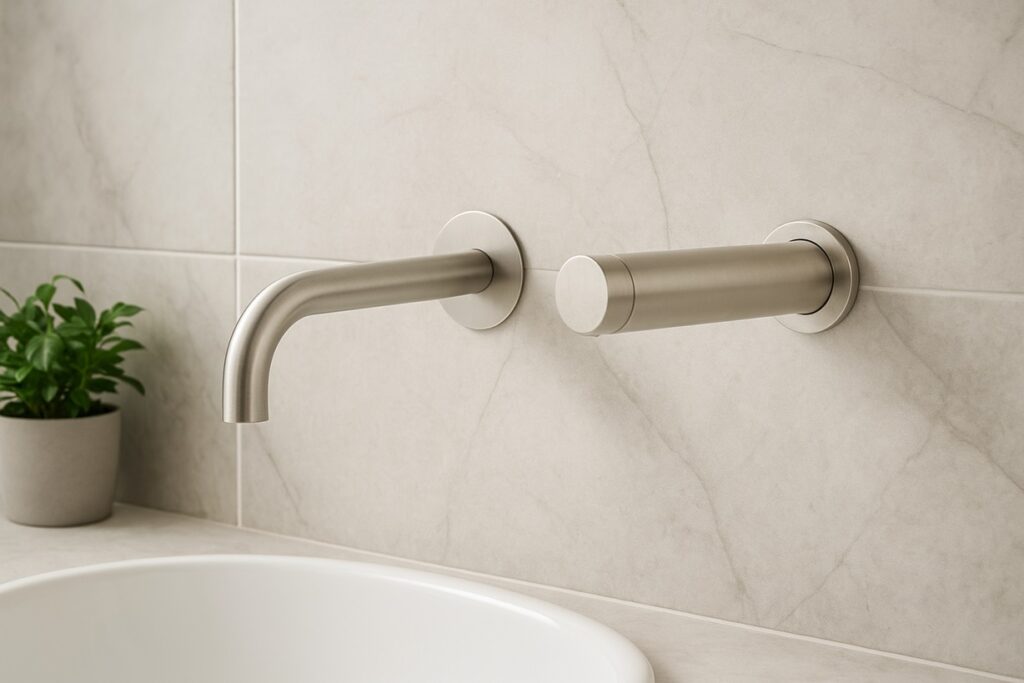
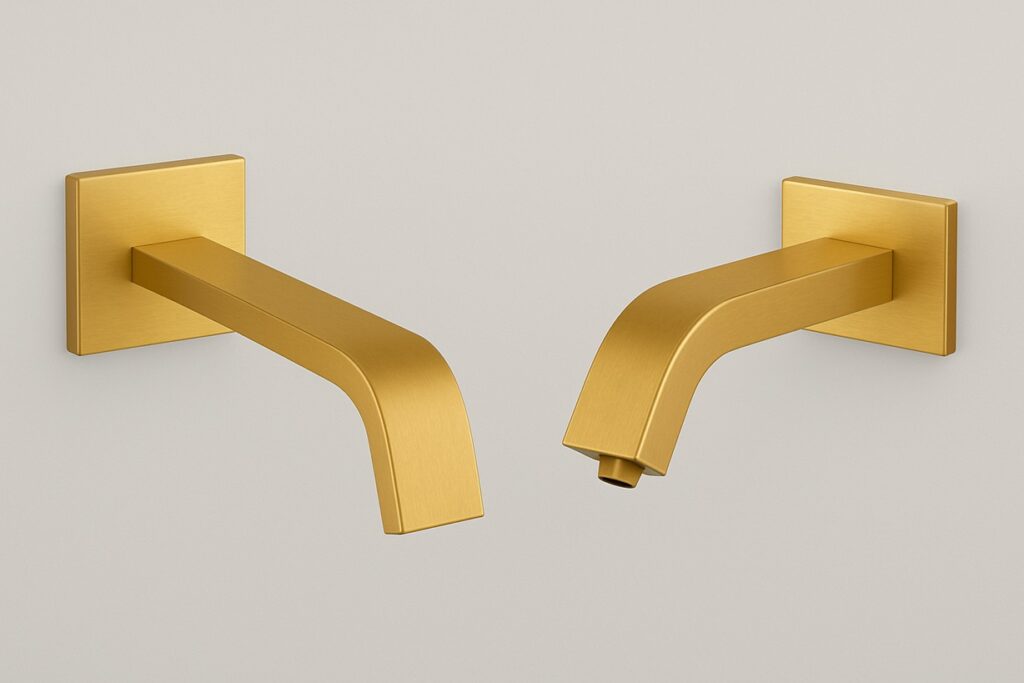
- Center soap dispensers either directly next to or slightly offset from the faucet spout, within a comfortable reach zone.
- Keep a consistent pattern across multiple sinks—users should not have to “hunt” for soap at each basin.
- Verify clearances for ADA reach ranges and knee space; avoid protruding bodies that conflict with grab bars or basins.
- Coordinate with mirror height, backsplash thickness, and edge details to avoid visual clutter.
2. Coordinating Finishes & Geometry
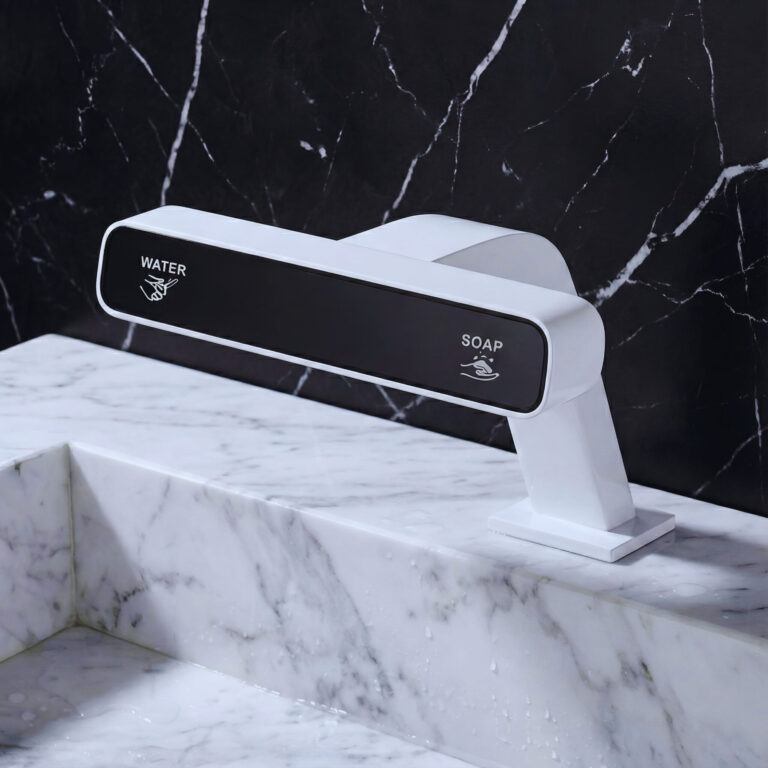
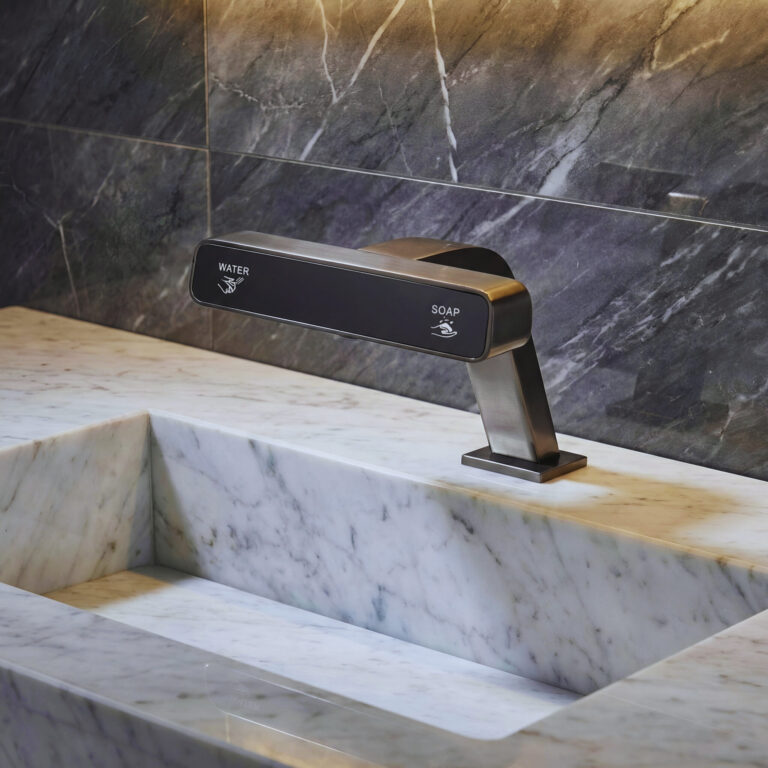
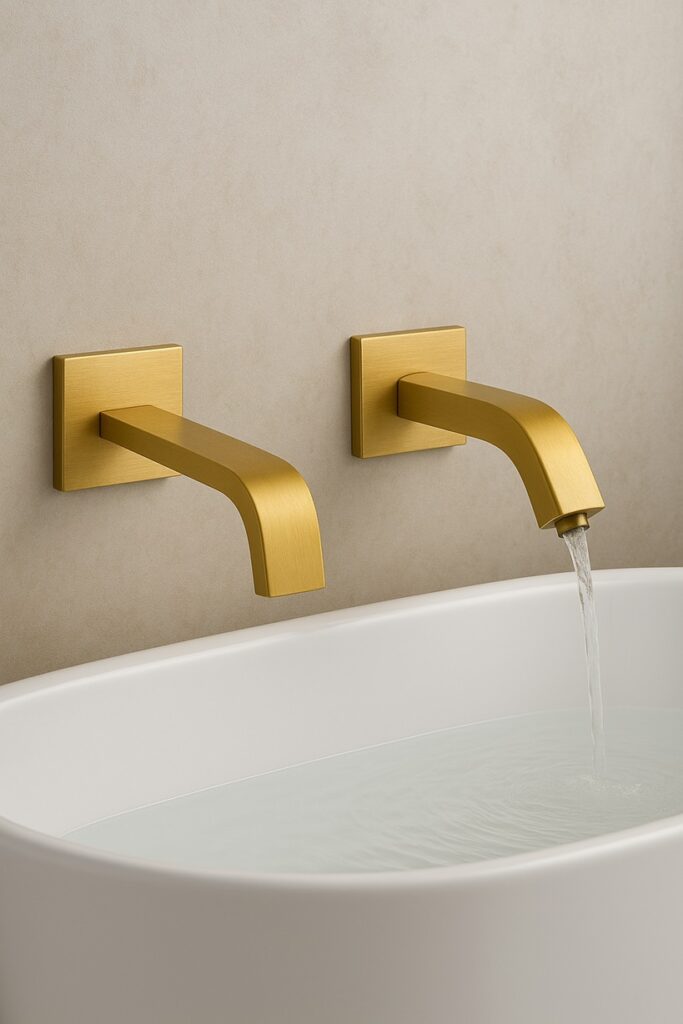
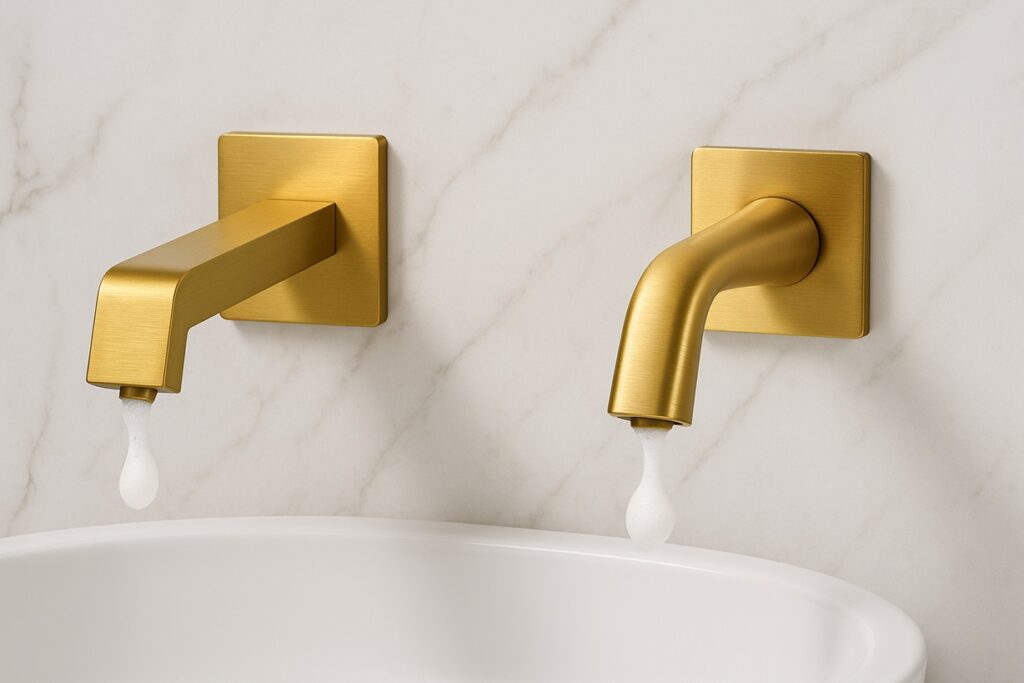
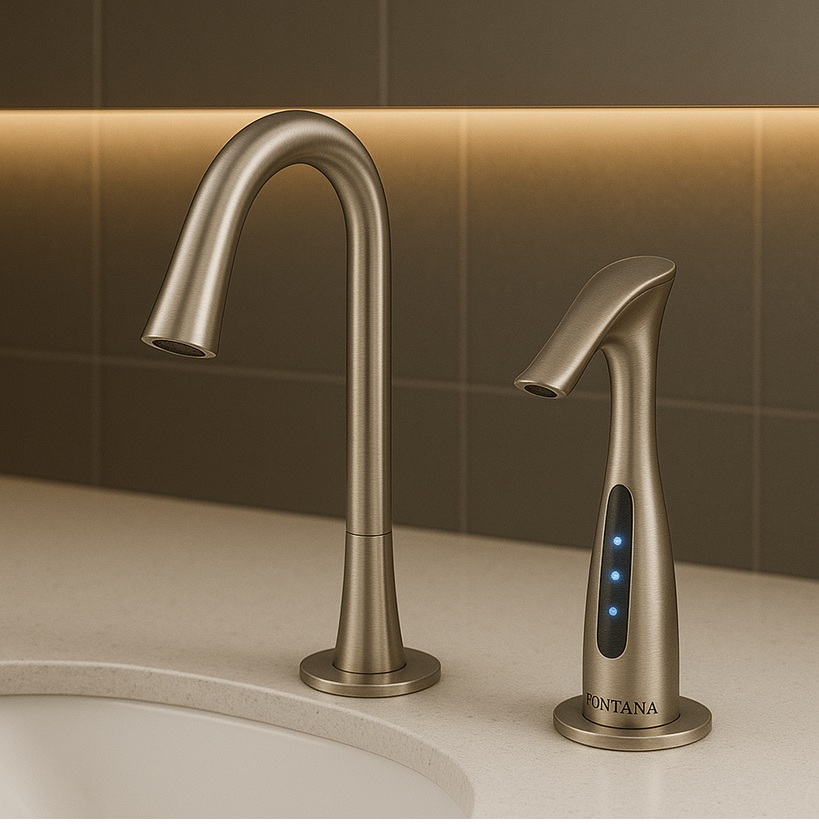
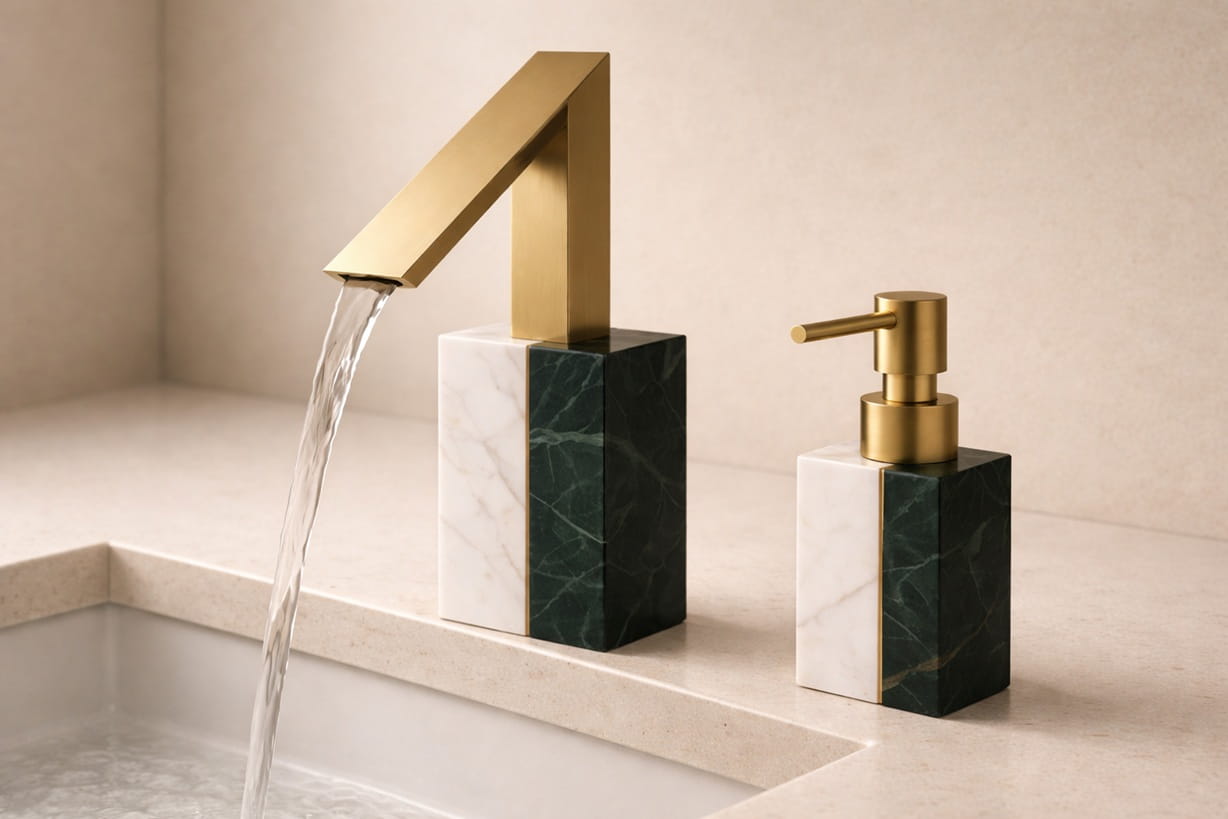
Nothing makes a new restroom look more “value-engineered” than mismatched finishes and form factors. For high-visibility commercial projects, touchless soap dispensers should be selected as part of a family with faucets and other visible hardware.

Finish & form decisions
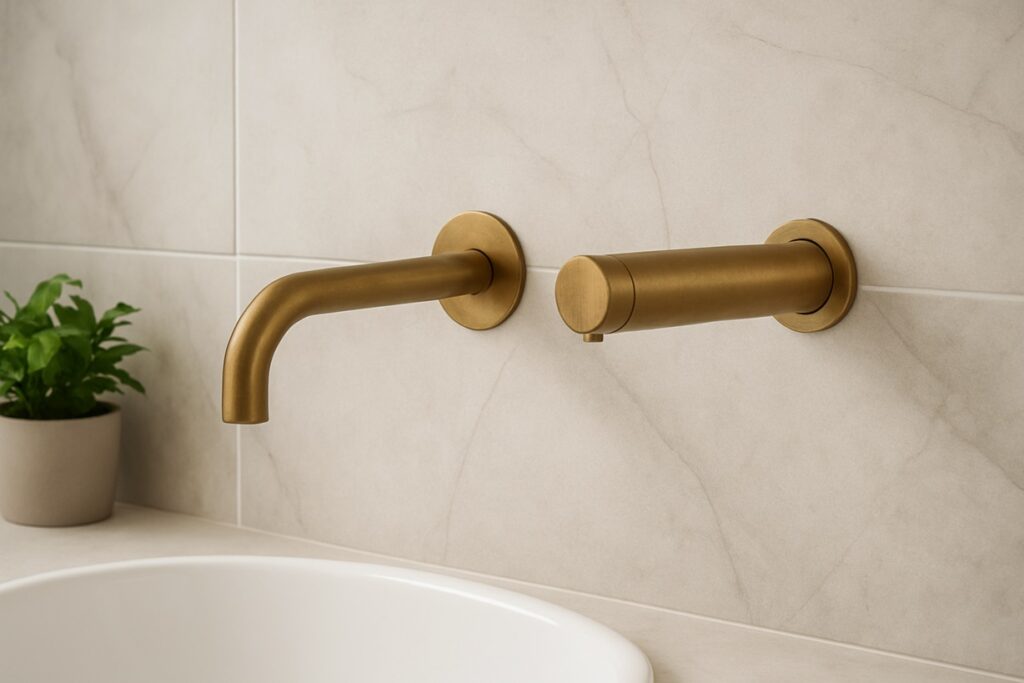
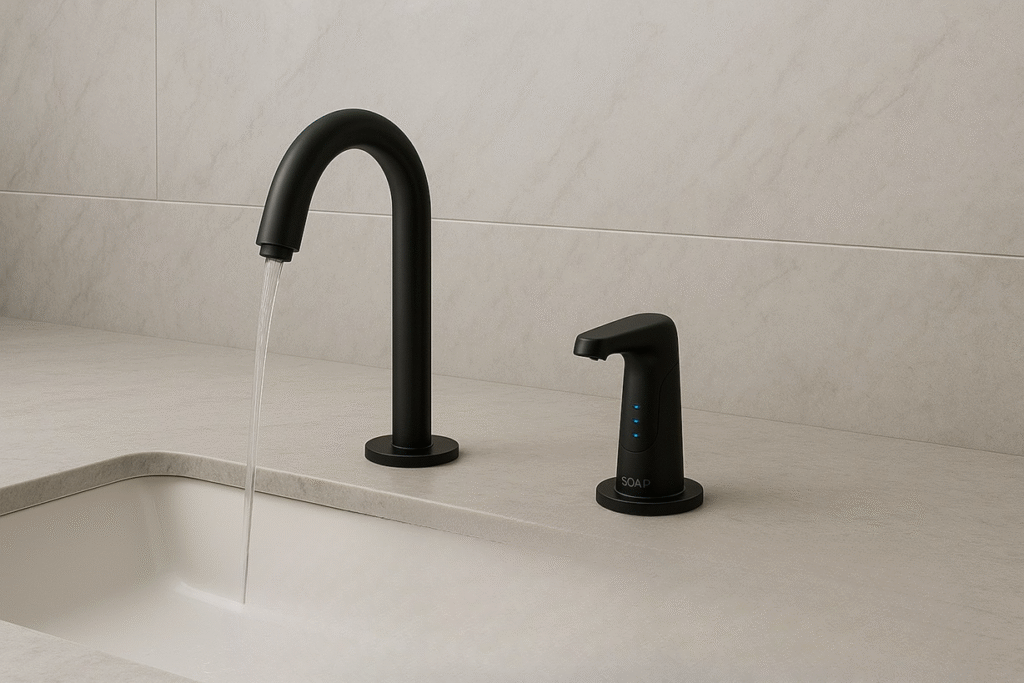
- Match faucet and dispenser finishes (chrome, matte black, brushed gold, bronze, stainless, etc.).
- Choose similar spout shapes (round vs. square vs. blade) for both water and soap to create a cohesive look.
- Consider darker finishes in high-splash areas to hide water spots—or specify coatings that resist spotting.
- Use brand-aligned finishes in flagship areas (executive floors, lounges) and more standard finishes in core restrooms.
3. Power, Controls & Service Access
The most elegant dispenser means nothing if maintenance staff can’t reach power components or refill points. Early coordination between plumbing, electrical, and millwork is essential—especially if you want the option to add or upgrade to a multifeed system by Fontana later on.
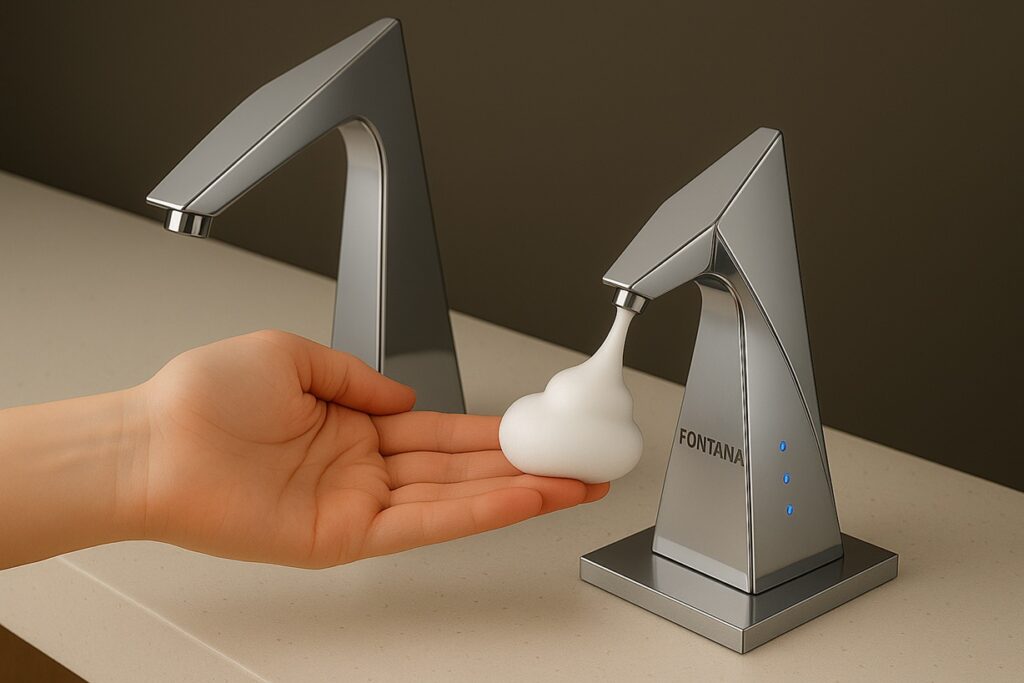
Power strategy options
- Battery-powered: easiest retrofit; plan for battery change intervals aligned with cleaning rounds.
- Hardwired / low-voltage: best for large projects; requires early electrical coordination.
- Hybrid / centralized controls: ideal when planning for future multifeed or smart monitoring systems.

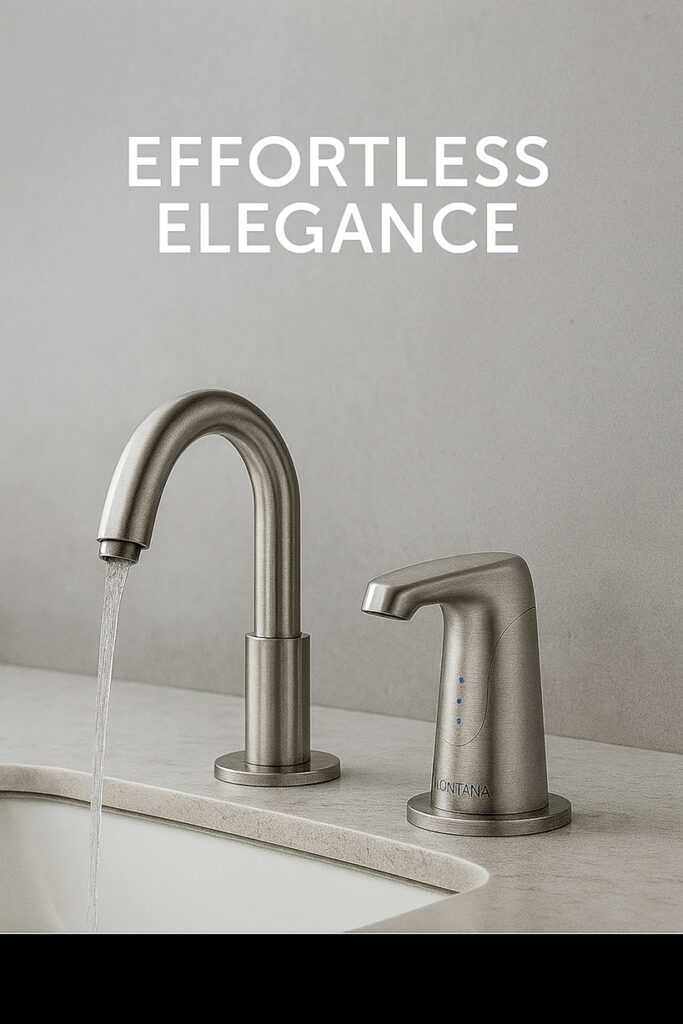
4. Planning for Multifeed & Centralized Refilling (Fontana-Friendly Design)
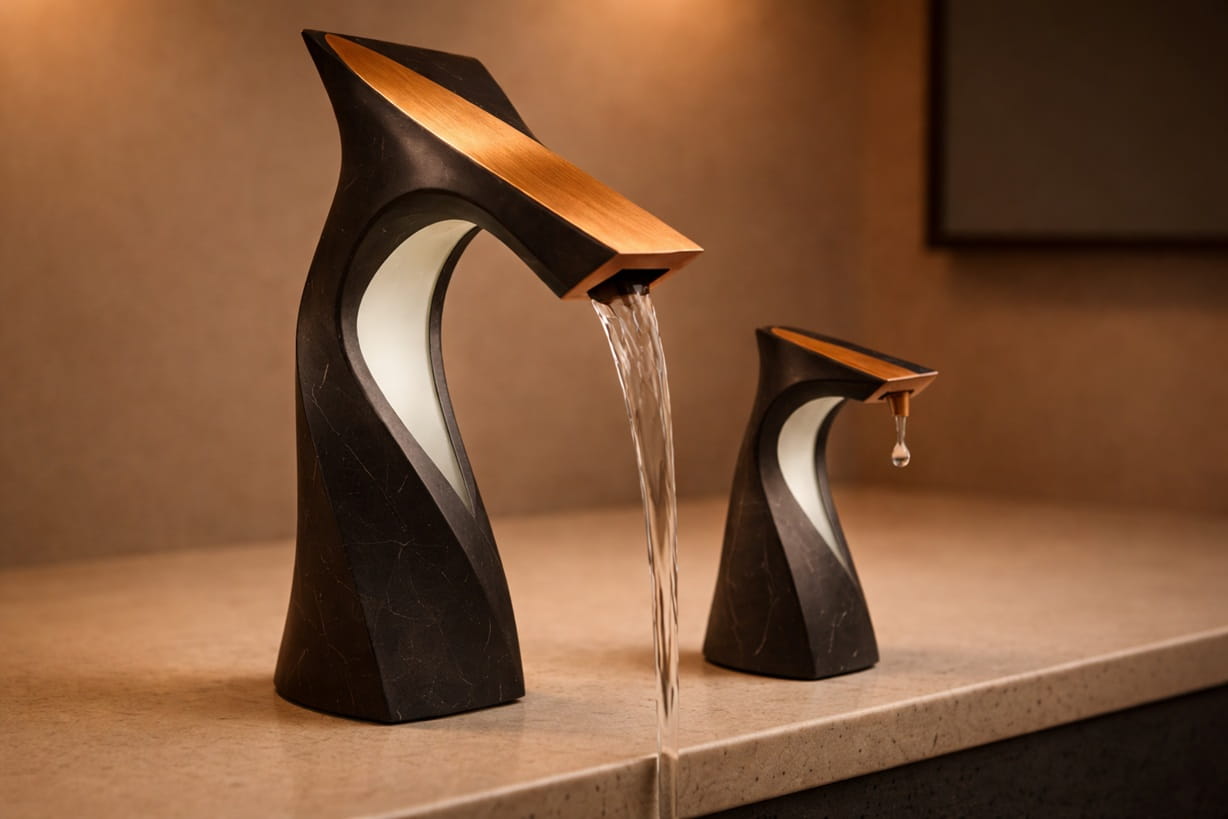
Even if you’re not ready to install a multifeed system today, smart projects increasingly design the millwork and under-counter space to accommodate one later. This is where Fontana’s multifeed approach becomes especially attractive: you can start with individual automatic dispensers, then upgrade to a centralized Fontana multifeed tank and manifold when budgets allow.

Design moves that make multifeed easier (now or later)
- Reserve a clear zone under the vanity for a future bulk soap tank and controller.
- Provide a logical path for tubing from the central tank to each dispenser location.
- Include one or more discreet top-fill ports at the counter for safe, ergonomic refilling.
- Coordinate with owners so they understand the operational benefits of multifeed before construction is complete.
5. Maintenance, Soap Selection & Owner Standards
The best-designed restroom can still fail if the soap is incompatible with the dispensers or if maintenance staff are not trained. Commercial touchless systems—including those from Fontana—typically require specific viscosity ranges and non-abrasive, non-particulate formulas.
- Choose the right soap: follow manufacturer recommendations to avoid clogs and premature pump wear.
- Train staff: cover how to check indicator lights, refill tanks, clean sensor windows, and interpret error states.
- Document settings: for dose volume and sensor range, keep a record in O&M manuals and on the back of access panels.
- Align with ESG goals: consider low-VOC, eco-certified soaps and reduced packaging when using bulk or multifeed systems.
User flow efficiency and dwell-time optimization at multi-station vanities
In high-traffic commercial restrooms, the performance of automatic soap dispensers is closely tied to user flow efficiency and total dwell time at each basin. Poorly positioned dispensers can interrupt movement patterns, causing users to hesitate, double-trigger sensors, or extend rinsing time, which increases both water and soap consumption across the facility.
From an AEC planning perspective, dispenser placement should support a single continuous motion: approach → soap activation → rinse → exit. When soap dispensers are aligned within the natural reach arc of the faucet zone, users complete handwashing faster and with fewer repeated activations, improving throughput in peak periods such as airport rush hours or stadium events.
Advanced layouts—especially those designed for multifeed systems—benefit from consistent spacing, synchronized sensor positioning, and predictable activation zones. These factors reduce congestion at long vanity runs and help maintain uniform hygiene performance across all stations, even under heavy load.
Key Takeaways for AEC Teams
- Start early: treat touchless soap dispensers as part of core restroom planning, not final-stage hardware.
- Design for flow: align dispenser placement with faucet and dryer locations to minimize dripping and confusion.
- Coordinate finishes: choose families and finishes that unify faucets, dispensers, and accessories.
- Future-proof the space: allocate room for bulk tanks and tubing so you can implement a Fontana-style multifeed system later.
- Train and standardize: support operations teams with consistent models, clear O&M, and documented settings.
By thinking in terms of systems rather than just fixtures, design teams can deliver commercial restrooms that look better, perform better, and cost less to operate—especially when they keep multifeed-ready solutions like Fontana in mind from the start.
Commercial Restroom Design Resource Center
Design Resources for Commercial Restrooms with Touchless Soap Dispensers
Designing a modern commercial restroom requires careful coordination between hygiene, durability, accessibility, traffic flow, maintenance access, finish selection, and touchless fixture performance. These resources help architects, designers, contractors, and facility managers plan reliable soap dispensing systems for high-traffic public and commercial environments.
Commercial Soap Dispenser Collections
Touchless Restroom Systems
Installation & Planning Support
Design & Specification Guides
Commercial Applications
Hygiene & Maintenance Resources
Featured Touchless Restroom Design Solutions
Wall Mount Automatic Soap Dispenser
A practical choice for commercial restroom layouts where clean counters, easy maintenance access, and touch-free dispensing are design priorities.
View Model FS9818 →Matte Black Commercial Soap Dispenser
Ideal for modern hospitality, office, restaurant, and public restroom interiors requiring both visual impact and commercial-grade reliability.
View Matte Black Model →Integrated 3-In-1 Touchless System
A coordinated commercial restroom solution combining soap dispensing, sensor faucet operation, and hand drying into one streamlined design.
View 3-In-1 System →