Soapdispensing Buying Guide — What to Look For
Choosing a soap dispenser is about far more than appearance. Compare touchless technology, soap compatibility, mounting, refill capacity, accessibility, and lifecycle servicing before specifying a product for hotels, malls, stadiums, offices, or other commercial restrooms.
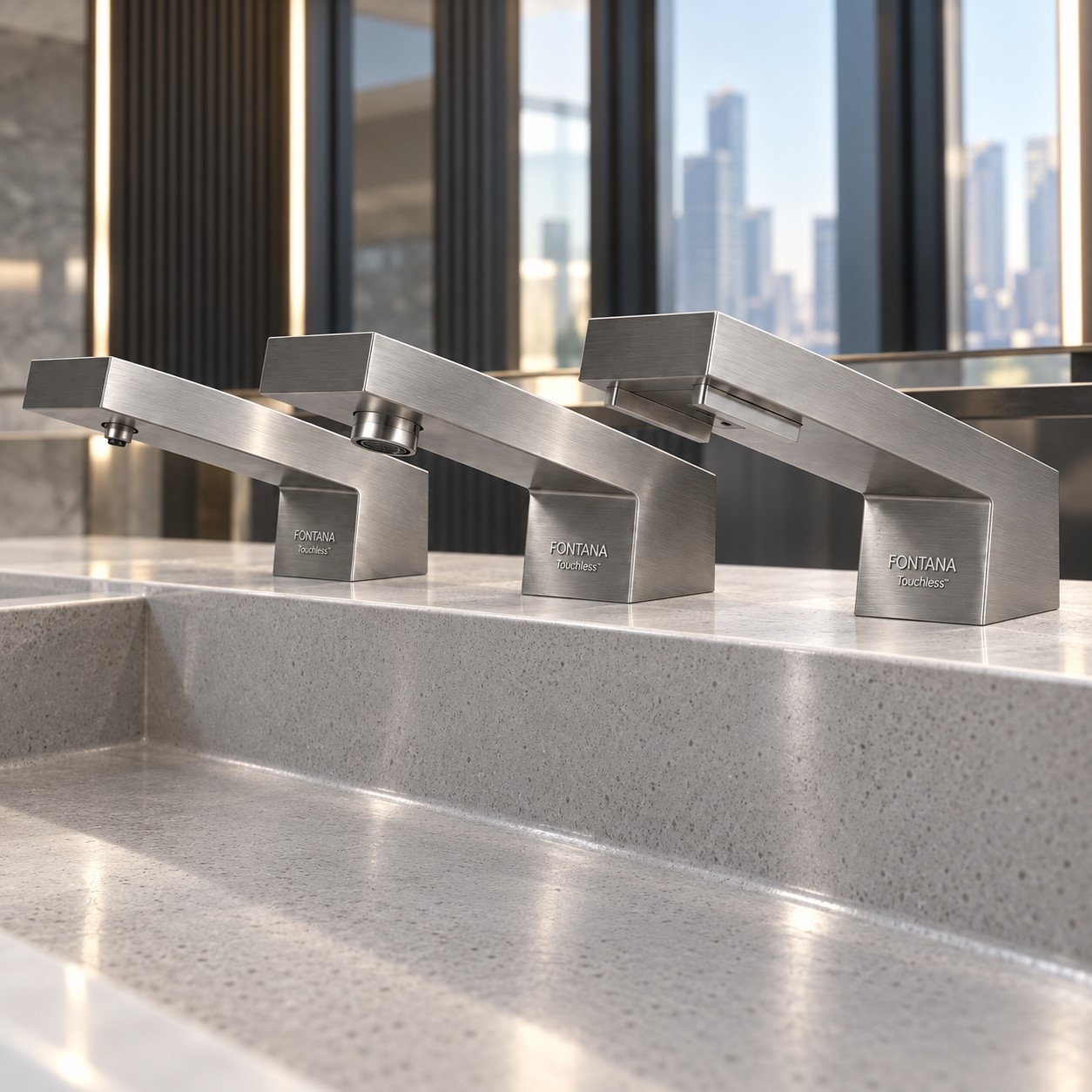
What makes a commercial soap dispenser worth buying?
The right soap dispenser fits the handwashing station, works with the facility’s approved soap, delivers a consistent dose, and is straightforward for staff to maintain. For commercial projects, buying decisions should weigh the entire installed system—not simply the fixture price. The sections below translate those requirements into practical checks for designers, purchasing teams, contractors, and facilities managers.
Specify the system
Match activation, soap chemistry, reservoir, and power to use conditions.
Plan the installation
Verify mounting geometry, clearances, finish coordination, and service access.
Control lifecycle cost
Consider refilling labor, consumables, cleaning, batteries, pumps, and spare parts.
Choose the dispenser around the restroom, not just the finish
A soap dispenser influences how people move through a washstation, how consistently soap reaches the hand, and how much labor the facility spends on refilling and repairs. A suitable commercial specification balances hygiene, capacity, mounting geometry, dispensing accuracy, access for service, and a finish that survives routine cleaning. Start with expected daily traffic, the kind of soap the facility stocks, and the space available behind the wall or below the countertop. A premium exterior cannot compensate for a reservoir that is difficult to reach or a pump that is incompatible with the chosen formulation.
Read More
For a multi-site program, document every model’s soap format, viscosity allowance, activation zone, minimum clearance, dose setting, operating voltage, refill method, and replacement-part availability. Use comparable data sheets before evaluating decorative finishes.
Manual, touchless and centralized systems
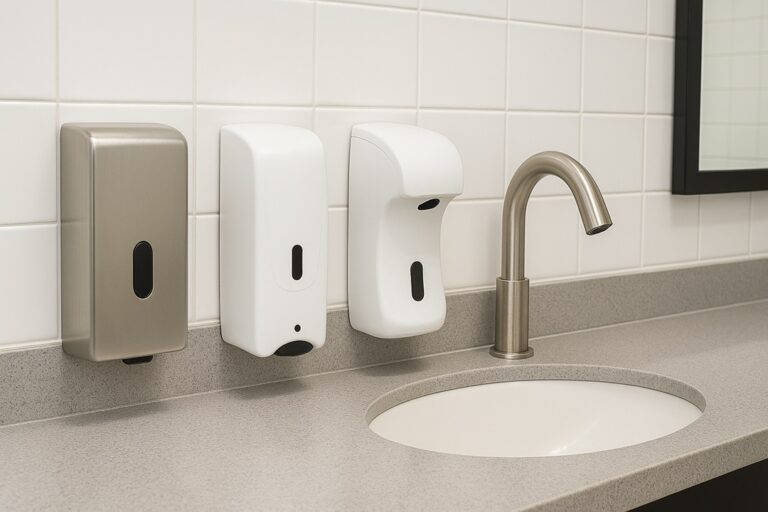
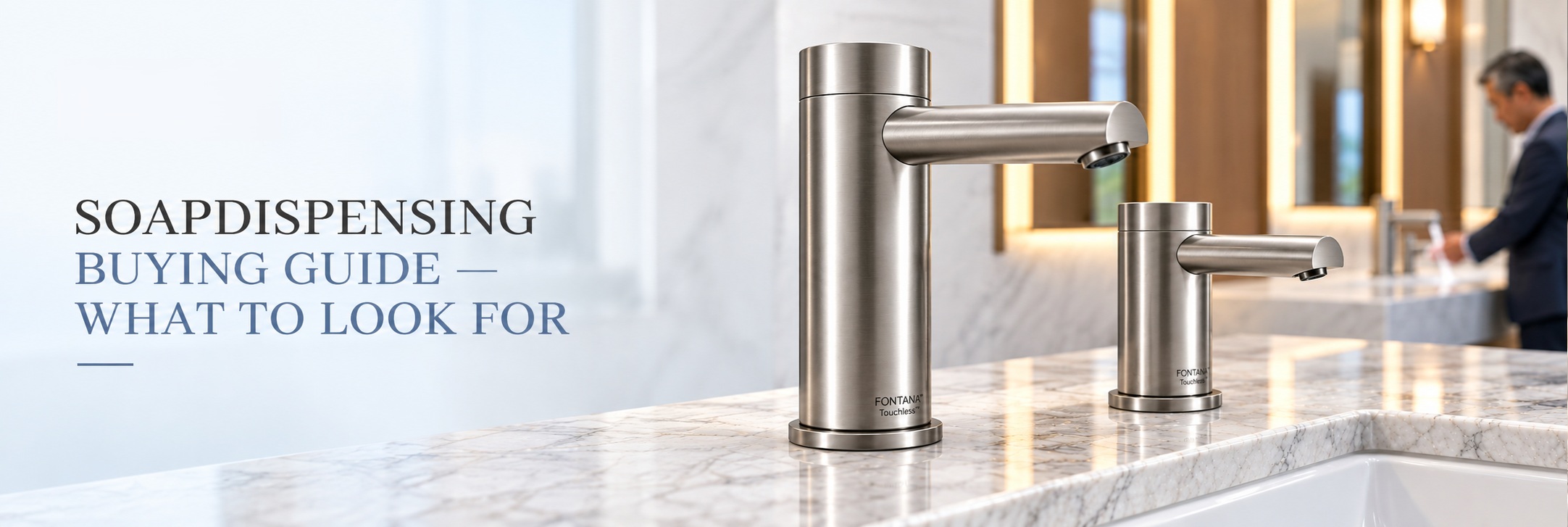
Manual wall-mounted units are straightforward to operate, often economical to acquire, and may be appropriate where budgets or power access are constrained. Automatic dispensers activate through a sensor and allow an intentional hands-free experience, although they introduce electronics and power requirements. Deck-mounted systems visually integrate with faucets and counters, while wall-mounted housings free up counter space. Centralized multi-feed systems may reduce the number of refill points in large facilities but require routing, access, and coordinated maintenance.
View More
Consider the entire system: a touchless spout is only one part of performance. Inspect the sensor module, pump, tubing, backflow or anti-drip arrangements when provided, and the strategy for refilling or replacing soap. Confirm whether a particular unit supports bulk soap, sealed cartridges, or a dedicated proprietary supply.
Liquid versus foam: check the pump and chemistry
Liquid soap and foaming soap are not interchangeable simply because both dispense through a nozzle. Foaming systems often rely on an air-mixing mechanism and a compatible low-viscosity formulation. Liquid systems may support a specified range of viscosity, but that range varies widely between pumps. Selecting an unsupported formula can cause inconsistent dosing, motor strain, leaks, or blockage.
Learn More
Ask the manufacturer to state the approved soap type, concentration, viscosity range at a stated temperature, compatibility with fragrances and additives, and any limits on abrasive or particulate formulas. Avoid diluting a product unless both soap and dispenser manufacturers explicitly authorize it.
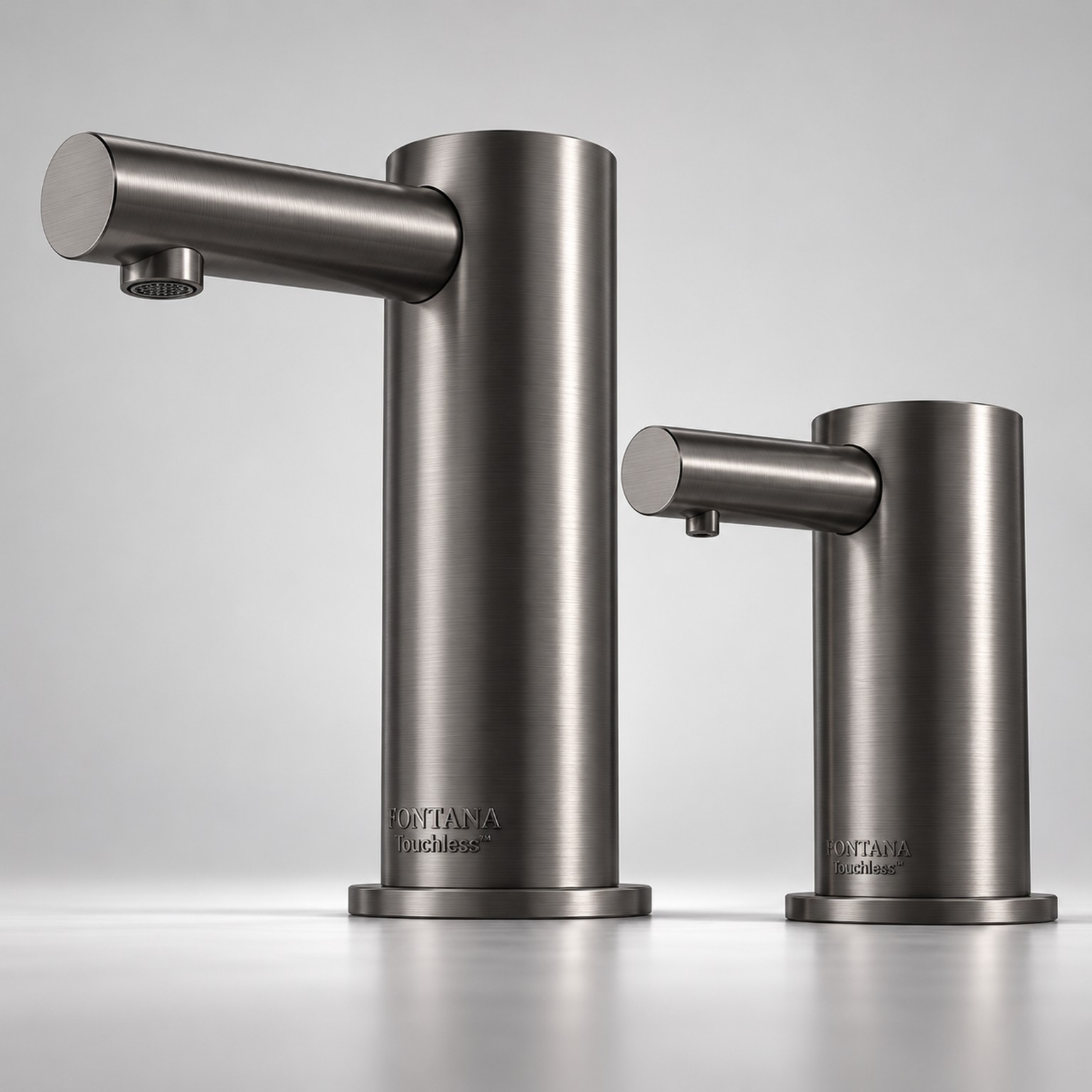
Measure sensor performance in the actual basin
Infrared proximity sensing is widely used in commercial dispensers. Some ranges also offer time-of-flight distance sensing. Neither technology should be treated as universally superior without examining the particular installation. Reflective basins, strong lighting, gloss surfaces, adjacent faucets, and hand approach angles may affect behavior. A sensor should trigger intentionally while limiting uncommanded operation and repeated dosing.
View More
During mock-up or commissioning, test approach angles, wet and dry hands, dark surfaces, hand sizes, ambient lighting, and nearby sensor-equipped equipment. Record whether sensing distance or dose can be adjusted and whether the settings survive power loss.
Dose control and waste management
Dose volume, measured in milliliters per activation, affects consumption and how frequently staff refill the dispenser. Too little soap may make users activate it several times; too much can create waste and increase cleaning. A programmable dose lets a team tune delivery to the approved soap formulation and actual occupancy. Anti-drip design and nozzle placement matter as much as dose accuracy for keeping stone, tile, and counter surfaces clean.
Read More
Use a site trial rather than assuming the lowest setting is best. Measure the average dose and actual reactivations, then compare the results against the soap maker’s usage instructions. Record the selected dose as part of the operations handover.
Capacity and refill strategy
The right capacity depends on handwashing events, the average dose, operating hours, and the facility’s refill schedule. A small reservoir is manageable in a private suite but can become a labor burden in a stadium concourse. Central storage may simplify supply replenishment, but it creates different routing, leak detection, and service dependencies. Reservoir accessibility should be checked with the countertop, trap, waste pipe, and vanity panels installed.
View More
Estimate daily consumption as activations multiplied by average dose. For example, 400 activations at 1 mL require roughly 400 mL daily before allowing for waste, priming, and uncertainty. Size refill intervals from observed demand and leave an operational reserve.
Power, maintenance access and reliability
Battery-operated dispensers simplify some retrofits; hardwired power can reduce routine battery changes when planned early. Hybrid power should be verified for the exact model rather than assumed from a product family. Review low-power indicators, wiring protection, cable length, accessible battery compartments, and the location of controllers and pumps. Service personnel should be able to remove a reservoir or replace a pump without dismantling finished walls.
Learn More
Specify replacement pump assemblies, sensors, seals, tubes, batteries, and nozzles as appropriate. Confirm parts availability and instructions for cleaning, fault diagnosis, system priming, and shutdown. Facility-wide standardization can lower the number of spares and cleaning procedures required.
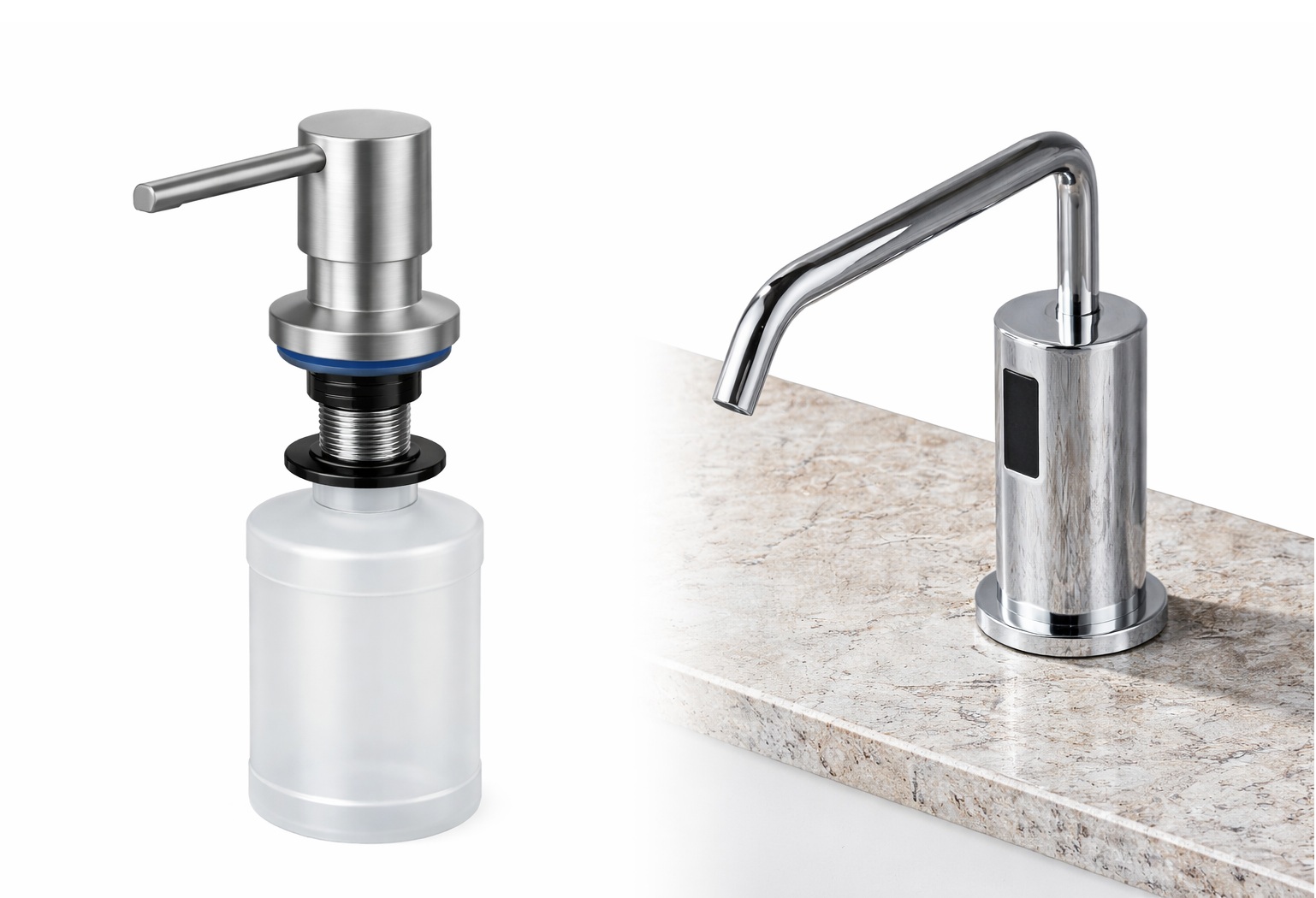
Accessibility and safe placement
For U.S. accessible installations, applicable portions of the 2010 ADA Standards address reach ranges, clear floor space, and operable parts. An unobstructed adult reach commonly extends from 15 to 48 inches above the finished floor; counters or other obstructions can change the allowable reach. Soap outlets and activation zones should remain usable from an accessible position without forcing a reach through the faucet stream or across a deep sink.
View More
Do not declare a dispenser ADA compliant from its catalog photo alone. Evaluate its actual mounting height, distance from the approach, counter depth, clear space, knee clearance, operating force where applicable, and the jurisdiction’s adopted requirements. Obtain a project-specific accessibility review.
Commercial materials and architectural finishes
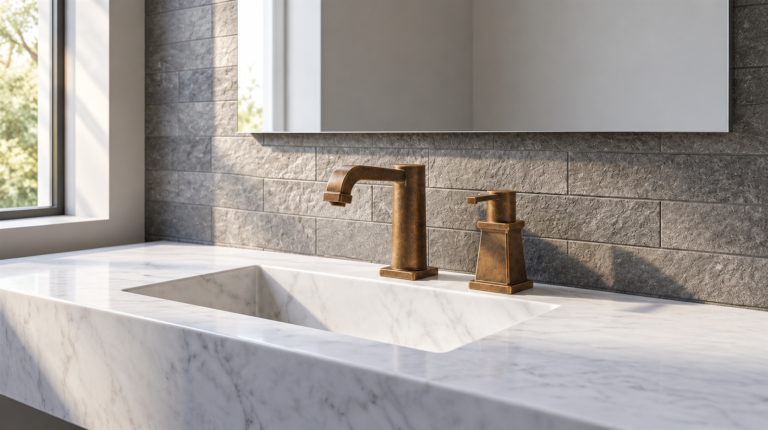
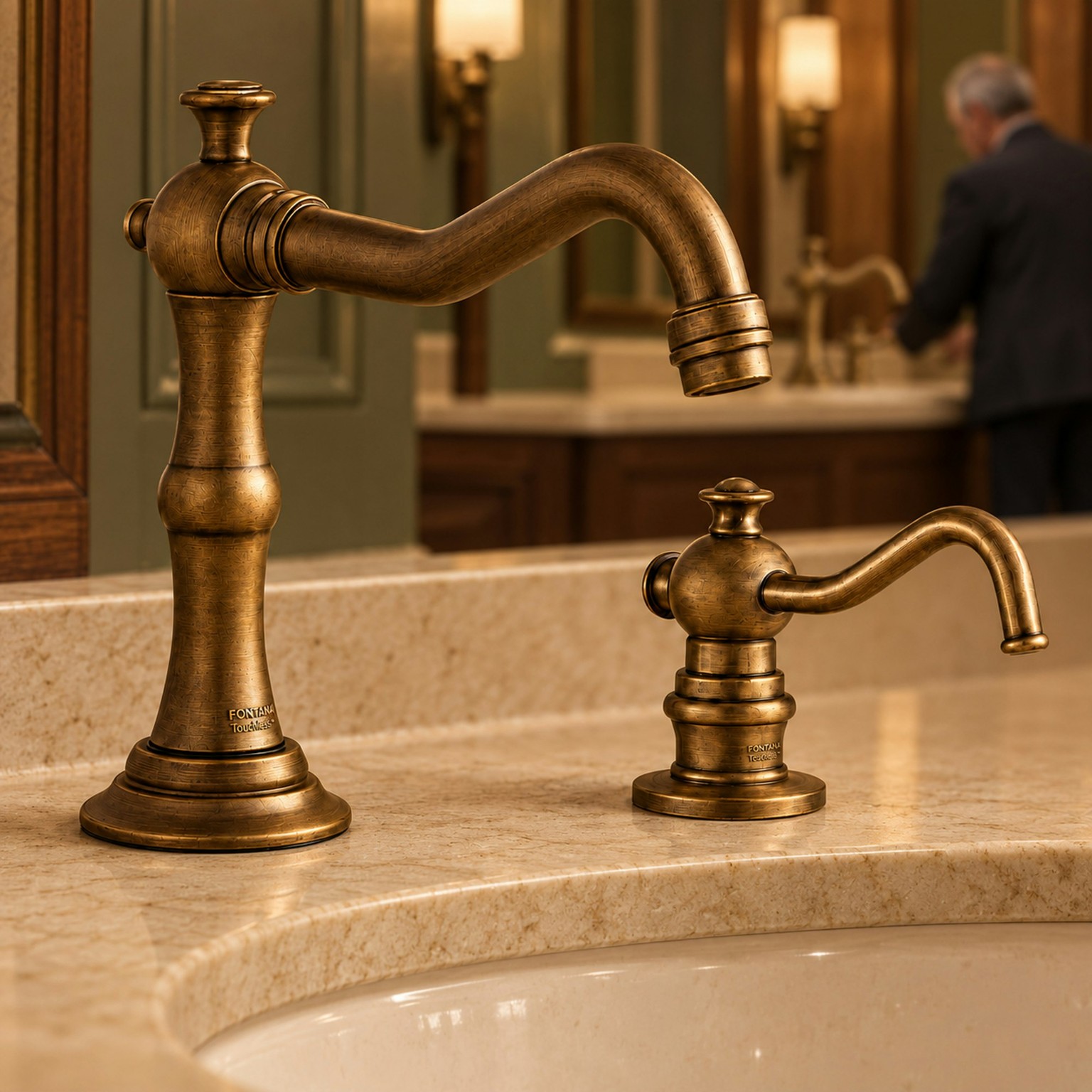
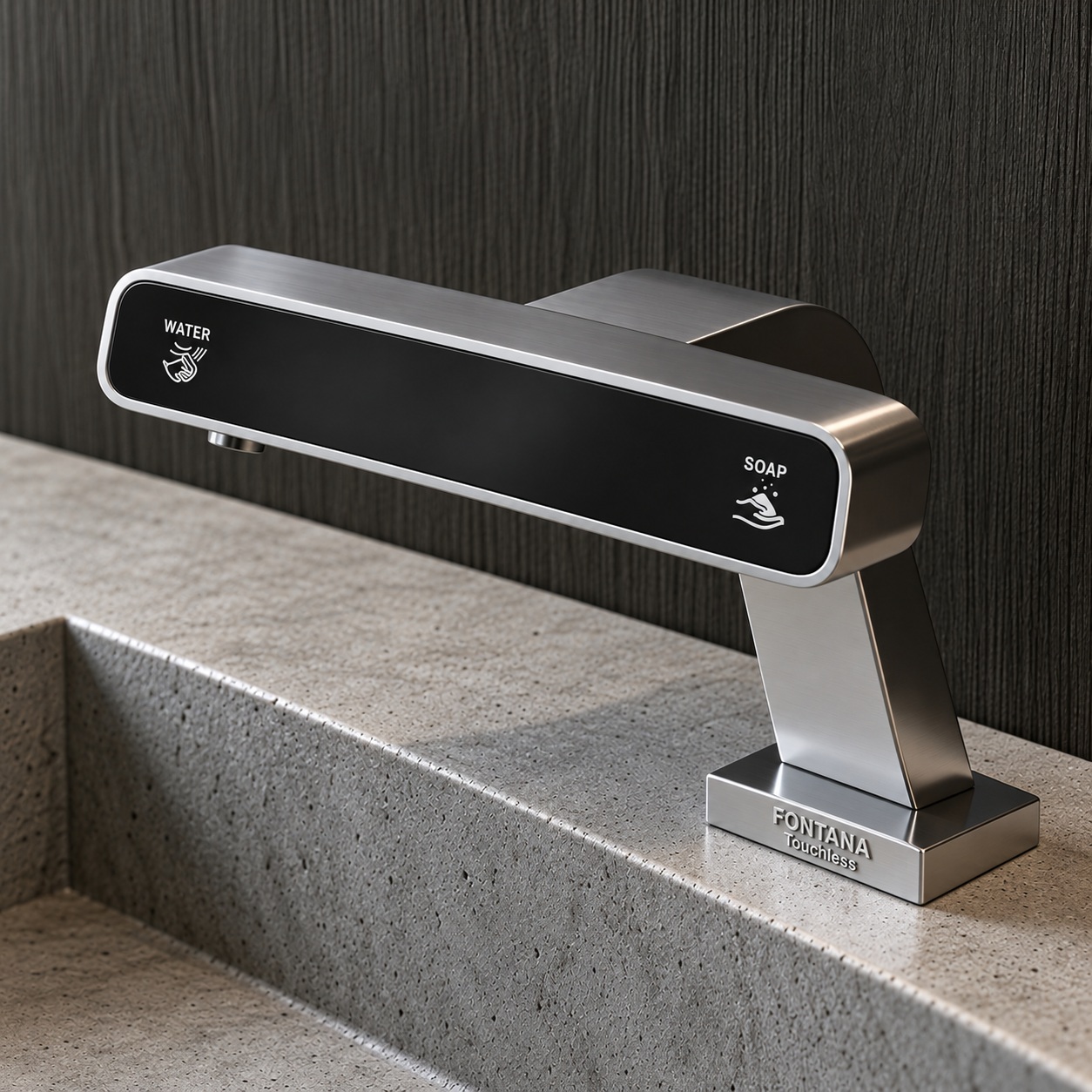
Solid brass, stainless steel, and appropriately specified coated metals can support long-term commercial use, but construction, coating quality, cleaning compatibility, and repairability matter more than appearance alone. Chrome and brushed nickel commonly coordinate with other fixtures; matte black and brushed gold create design continuity where finishes are standardized. High-contact and vandal-prone environments may need protected fasteners and tamper-resistant access.
View More
Request finish maintenance instructions and cleaning-agent compatibility. Check whether replacement spouts, sensor windows, or housings match the original finish. Where a dispenser sits above natural stone, consider how concentrated soap or drips interact with the countertop sealer.
A practical shortlist for different buildings
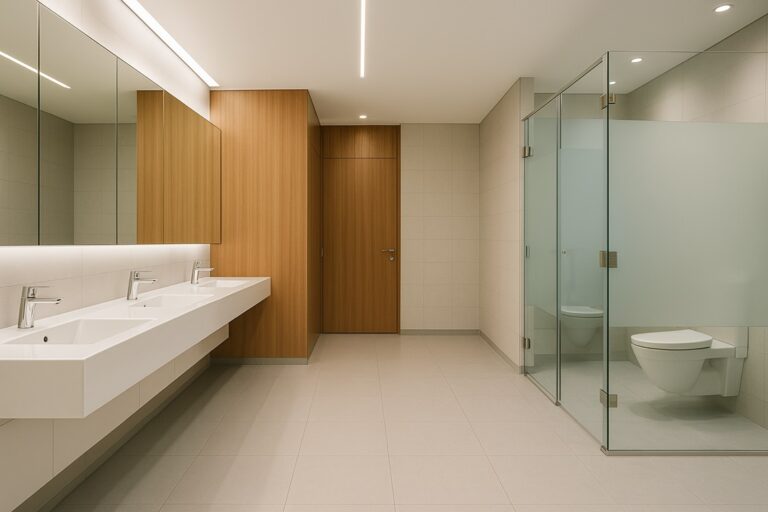
Hotels and hospitality venues often prioritize finish consistency, quiet dosing, and easy servicing during guest-room turnover. Shopping malls favor robust housings, intuitive use, and accessible refill points. Stadiums and transport hubs benefit from high refill capacity, fast turnover, and maintenance routines that work between event peaks. Offices may prioritize quiet operation, understated design, and predictable consumable spending. Healthcare environments should involve infection prevention teams in selecting compatible products and refill procedures.

Read More
Avoid applying one model indiscriminately across every restroom. Visitor counts, cleaning staffing, vandalisms risks, and service windows differ significantly among a lobby washroom, staff restroom, suite bathroom, and event-level concourse.
Verify the documentation before placing an order
Before procurement, request a current submittal package with dimensional drawings, mounting template, finish information, soap and viscosity compatibility, dose range, sensor adjustment, reservoir capacity, power details, warranty scope, and parts references. If the product is integrated with a faucet, verify basin location and service access for both components.
Read More
For major projects, approve a physical sample or working mock-up. Assign responsibility for supply of soap, electrical rough-in, installation, programming, commissioning, and owner training. A short mock-up can reveal geometric and maintenance problems before they repeat across dozens of washstations.
Soap dispenser comparison at a glance
| Configuration | Where it fits | Key selection check | Service consideration |
|---|---|---|---|
| Manual wall mount | Low-complexity restrooms | Operating force and refill access | Inspect valves and cleaning access |
| Touchless wall mount | Public washrooms and retrofits | Sensor geometry and power | Access to batteries and refill housing |
| Touchless deck mount | Architectural counters and coordinated basins | Counter cutout, spout placement and soap tube | Under-counter pump and bottle access |
| Centralized multi-feed | Multi-station high-traffic facilities | System capacity and tubing runs | Central fill, line servicing and leak checks |
A spec sheet is decisive: for example, Fontana FS1222 documents an 800 mL reservoir and adjustable dose of 0.5–3 mL, while other models specify different compatible viscosities and pump configurations. Do not transfer specifications between models.
Estimate refill demand before selecting capacity
| Planning input | Example | Calculation |
|---|---|---|
| Daily activations | 400 | Observed or projected restroom usage |
| Average dose | 1 mL | Use approved setting and test results |
| Daily demand | 400 mL | 400 × 1 mL |
| Nominal 800 mL reservoir | About 2 days | 800 ÷ 400, before reserve and losses |
The figures illustrate the method, not a recommended refill interval. Increase reserves for event surges and include actual replenishment schedules, refill restrictions, and operational downtime.
Compare documented commercial products
FontanaShowers offers commercial dispenser collections, deck-mounted models, and coordinated faucet-and-dispenser systems. Use the links below to compare actual product details and request model-specific submittals.
Commercial Collection
Browse wall, deck, and centralized dispensing approaches across finishes and technologies.
Explore the commercial rangeChrome Deck-Mount
See the FS9854-C automatic dispenser configuration and confirm compatible soap type.
View the dispenserMatched Washstation
Compare the FS10232 touchless faucet and soap dispenser combination.
View the coordinated setFrequently asked questions about buying soap dispensers
What is the best soap dispenser for a high-traffic restroom?
Choose based on measured demand, refill labor, vandal exposure, soap compatibility, and available power. High-capacity or centralized systems may be useful, but service access and documented compatibility remain essential.
Are automatic soap dispensers better than manual ones?
Automatic dispensers offer hands-free activation. Manual units can be simpler and need no electrical supply. The better choice depends on project hygiene goals, maintenance resources, accessibility, and the environment.
Can liquid soap be used in a foam dispenser?
Only if the manufacturer specifically approves that formulation and its concentration. Foam pumps and liquid pumps frequently have different operating requirements.
How much soap should an automatic dispenser release?
There is no single universal dose. Follow the soap manufacturer’s usage guidance and choose a dispenser with an adjustable, documented output range where required.
How do I size a commercial soap dispenser reservoir?
Multiply expected daily activations by average dose and divide reservoir capacity by that daily consumption, then adjust for traffic peaks, priming losses, and maintenance reserve.
Are touchless soap dispensers automatically ADA compliant?
No. Accessibility depends on installation geometry, the operable sensing area, clear floor space, reach limitations, and applicable regulations—not touchless activation alone.
Should staff top off refillable soap tanks?
No. CDC guidance warns that adding soap to partially filled dispensers has been associated with bacterial contamination. Follow manufacturer procedures for replacing or thoroughly cleaning refillable systems.
What should be included in a commercial dispenser submittal?
Include dimensions, mounting details, materials, sensor and pump specifications, approved soap formulations, reservoir and power data, servicing instructions, parts, warranty, and finish information.
Technical references and product resources
For specification checks, consult 2010 ADA Standards for Accessible Design, U.S. Access Board guidance on operable parts and reach ranges, and the CDC’s clinical hand hygiene safety guidance on soap refilling. Product references include the Fontana commercial automatic dispenser catalog, the Fontana FS1222 specification sheet, and the Fontana soap dispenser range.
Product specifications, certifications, compatibility and availability should be confirmed for the selected model and project before purchase.