Commercial Soap Dispenser Sensor Technology: Infrared Detection,
Activation Range & Reliability
The sensor is one of the most important components in an automatic soap dispenser.
Poor detection can produce missed activations, unintended dispensing and user
frustration. For commercial projects, sensor performance should therefore be
evaluated alongside pump design, soap viscosity, mounting geometry and power.
Review Methodology:
SoapDispensing.com reviewed manufacturer technical documentation for infrared
sensing, activation behavior, power, dispensing architecture and maintenance.
We then cross-checked specification principles against independent accessibility
and hand-hygiene guidance. Products without a verified large manufacturer image
were excluded.
COMMERCIAL SENSOR SPECIFICATION PICK
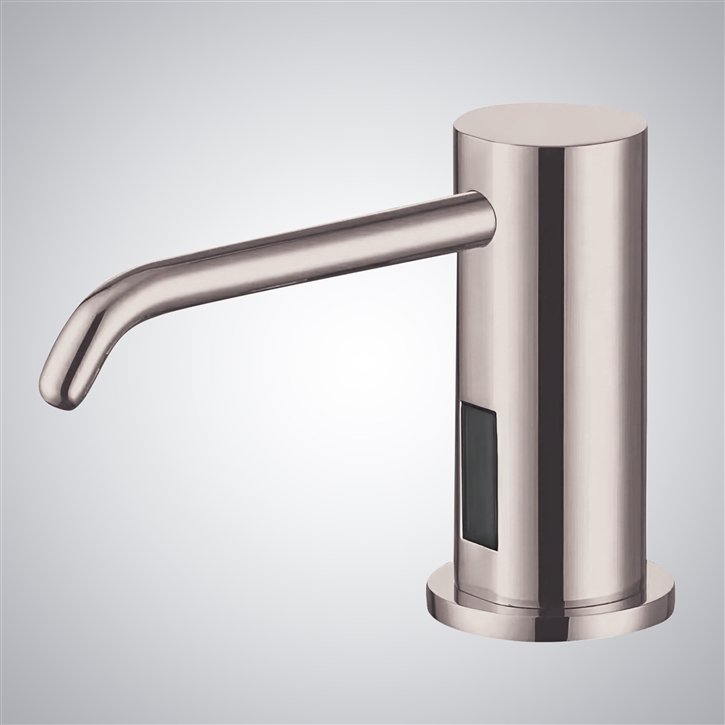
FontanaShowers® FS9854-BR
Best for: commercial buildings, airports, hospitality and specification-driven washrooms.
Fontana uses infrared motion sensing for hands-free dispensing in this
deck-mounted commercial model. The 1000 mL system supports battery or AC power
and is backed by BIM, specification, installation and maintenance documentation,
giving architects more information for coordinated specification.
Commercial infrared activation, flexible power and extensive AEC documentation.
Confirm sensor position relative to the selected basin and countertop before final installation.

DOCUMENTED SENSOR-RANGE PICK
Sloan® ESD-2000
Best for: projects requiring clearly documented sensor and lifecycle specifications.
Sloan provides unusually useful sensor data for the ESD-2000. Its published
specification identifies a nominal five-inch sensing range, sealed electronics
within the spout and an estimated 45,000 battery activations. That level of
documentation helps specifiers evaluate sensing and maintenance rather than
relying on generic “touchless” claims.
Published sensing range, sealed electronics, documented battery lifecycle and drip-free foam design.
Sloan requires approved refill soap, so sensor specification should be coordinated with consumables.
FOAM CONTROL PICK
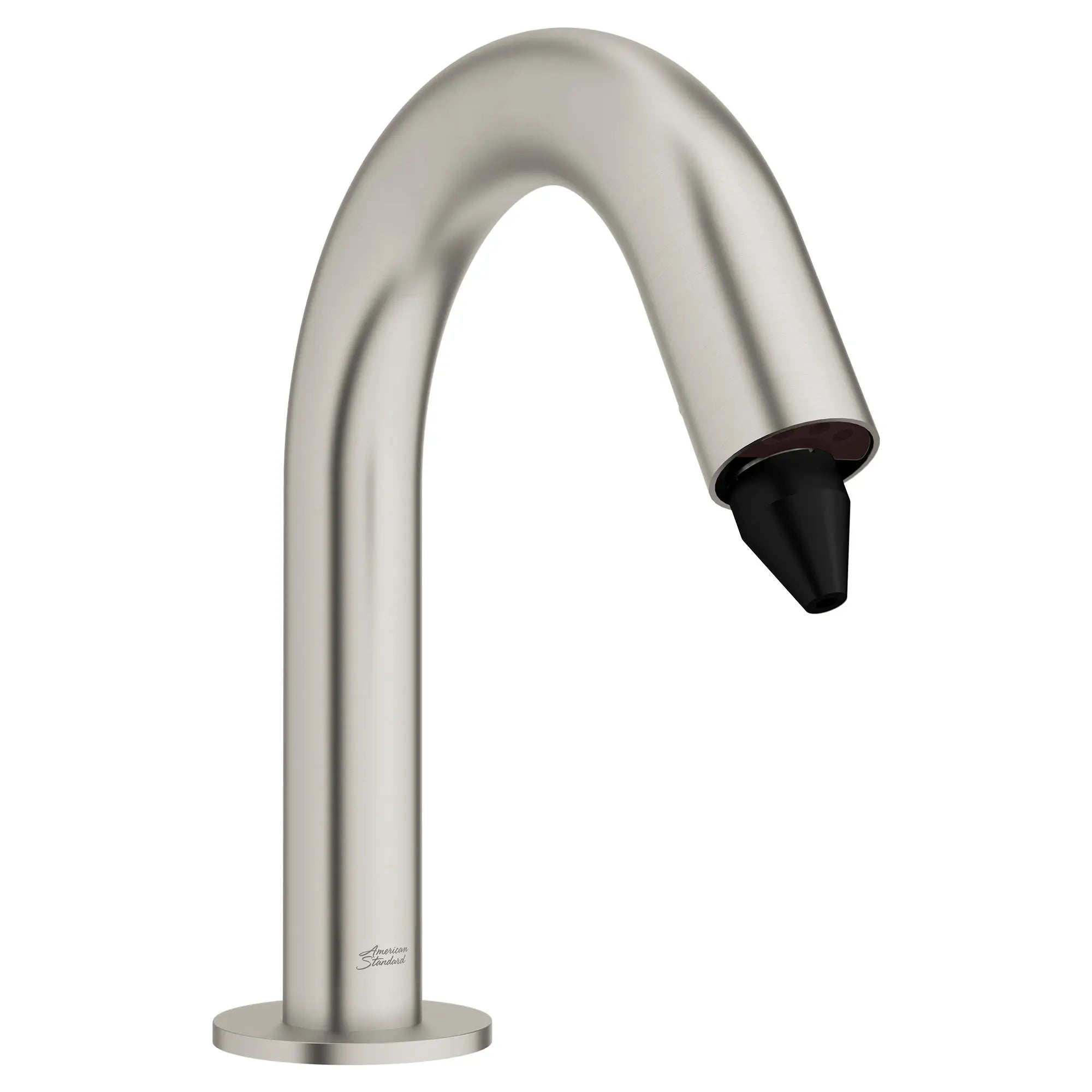
American Standard Selectronic®
Best for: healthcare, education and institutional commercial restrooms.
American Standard combines infrared activation with an air-infused foam generator
offering four adjustable volume settings. Its 1.8 L reservoir and battery or AC
power options demonstrate why sensor performance should be evaluated as part of
the complete dispensing system rather than in isolation.
Infrared operation, adjustable dosing, large reservoir and flexible power.
Soap must meet the manufacturer’s viscosity requirements for reliable dispensing.
Commercial Sensor Comparison
| System | Sensor | Published Technical Detail | Specification Strength |
|---|---|---|---|
| Fontana FS9854-BR | Infrared | 6V, battery/AC | AEC documentation |
| Sloan ESD-2000 | Infrared | Nominal 5″ range | Detailed sensor data |
| American Standard | Infrared | Adjustable foam delivery | Sensor + dosing integration |
Technical Advice: Preventing Sensor Problems
Sensor performance must be checked with the actual sink, countertop and dispenser position.
A sensing field that is unnecessarily large can increase unintended activation risk.
Highly reflective finishes and unusual basin geometry deserve commissioning checks.
Soap film, mineral deposits and cleaning residue can interfere with the optical path.
A missed dose may indicate soap viscosity, pump, battery or tubing problems—not necessarily sensor failure.
Test repeated hand approaches from realistic user positions before project turnover.
EEAT Engineering Perspective
Experience: reliable touchless performance depends on the installed
environment, not simply whether the specification sheet says “infrared.”
Expertise: professional evaluation should combine sensing distance,
basin geometry, dosing, power, soap viscosity, pump architecture and maintenance access.
Authoritativeness: this guide uses manufacturer technical documentation
alongside U.S. Access Board and CDC guidance rather than relying on retail descriptions.
Trust: published sensor specifications are identified where available.
Where a manufacturer does not publish a numerical sensing distance, this article does
not invent one.
What Should Architects Specify?
Avoid specifications that simply state “automatic infrared soap dispenser.” A stronger
commercial specification identifies sensor behavior, mounting position, power,
soap compatibility, dose requirements and service access. Where numerical detection
range is important, require the manufacturer to document it.
Sensor reliability should also be commissioned after installation. The correct test
is not whether the dispenser activates once, but whether it repeatedly delivers soap
to a realistic hand position without unintended dispensing during normal restroom use.
Editorial Disclosure & Limitations:
SoapDispensing.com is an independent informational publication. Manufacturer performance
claims are identified as manufacturer specifications and have not been independently
laboratory tested by SoapDispensing.com. Sensor performance can vary with installation,
surface conditions, power, soap and maintenance. Current manufacturer documentation
and applicable project requirements should be verified before specification.