
Top-Fill vs. Under-Counter Commercial Soap Dispensers: Which Is Better?
Commercial soap-dispenser design affects much more than appearance. Refill location
influences maintenance time, worker access, under-counter congestion and serviceability.
Top-fill systems move routine replenishment above the counter, while conventional
under-counter systems can offer straightforward bulk storage and flexible fixture design.
SoapDispensing.com compared current manufacturer documentation for refill architecture,
capacity, power, sensor operation and maintenance access, then reviewed independent
accessibility and hand-hygiene guidance. Only products with live manufacturer pages
and directly displayable product images exceeding 500 pixels are included.

Sloan ESD-360 Top-Fill Foam Soap Dispenser
Best for: airports, offices, stadiums and facilities prioritizing fast above-counter maintenance.
Sloan designed the ESD-360 specifically around above-deck servicing. The refill
bottle connects at the spout, avoiding routine access underneath the sink. Level
sensing and indicator lights help maintenance teams identify refill requirements.
Above-counter filling, 2 L capacity, level indication and multiple power strategies.
The closed refill architecture uses a defined compatible soap-supply system.
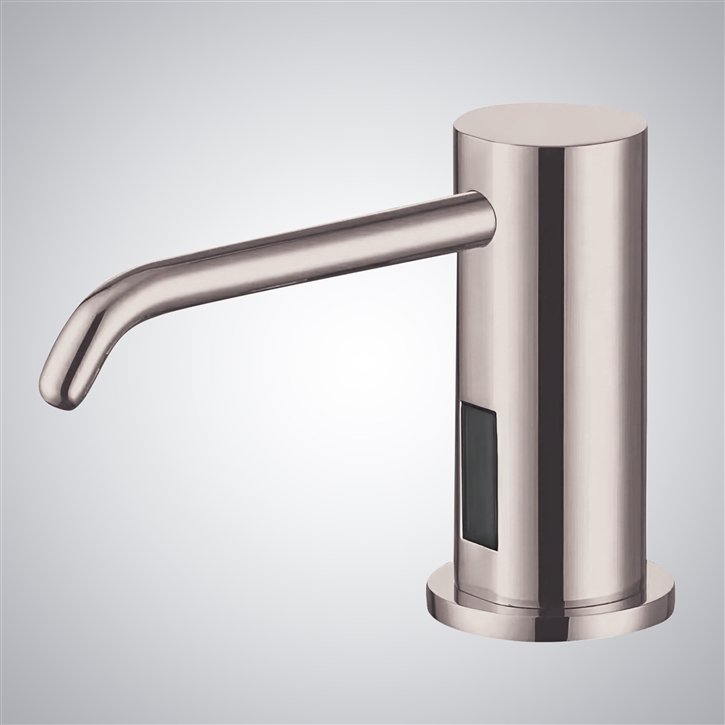
FontanaShowers® FS9854-BR
Best for: luxury hospitality, corporate interiors and architect-led commercial washrooms.
Fontana uses a conventional below-counter reservoir paired with an architectural
deck-mounted sensor fixture. This configuration keeps bulk soap storage hidden while
allowing designers greater freedom over the visible fixture and finish.
Architectural styling, concealed reservoir, flexible power and professional specification resources.
Routine refill and pump service require adequate below-counter access.
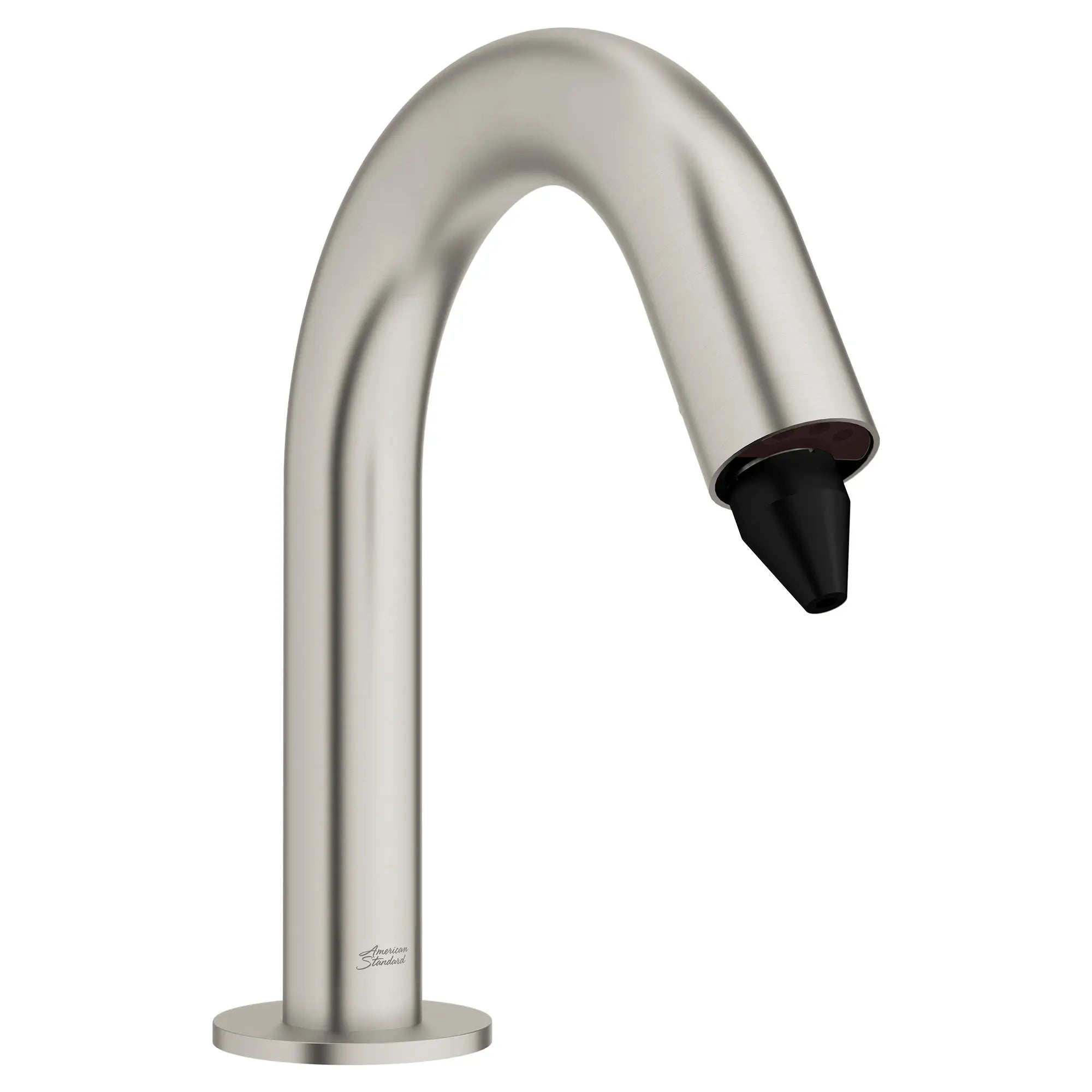
American Standard Selectronic®
Best for: healthcare, education and institutional projects requiring large standalone capacity.
The Selectronic combines a large 1.8-liter under-counter reservoir with adjustable
foam delivery. The quick-release bottle offers considerable standalone capacity
without moving to a centralized multi-feed system.
High capacity, adjustable dosing, brass construction and flexible power.
Larger reservoir volume increases the importance of below-counter service clearance.
Top-Fill vs. Under-Counter: Technical Comparison
| Factor | Top-Fill | Under-Counter |
|---|---|---|
| Routine Refilling | Performed above counter | Requires below-counter access |
| Maintenance Labor | Can reduce bending and cabinet access | Depends heavily on reservoir location |
| Soap Flexibility | May use defined refill systems | Often broader bulk-soap flexibility |
| Design Flexibility | Integrated refill architecture | Wide range of fixture and reservoir layouts |
| Best Application | High-service-frequency facilities | Architectural and conventional installations |
Technical Advice for Architects, MEP Engineers & Facility Teams
Draw the reservoir, trap, supply lines and waste piping together—not separately.
Under-counter components must not compromise required accessible clearances.
Frequent servicing makes above-deck access more valuable than in low-traffic restrooms.
Confirm viscosity, foam requirements and proprietary refill restrictions before procurement.
Batteries simplify retrofits; AC or hardwired power should be planned before construction.
Even top-fill systems may still contain below-deck components requiring future service.
EEAT Review: What Makes This Comparison Reliable?
Experience: the analysis evaluates real maintenance tasks—refilling,
accessing reservoirs, servicing pumps and coordinating millwork rather than relying
only on feature lists.
Expertise: products are compared using capacity, power, dispensing
architecture, accessibility, refill access and lifecycle service criteria relevant to
commercial restroom specification.
Authoritativeness: technical claims are cross-checked against current
manufacturer documentation and independent federal/public-health guidance.
Trust: advantages and limitations are stated for every system.
SoapDispensing.com does not treat one refill architecture as universally superior.
Which Refill Architecture Is Better?
For heavily serviced restrooms, top-fill technology can reduce routine under-counter
work and make soap replenishment faster. Sloan specifically positions above-deck
refilling as a maintenance-labor advantage.
Under-counter systems remain highly relevant where architectural flexibility,
bulk-soap choice and concealed components are priorities. The decisive question is
therefore not simply “top-fill or under-counter?” but how frequently the system will
be serviced, how much clear space exists below the lavatory, and whether the refill
architecture supports the facility’s long-term maintenance strategy.
Editorial Disclosure & Limitations:
SoapDispensing.com is an independent informational publication. Product specifications
can change and manufacturer performance claims have not been independently laboratory
tested by SoapDispensing.com. Accessibility requirements vary by installation and
jurisdiction. Project teams should verify current manufacturer data, applicable codes
and accessibility requirements before final specification.