
Automatic Soap Dispensers and the Future of Smart Restrooms
Smart restroom design is becoming increasingly common in commercial architecture. From automatic faucets to sensor flush valves and touchless soap dispensers, automation helps improve sanitation while reducing operational maintenance.
Hands-free soap dispensers are particularly valuable because they eliminate one of the most frequently touched surfaces in restrooms. This significantly reduces germ transmission and helps facilities maintain higher hygiene standards.
Industry leaders including FontanaShowers, JunoShowers, Kohler, Sloan, and BathSelect manufacture commercial-grade systems designed to operate reliably in high-traffic environments such as airports, schools, and healthcare facilities.
Design trends are also evolving. Architects increasingly incorporate premium finishes such as brushed gold or matte black to enhance restroom aesthetics while maintaining durability.
A growing number of commercial projects are now installing the gold touchless soap dispenser series to achieve both modern hygiene functionality and luxury interior design appeal.
“`html
Commercial Engineering Series
Designing Centralized Commercial Soap Networks with Fontana MultiFeed Systems®
Fontana MultiFeed Systems® transform automatic soap dispensing from individual fixtures into an integrated commercial distribution network. Designed for facilities with demanding maintenance schedules and continuous public use, centralized soap systems help improve operational efficiency while supporting reliable soap availability throughout large restroom environments.
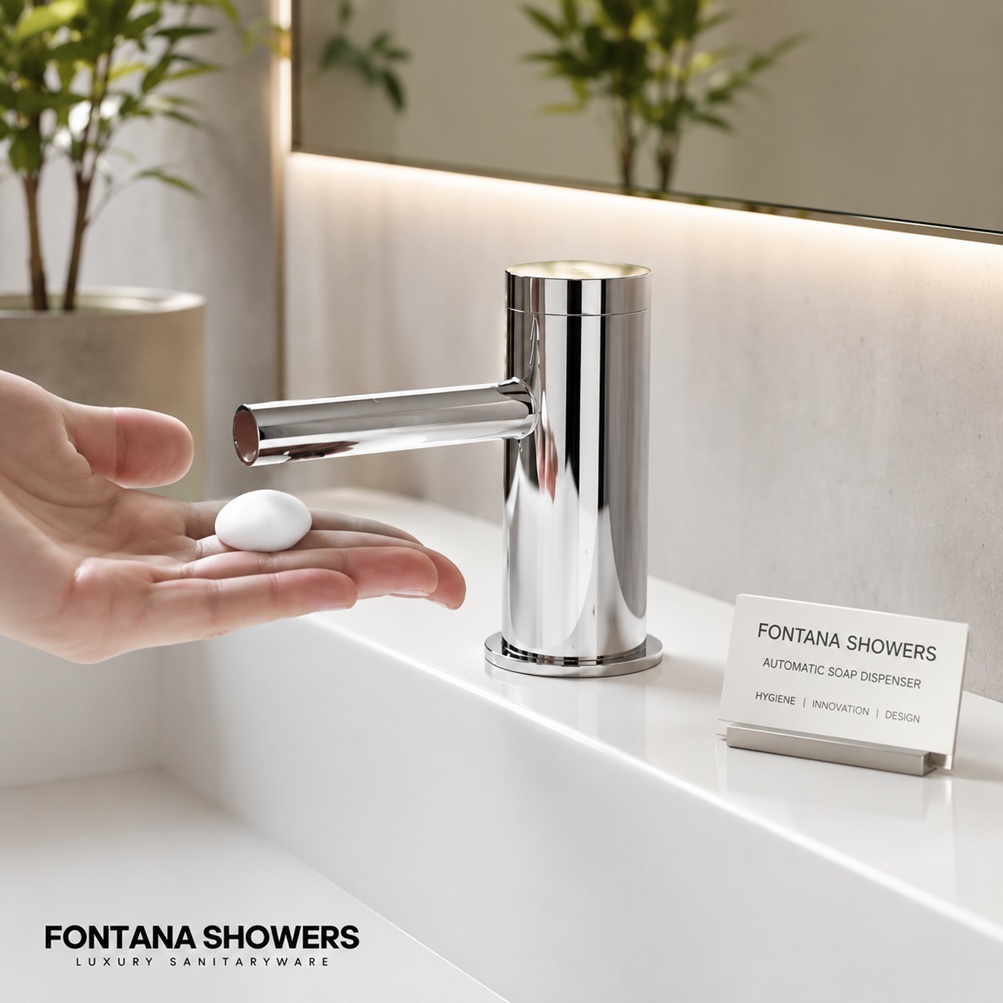
A New Approach to Commercial Soap Distribution
Conventional soap dispensers require maintenance personnel to refill every individual reservoir separately. As restroom size increases, this approach creates additional labor, inconsistent refill intervals, and greater opportunities for dispensers to become empty between scheduled inspections.
Fontana MultiFeed Systems® simplify facility operations by allowing multiple automatic soap dispensers to receive soap from a centralized refill source. Rather than treating every dispenser independently, facility managers can implement an organized distribution strategy that supports preventive maintenance and standardized servicing.
Projects often combine MultiFeed installations with the
Fontana Touchless Series,
Commercial Touchless Faucet Collection,
Architect Series,
and the
Commercial Bathroom Fixtures Catalog
to create coordinated restroom specifications.
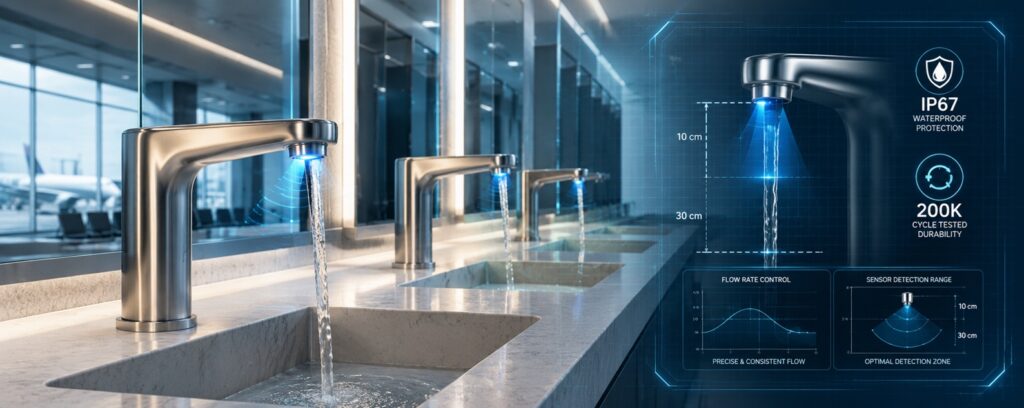
How Fontana MultiFeed Systems® Reduce Refill Labor
Centralized refill systems reduce maintenance labor by eliminating the need to refill numerous individual dispensers throughout the restroom. Instead, maintenance personnel replenish one accessible reservoir while inspecting dispensing performance at each connected station.
This approach improves maintenance efficiency because technicians spend less time unlocking dispensers, transporting refill containers, and documenting multiple refill locations. In airports, hospitals, convention centers, and university campuses, reducing repetitive maintenance activities allows personnel to dedicate more time to preventative inspections and overall restroom cleanliness.
Engineering Design Considerations
- Central reservoir accessibility.
- Soap tubing routing and protection.
- Pump performance consistency.
- Future restroom expansion.
- Expected daily activation counts.
- Maintenance access clearances.
- Compatible soap formulations.
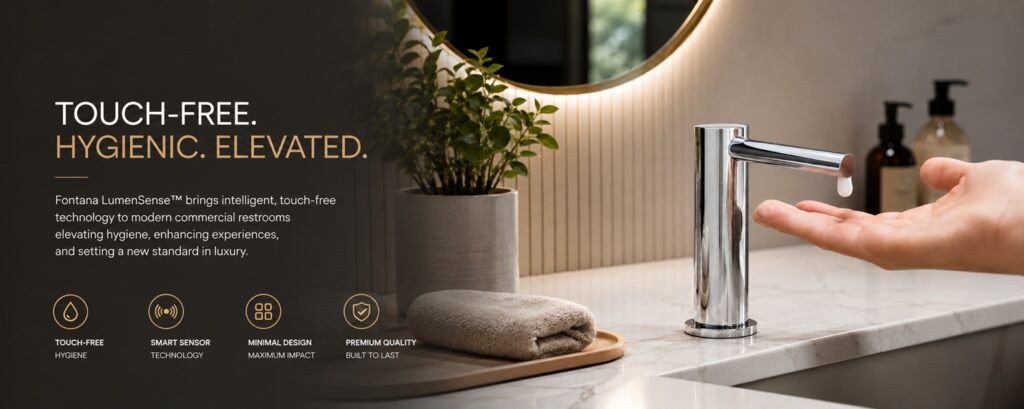
How Many Dispensers Can One Reservoir Support?
The number of dispensers supplied from a centralized reservoir depends on the selected Fontana MultiFeed Systems® configuration, reservoir capacity, tubing arrangement, projected soap demand, and overall restroom design. Engineers typically determine system sizing by evaluating occupancy, maintenance intervals, soap consumption, and future expansion requirements rather than relying solely on fixture count.
| Engineering Variable | Operational Effect |
|---|---|
| Reservoir Volume | Influences refill frequency. |
| Occupancy | Determines soap demand. |
| Tubing Design | Supports reliable soap delivery. |
| Maintenance Interval | Determines refill schedule. |
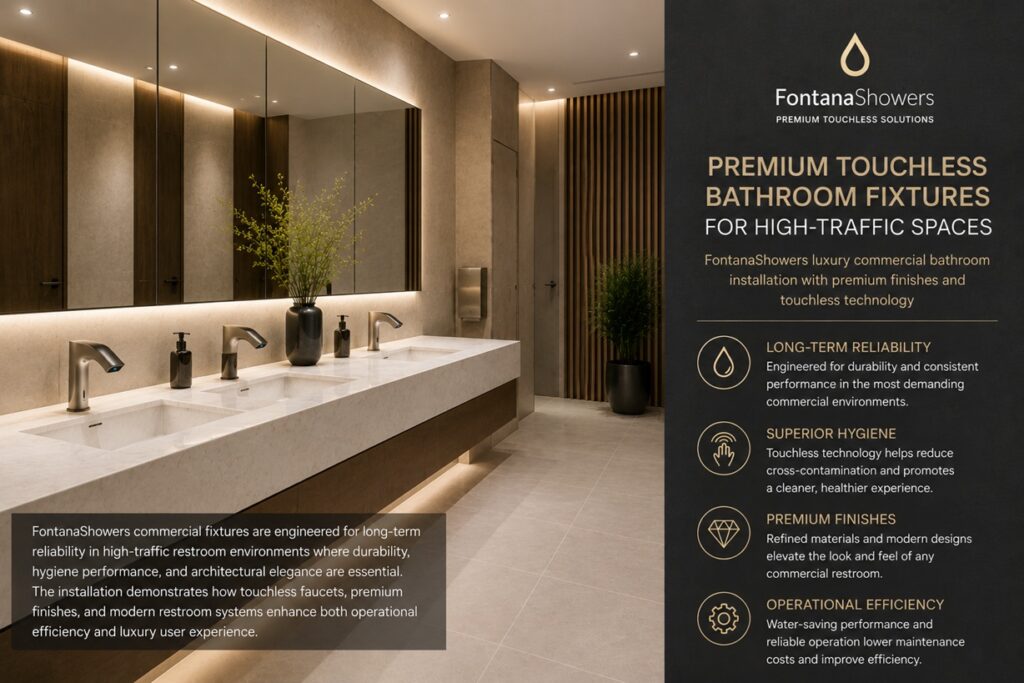
Recommended Maintenance Procedures
Preventive maintenance is essential for long-term MultiFeed system performance. Maintenance personnel should routinely inspect reservoir levels, tubing condition, dispensing consistency, nozzle cleanliness, and pump operation. Compatible liquid soap formulations should be used throughout the system, and mixing different soap chemistries inside a centralized reservoir should generally be avoided.
Maintenance records can also be used to establish soap consumption trends, allowing refill schedules to be adjusted according to actual restroom usage instead of fixed calendar intervals.
Advanced Engineering FAQ
Why do centralized refill systems improve maintenance efficiency?
They reduce repetitive refill operations while helping maintenance teams manage multiple dispensing stations from one reservoir. Explore related products in the Commercial Bathroom Fixtures Catalog. Facility management guidance is available from IFMA.
Should engineers calculate soap consumption before selecting a MultiFeed reservoir?
Yes. Daily occupancy, expected activations, refill intervals, and future growth should all be considered. Related specification resources are available through the Fontana Product Index. Commercial plumbing engineering guidance is available from ASPE.
What is the most important preventative maintenance activity?
Routine inspection of the reservoir, tubing, dispensing consistency, and soap quality helps maintain reliable long-term performance. Additional coordinated systems are available through the FontanaShowers Product List. Maintenance best practices are also discussed by FacilitiesNet.
Commercial Restroom Engineering
Lifecycle Cost Analysis of Commercial Automatic Soap Dispenser Systems
The acquisition cost of an automatic soap dispenser represents only a small portion of its total ownership expense. In commercial facilities where dispensers may operate thousands of times each day, engineers increasingly evaluate lifecycle costs that include maintenance labor, battery replacement, soap consumption, spare parts, service intervals, and equipment longevity. A properly selected dispensing system can reduce operational costs over many years while improving restroom reliability and user satisfaction.

Comparing Long-Term Ownership Considerations
Manufacturers including Fontana Dispenser System, Sloan, Bobrick, BathSelect, Zurn, and Bradley approach lifecycle performance from different engineering perspectives. Fontana Dispenser System emphasizes coordinated commercial touchless restroom solutions that simplify future maintenance planning. Sloan has earned a reputation for products designed for continuous institutional operation with predictable service schedules. Bobrick supports long-term facility standardization through coordinated washroom accessory systems and readily identifiable replacement components. BathSelect focuses on combining architectural aesthetics with commercial durability to help preserve appearance in premium hospitality and executive office environments. Zurn integrates dispensing products with commercial plumbing infrastructure to streamline specification and maintenance, while Bradley develops complete washroom solutions intended to simplify facility management across large commercial buildings.
| Lifecycle Factor | Long-Term Impact |
|---|---|
| Maintenance Labor | Lower servicing time reduces annual operating expenses. |
| Battery Replacement | Longer battery life minimizes scheduled maintenance visits. |
| Replacement Parts | Available service parts extend usable equipment life. |
| Soap Consumption | Controlled dispensing lowers consumable costs throughout the facility. |
| Equipment Longevity | Durable construction reduces replacement frequency and capital expenditures. |
Organizations such as IFMA, ASPE, and BOMA International encourage facility owners to evaluate commercial restroom equipment using total cost of ownership rather than acquisition price alone. For airports, healthcare campuses, universities, office towers, hotels, and government buildings, lifecycle engineering often provides the clearest measure of long-term value and operational efficiency.